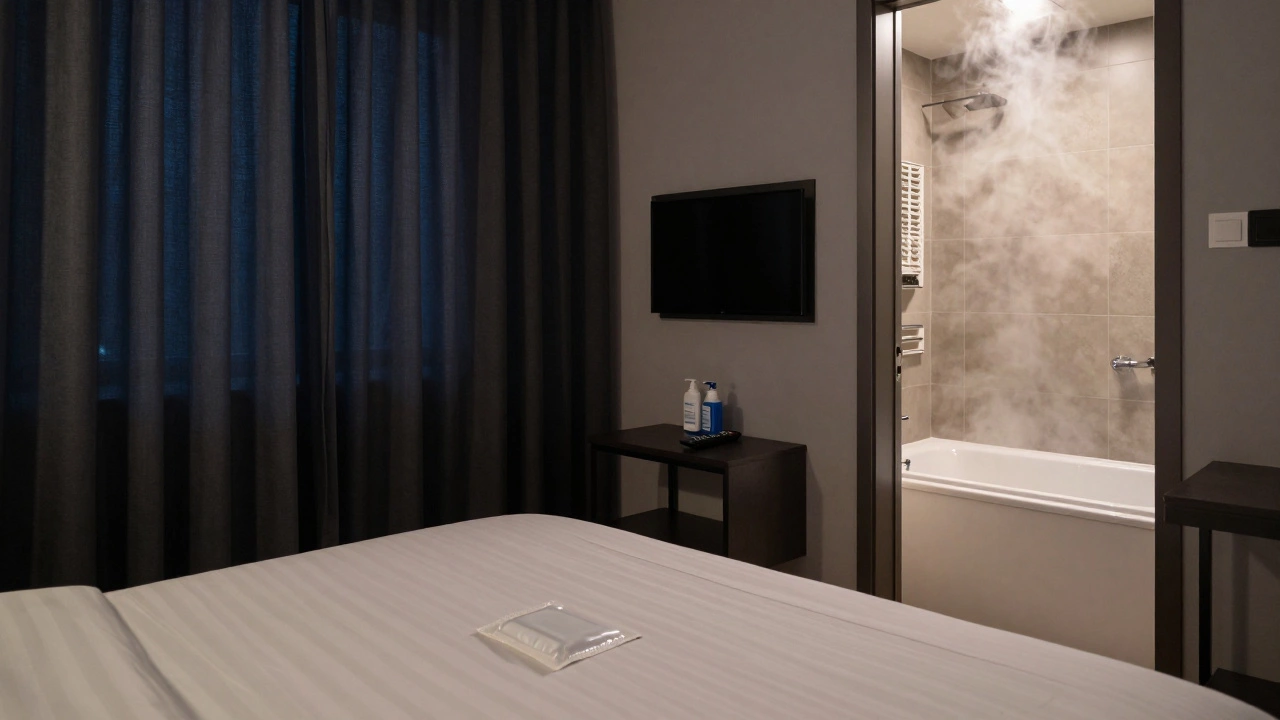
Love Hotel Sanitation Risk Calculator
Your Stay Details
Ever walked past a love hotel and wondered if the sheets have ever been changed? You’re not alone. These places - often hidden in backstreets, lit with neon, and designed for privacy - come with a lot of questions. And the biggest one? Are love hotels sanitary?
What even is a love hotel?
A love hotel isn’t just a romantic getaway. It’s a specific type of short-stay accommodation built for discretion, usually rented by the hour or for overnight stays. They’re common in Japan, South Korea, parts of Europe, and even scattered across major cities in the U.S. and Australia. Unlike regular hotels, they often have automated check-in kiosks, private entrances, and rooms designed for intimacy - think heart-shaped tubs, mood lighting, and themed decor.
But here’s the thing: they’re not designed to be long-term living spaces. That changes how cleaning and maintenance work. You’re not staying for a week. You’re staying for two hours. Or eight. So the cleaning schedule isn’t the same as a Marriott or a Hilton.
How often are rooms actually cleaned?
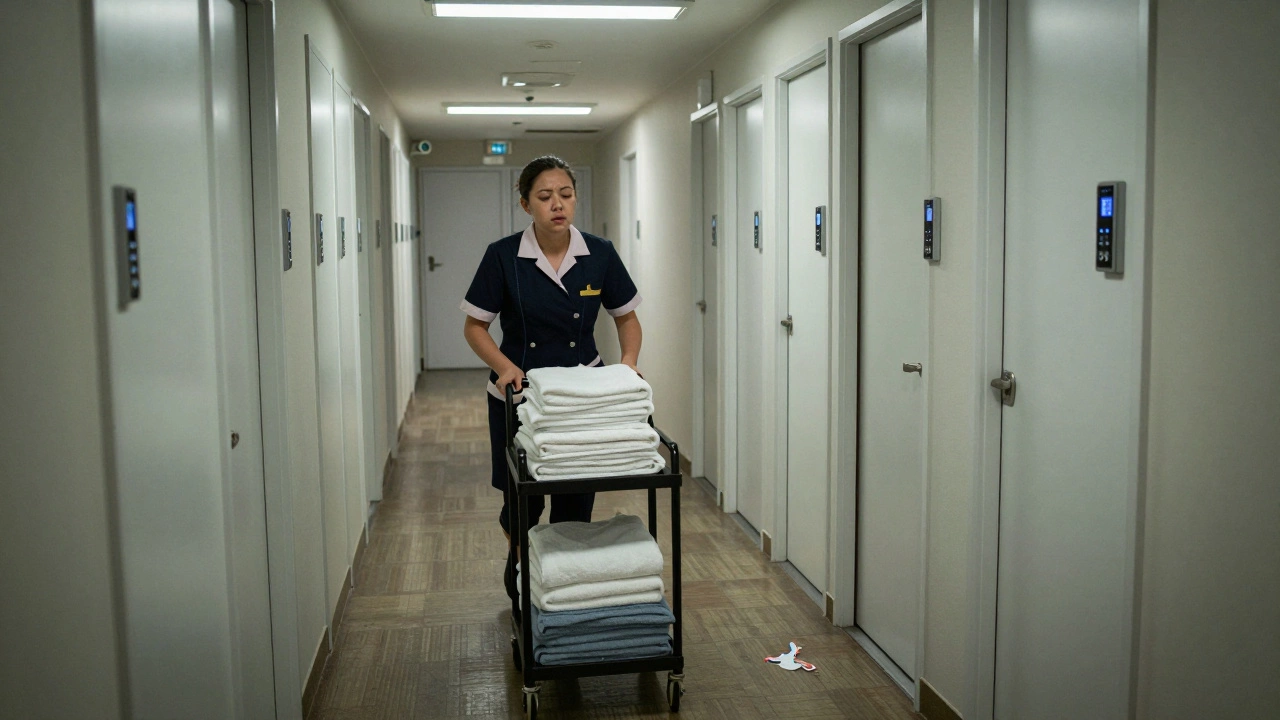
Most reputable love hotels clean rooms between every guest. That’s the rule. But rules don’t always mean reality. In places with high turnover - think Tokyo’s Shinjuku or Seoul’s Gangnam - a room might get used five or six times in a single day. That means the cleaning crew has maybe 20 to 30 minutes between check-outs and new check-ins.
That’s not enough time to deep clean. So what gets done?
- Trash is removed
- Surfaces like nightstands and TV remotes are wiped down
- Bedding is swapped - but only if the previous guest didn’t use the room for more than a few hours
- Bathrooms get sprayed with disinfectant, but showers and tubs might not be scrubbed if the previous guest only used them briefly
Think of it like a fast-food bathroom. It’s not dirty because no one cares - it’s dirty because no one has time to do it right. Staff are under pressure to turn rooms fast. Profit depends on it.
What about the bedding?
This is where people get nervous. Do they change the sheets after every guest?
In high-end love hotels - the kind with digital keypads and designer toiletries - yes. They change sheets, pillowcases, and even towels after every guest. These places know reputation matters. A single bad review about unclean linens can tank their business.
But in budget or older locations? Not always. Some use disposable mattress covers. Others just vacuum the bed and toss on a fresh top sheet. Pillowcases? Sometimes reused if they look clean. You won’t find this written on their website. It’s not advertised. But if you’ve stayed in a dozen love hotels across Asia and Europe, you’ll notice the difference.
One traveler in Osaka told me: “I always brought my own pillowcase. Not because I thought they were dirty - but because I didn’t want to find out.”
Are bathrooms safe to use?
Bathrooms are the biggest concern. You’re using the same shower, sink, and toilet that someone else used two hours ago. The question isn’t whether it’s clean - it’s whether it’s clean enough.
Most love hotels use commercial-grade disinfectants. They spray the toilet bowl, wipe the sink, and run a quick cycle on the showerhead. But here’s what they don’t do: scrub grout. Remove soap scum. Deep-clean the bathtub.
Studies from Japan’s National Institute of Public Health show that while bacteria levels in love hotel bathrooms are higher than in standard hotels, they’re still within safe limits - if the cleaning was done properly. But “properly” is subjective. If the staff is rushed, the disinfectant sits for five seconds instead of ten. That’s not enough to kill everything.
Pro tip: Bring your own disinfectant wipes. Wipe down the toilet seat, faucet handles, and shower floor before you use them. It takes 30 seconds. It’s worth it.
Do they follow health codes?
Yes - mostly. In Japan, love hotels are regulated under the Hotel Business Law. They need licenses. Inspectors show up unannounced. In South Korea, they fall under the same rules as regular hotels. In the U.S., it’s patchy. Some states treat them like motels. Others don’t have specific rules.
But here’s the catch: inspections are spot checks. They don’t test for every surface. They don’t swab every pillow. They check for fire exits, smoke detectors, and basic plumbing. Hygiene? That’s up to the staff.
One inspector in Tokyo told a local news outlet: “We don’t go in to check if the towels are clean. We go in to check if the fire alarm works.”
How to pick a clean love hotel
You don’t have to guess. There are ways to tell if a place is likely to be clean.
- Look at reviews - not just the star rating. Read the comments. Words like “smelled weird,” “sticky floor,” or “sheets felt reused” are red flags.
- Check the photos - real hotels post high-quality images. If the website looks like it was taken with a phone in dim light, be cautious.
- Look for chains - places like Love Hotel Tokyo or Hotel MyStays have corporate standards. Independent joints? Riskier.
- Ask about cleaning - yes, you can ask. Say: “Do you change all linens after every guest?” If they hesitate or dodge, walk away.
- Go during the day - rooms cleaned at 3 a.m. after a busy night are less likely to be spotless than ones cleaned at noon.
What about the air quality?
Love hotel rooms often smell. Not because they’re dirty - but because they’re sealed. Air conditioning runs on low. Windows rarely open. Air fresheners are used to mask smells - not clean the air.
Some rooms have UV lights or ozone purifiers. These are rare. More common? Scented candles and plug-in air fresheners that just cover up odors. If you’re sensitive to smells, bring a small portable air purifier. Or just crack the window for five minutes when you get in.
Are there any real health risks?
For most people? No. The risk of catching something serious from a love hotel room is extremely low. You’re not going to get hepatitis from a towel. Or STIs from a bedsheet. Those don’t survive long on surfaces.
But minor stuff? Yes. Skin irritations. Rashes. Allergies from harsh cleaners. Even a bad case of athlete’s foot if the shower floor hasn’t been scrubbed in days.
One 2023 study in the Journal of Environmental Health tracked 1,200 guests across 47 love hotels in Japan. 12% reported minor skin irritation after their stay. 3% had mild allergic reactions to cleaning chemicals. None had infections.
The biggest health risk? Not the room. It’s the stress of wondering if it’s clean.
Bottom line: Can you sleep easy?
Yes - if you’re smart about it.
Love hotels aren’t inherently dirty. But they’re not designed for luxury. They’re designed for speed. That means you need to take a few extra steps to protect yourself.
Bring your own towel. Wipe down surfaces. Skip the bathtub if you’re unsure. Don’t assume the sheets are fresh. And if you’re uncomfortable? Pick a regular hotel. Pay a little more. Sleep better.
At the end of the day, cleanliness isn’t about the label on the door. It’s about what you’re willing to do to make sure you’re safe. And that’s something no hotel can do for you.
Are love hotels cleaner than regular hotels?
Generally, no. Regular hotels have standardized cleaning protocols, trained staff, and longer turnaround times. Love hotels prioritize speed over depth. While many are clean, they don’t have the same level of oversight or time to do thorough cleaning between guests.
Do love hotels change sheets after every guest?
It depends. High-end love hotels do. Budget or older ones might only change the top sheet or use disposable mattress covers. There’s no universal rule. Always check reviews or ask directly before booking.
Can you get an STD from a love hotel?
No. STIs like HIV, chlamydia, or gonorrhea don’t survive long outside the human body. You can’t catch them from sheets, towels, or toilet seats. The only way to get one is through direct contact with an infected person - not from the room itself.
Are love hotels legal in Australia?
Yes, but they’re rare. Australia doesn’t ban them, but local councils often restrict them through zoning laws. You’ll find a few in major cities like Sydney or Melbourne, but they’re not common. Most operate under regular hotel licenses with no special designation.
What’s the best way to check if a love hotel room is clean?
Bring disinfectant wipes and clean the high-touch areas: remote control, door handle, light switches, bathroom fixtures, and the toilet seat. Look for visible stains on the bedding or sticky surfaces. Smell the room - if it reeks of air freshener, that’s often a sign they’re hiding something. If everything looks and smells neutral, you’re probably fine.