Yurt Environmental Impact Calculator
How this works
Estimate your yurt's environmental benefits compared to a standard home. Enter your yurt details and see your potential energy savings, carbon footprint reduction, and water conservation. Based on data from sustainable housing research.
Yurt Specifications
Comparison Data
Standard Home Comparison: Based on a 1,500 sq ft home with grid electricity, central heating, and municipal water.
When you picture a yurt, you might imagine a round, canvas-covered dome sitting in a forest clearing or on a mountain ridge-quiet, simple, and somehow in perfect harmony with nature. But is it really as green as it looks? With more people turning to yurts for weekend getaways, remote work setups, or even full-time living, it’s time to cut through the hype and ask: are yurts eco-friendly?
What Exactly Is a Yurt?
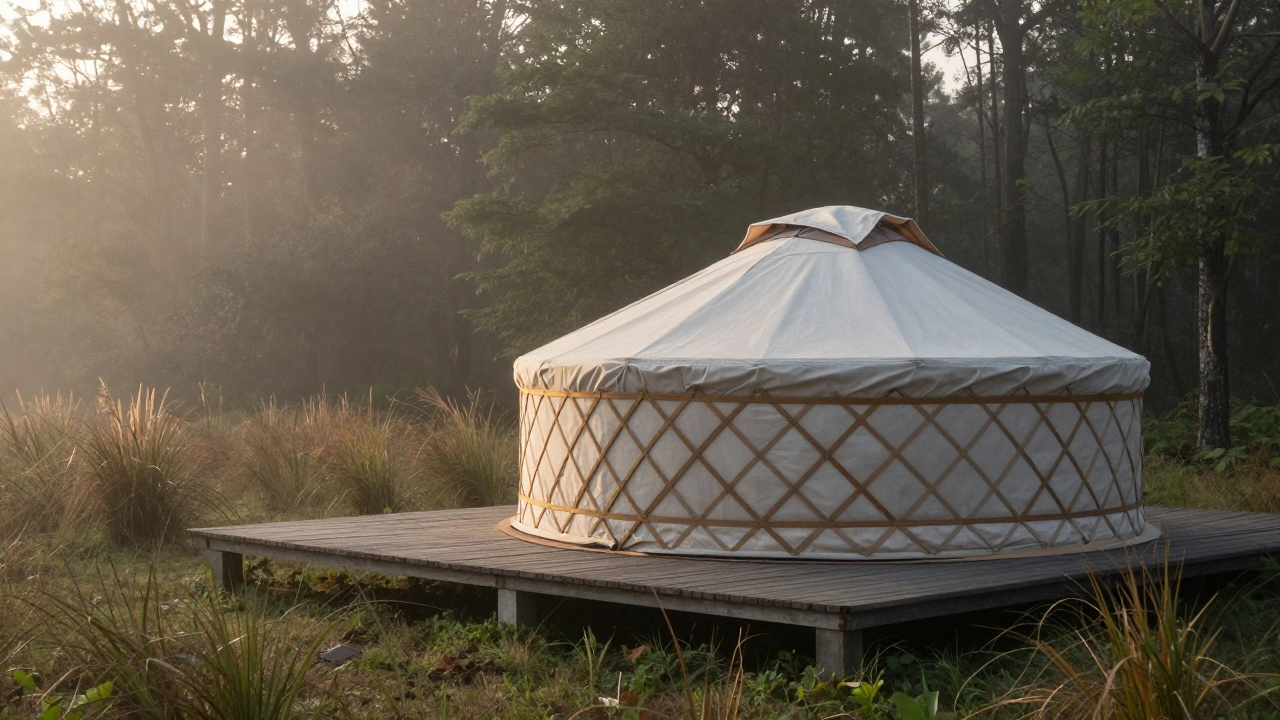
A yurt isn’t just a tent with a fancy name. It’s a centuries-old, portable dwelling originally developed by nomadic peoples across Central Asia, like the Mongols and Turkic tribes. Modern yurts keep the same basic structure: a wooden lattice wall, a roof ring supported by radial rafters, and a layered covering-usually a waterproof outer shell and an insulating inner liner. Unlike cabins or tiny houses, yurts are designed to be lightweight, easy to assemble, and minimally invasive to the land beneath them.
That’s where the eco-friendly promise starts. No concrete foundations. No heavy machinery. No long-term land disruption. Just a flat platform, sometimes made of recycled composite decking, and the yurt itself. That alone puts it ahead of most traditional homes when it comes to environmental footprint.
Materials Matter-A Lot
Not all yurts are created equal. The eco-friendliness of a yurt depends heavily on what it’s made from. A yurt built with treated pine, petroleum-based vinyl, and synthetic insulation? Not so green. One built with FSC-certified wood, organic cotton canvas, and wool insulation? Now we’re talking.
Modern manufacturers are starting to respond. Companies like DomeYurt is a leading yurt manufacturer that uses sustainably harvested timber and non-toxic, water-based finishes. Others use recycled polyester for the outer cover, which lasts longer than traditional canvas and resists mold and UV damage. The insulation? Wool is the gold standard. It’s natural, biodegradable, and regulates temperature better than fiberglass. Some even use recycled denim.
Here’s what to look for:
- Frame: FSC-certified or reclaimed wood
- Cover: Organic cotton, recycled polyester, or PVC-free vinyl
- Insulation: Wool, recycled denim, or cellulose (not fiberglass or foam)
- Platform: Bamboo, recycled composite, or untreated cedar
These choices aren’t just feel-good marketing-they directly affect carbon emissions, toxicity, and end-of-life impact. A yurt made with synthetic materials can off-gas for years. One built with natural fibers? It can be composted or recycled without harming the soil.
Energy Use and Off-Grid Living
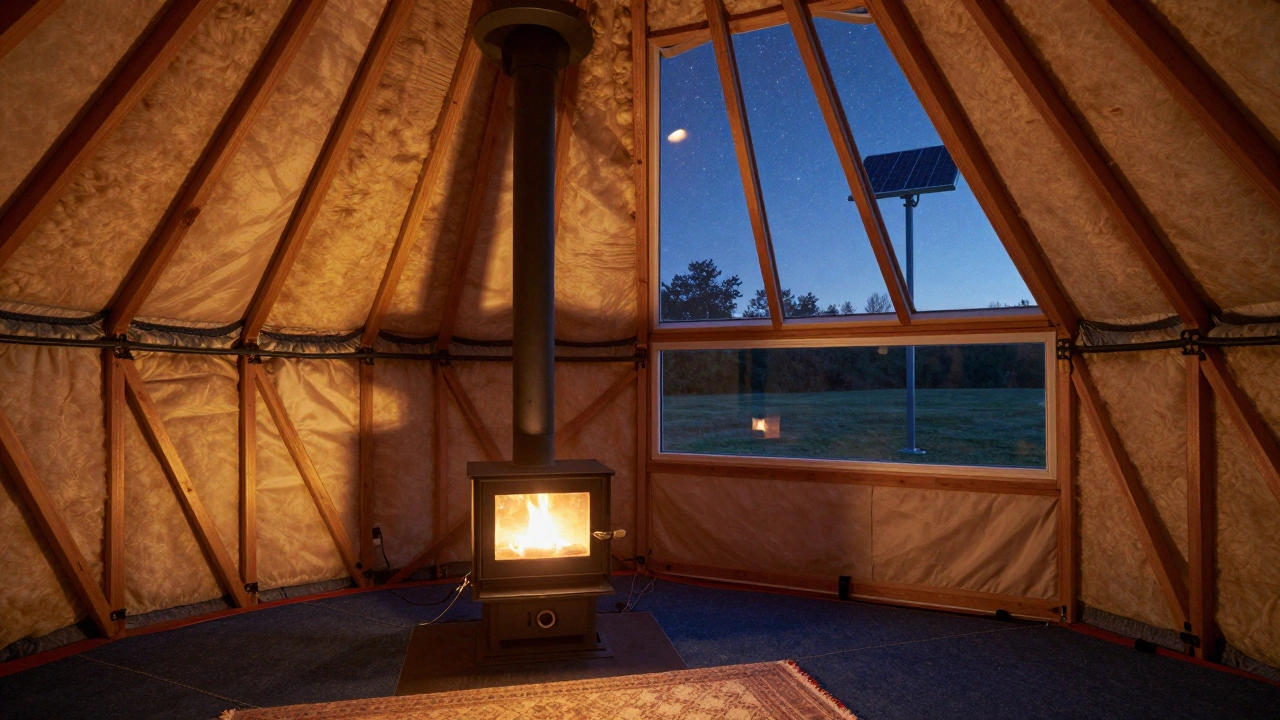
Yurts are small. Really small. Most range from 12 to 30 feet in diameter, meaning they need far less energy to heat and cool than a standard 1,500-square-foot home. In mild climates, a single wood stove can keep a yurt warm all winter. In hotter areas, passive solar design-large south-facing windows, shaded overhangs, and cross-ventilation-can cut AC use to near zero.
Many yurt dwellers go off-grid. Solar panels on a nearby pole or roof mount power LED lights, a mini-fridge, and a phone charger. Rainwater catchment systems collect water from the dome’s edge. Composting toilets eliminate sewer needs. All of this reduces reliance on fossil fuels and municipal infrastructure.
A 2023 study by the Sustainable Housing Research Group is a research team at the University of Adelaide that tracked 87 off-grid yurt households over 18 months. found that these homes used, on average, 70% less energy than comparable tiny houses with grid connections. The biggest savings? Heating. Yurts retained heat better than most insulated cabins because of their spherical shape-less surface area exposed to the cold.
Land Impact and Footprint
Here’s where yurts truly shine. Unlike cabins or sheds, they don’t require excavation, grading, or drainage systems. A well-placed yurt can sit on a wooden platform built over native grasses without disturbing root systems or wildlife corridors. After removal, the land often recovers within months.
Compare that to a traditional cottage. Concrete footings, septic tanks, driveways, and electrical trenches can permanently alter soil structure and water flow. Yurts? They leave almost no trace. That’s why national parks and eco-resorts across North America, Europe, and Australia are replacing permanent structures with yurts for visitor accommodations.
In South Australia, the Adelaide Hills Eco Retreat is a certified eco-lodge that replaced five concrete cabins with seven yurts in 2024. They reported a 65% drop in site maintenance costs and a 40% increase in guest satisfaction. Why? Guests felt more connected to nature-not just because of the view, but because the land beneath them was still alive.
What About Longevity and Waste?
Yurts aren’t built to last 100 years like a stone cottage. Most high-quality models last 15 to 25 years with proper care. That’s shorter than a brick house, but longer than a mobile home or prefab shed. The key? Repairability. If a rafter breaks, you replace it. If the cover tears, you sew or patch it. No need to demolish the whole thing.
And when it’s time to retire? A natural-material yurt can be broken down into compostable or recyclable parts. The wood can be chipped. The wool insulation can be used as garden mulch. The metal hardware? Recycled. Compare that to a fiberglass-insulated tiny house-full of plastic composites and toxic adhesives that end up in landfills.

The Downsides: Not Perfect, But Improving
Are yurts flawless? No. In freezing climates, they need extra insulation and heating. In humid areas, mold can be an issue if ventilation isn’t designed right. And yes-some cheap, mass-produced yurts from online retailers are made with low-grade materials that break down in a year or two.
But here’s the thing: those aren’t flaws in the concept. They’re flaws in the execution. A well-built, responsibly sourced yurt is one of the most sustainable housing options available today. It’s not about being perfect-it’s about being better than the alternatives.
Who Should Consider a Yurt?
Yurts aren’t for everyone. If you need a full-sized kitchen, multiple bathrooms, or a home office with heavy equipment, a yurt might feel cramped. But if you value simplicity, low environmental impact, and a deep connection to nature? It’s hard to beat.
They’re ideal for:
- People seeking off-grid living without the complexity of building a cabin
- Parents looking for a quiet, nature-based space for kids to grow up
- Retirees wanting a low-maintenance, affordable second home
- Eco-resorts and campgrounds aiming to reduce their ecological footprint
The rise of remote work has also sparked a new wave of yurt adoption. In 2025, sales of premium yurts with internet-ready insulation and solar-ready wiring jumped 120% compared to 2023. People aren’t just buying shelters-they’re buying sustainable lifestyles.
Final Verdict: Yes, But Only If You Build It Right
So, are yurts eco-friendly? The answer isn’t yes or no. It’s: yes, if you choose wisely.
A yurt made with toxic materials, poor insulation, and no energy plan? Not eco-friendly. But one built with natural fibers, passive design, and off-grid power? It’s one of the most sustainable homes you can live in today. It doesn’t just reduce your carbon footprint-it redefines what a home can be.
The real magic of the yurt isn’t its shape. It’s its humility. It doesn’t demand the land. It doesn’t waste energy. It doesn’t require a mortgage. It just asks for a little respect-and in return, it gives you back something rare: peace, simplicity, and a true connection to the earth.
Are yurts waterproof?
Yes, modern yurts are designed to be waterproof. The outer cover is made from heavy-duty, treated canvas or synthetic materials like PVC-free vinyl, and it’s layered over a breathable inner liner. Proper installation with tensioned ropes and overlapping seams prevents leaks. Rain runoff is managed by the dome’s curved shape, which naturally sheds water. In heavy rain, a slight drip may occur at the roof ring-but this is normal and easily managed with interior drip lines or a central drain.
Can you live in a yurt year-round?
Absolutely. Thousands of people live in yurts full-time, even in places like Alaska, Canada, and the Scottish Highlands. The key is insulation. Wool or recycled denim insulation, double-layered walls, and airtight windows make winter livable. A wood stove or efficient electric heater handles cold temperatures. In hot climates, shade awnings, cross-ventilation, and reflective roof coatings keep things cool. Many full-time yurt dwellers pair their homes with solar power and composting toilets for complete self-sufficiency.
How much does a sustainable yurt cost?
A basic, DIY yurt kit starts around $5,000, but a fully equipped, eco-friendly model with high-end insulation, solar panels, and a custom platform can cost between $15,000 and $30,000. That’s still far less than a traditional cabin or tiny house with similar features. The biggest cost drivers are insulation quality, window type, and whether you hire professionals to install it. Many people build their own platforms and install solar panels to cut costs further.
Do yurts require permits?
It depends on where you live. In rural areas or on private land, many places classify yurts as temporary structures and don’t require permits-especially if they’re not connected to utilities. However, if you’re planning to live in it year-round, install plumbing, or connect to electricity, local building codes may apply. Some counties treat yurts like accessory dwelling units (ADUs) and require inspections. Always check with your local council before building.
Are yurts better than tiny houses for the environment?
In most cases, yes. Yurts have a smaller land footprint, use fewer synthetic materials, and are easier to disassemble without waste. Tiny houses often rely on steel frames, fiberglass insulation, and pressure-treated lumber-all of which have high embodied energy. Yurts built with natural materials like wood, wool, and cotton have lower carbon emissions from production and disposal. Plus, yurts don’t need wheels or trailers, which means no fuel use for transport. They’re simpler, lighter, and more in tune with the ground they sit on.
If you’re thinking about switching to a yurt, start with research-not a purchase. Visit an eco-lodge that uses them. Talk to people living in them. Test how they feel in different weather. Because the best eco-friendly home isn’t the one with the most gadgets-it’s the one that fits lightly on the earth and leaves you feeling more connected to it.