Glamping Power Calculator
Add Your Devices
Glamping Power Limits
Solar/Battery Typical sites: 100W total power
Limited Most sites: 2 hours of power between 6PM-10PM
Off-Grid Some sites: No electricity available
Power Summary
When you picture glamping, you might think of cozy tents with fairy lights, wooden floors, and a warm wood stove. But the big question on everyone’s mind? Do you have electricity when glamping? The answer isn’t yes or no-it depends on where you are, what kind of glamping site you’ve booked, and how far off the grid they’re willing to go.
Most Glamping Sites Have Electricity-But It’s Not Always What You Think
Yes, the majority of modern glamping sites in Australia, the US, and Europe do provide electricity. But don’t expect the same kind of power you get at home. You won’t find 15 outlets beside your bed or a 240-volt kettle that boils water in 90 seconds. Instead, think of it as smart, limited, and intentional.
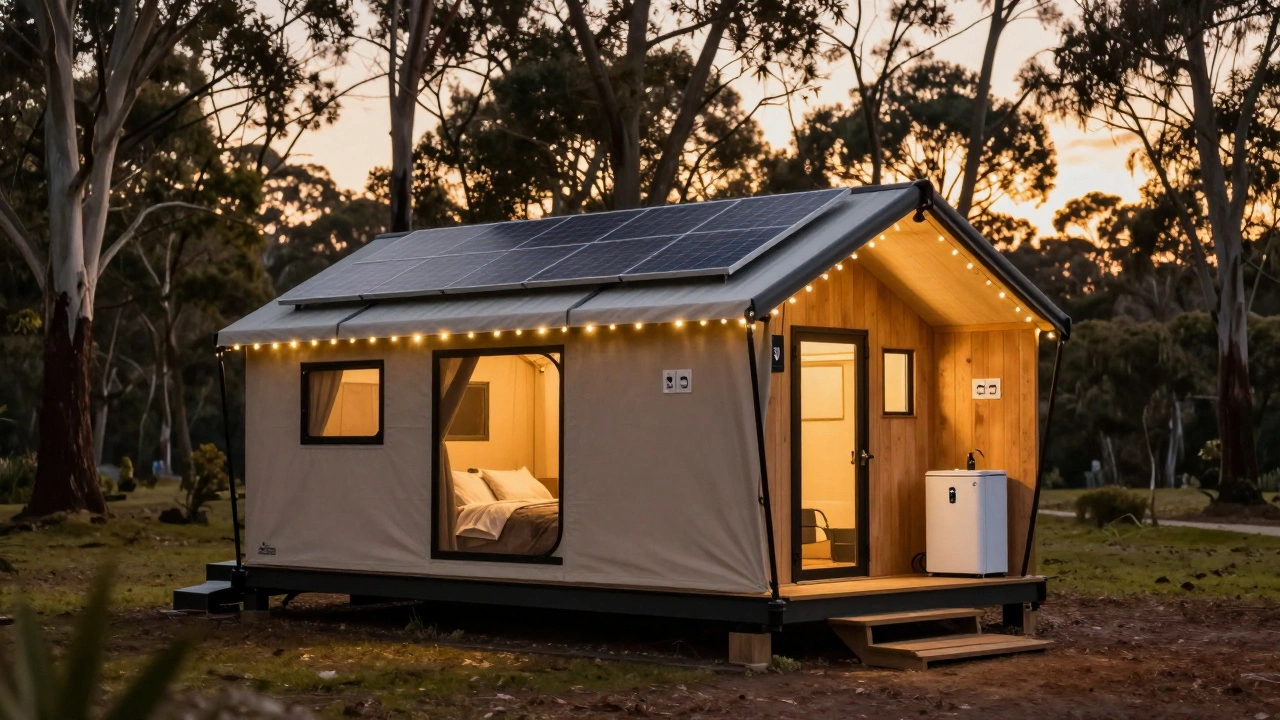
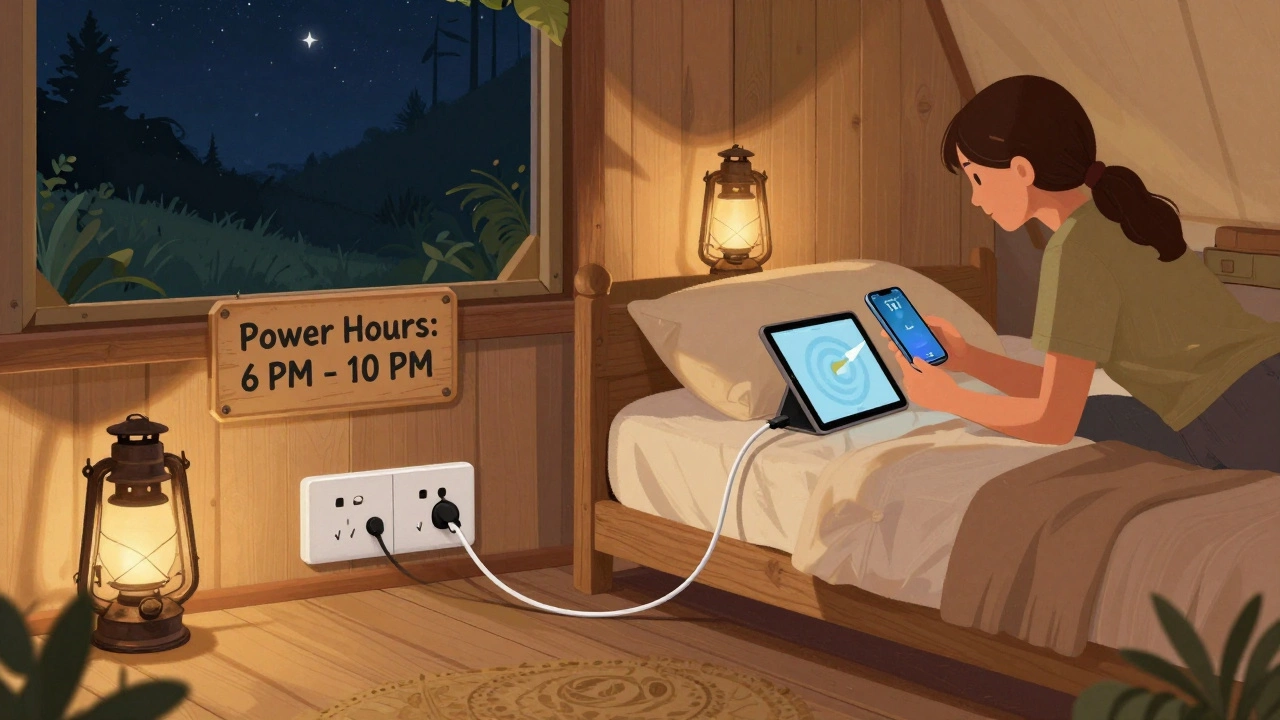
At most eco-friendly glamping sites, electricity comes from solar panels, small wind turbines, or battery banks charged during daylight hours. A typical setup might include two USB ports, one or two low-wattage LED lamps, and maybe a single 110V or 230V outlet for charging phones, cameras, or a small CPAP machine. Some sites even limit power usage to certain hours-say, 6 PM to 10 PM-to conserve energy.
Take a site like Wilderness Retreats in South Australia’s Adelaide Hills. They use 400-watt solar arrays on each cabin to power LED lighting, a small fridge, and a USB hub. No hair dryers. No electric kettles. No space heaters. That’s by design. The goal isn’t to replicate your suburban home-it’s to give you comfort without the carbon footprint.
What You Can and Can’t Plug In
If you’re planning to bring electronics, know this: not everything will work. Here’s what most glamping sites allow-and what they strictly ban.
- Allowed: Smartphones, tablets, cameras, e-readers, portable speakers (low wattage), CPAP machines (with prior notice), battery-powered razors.
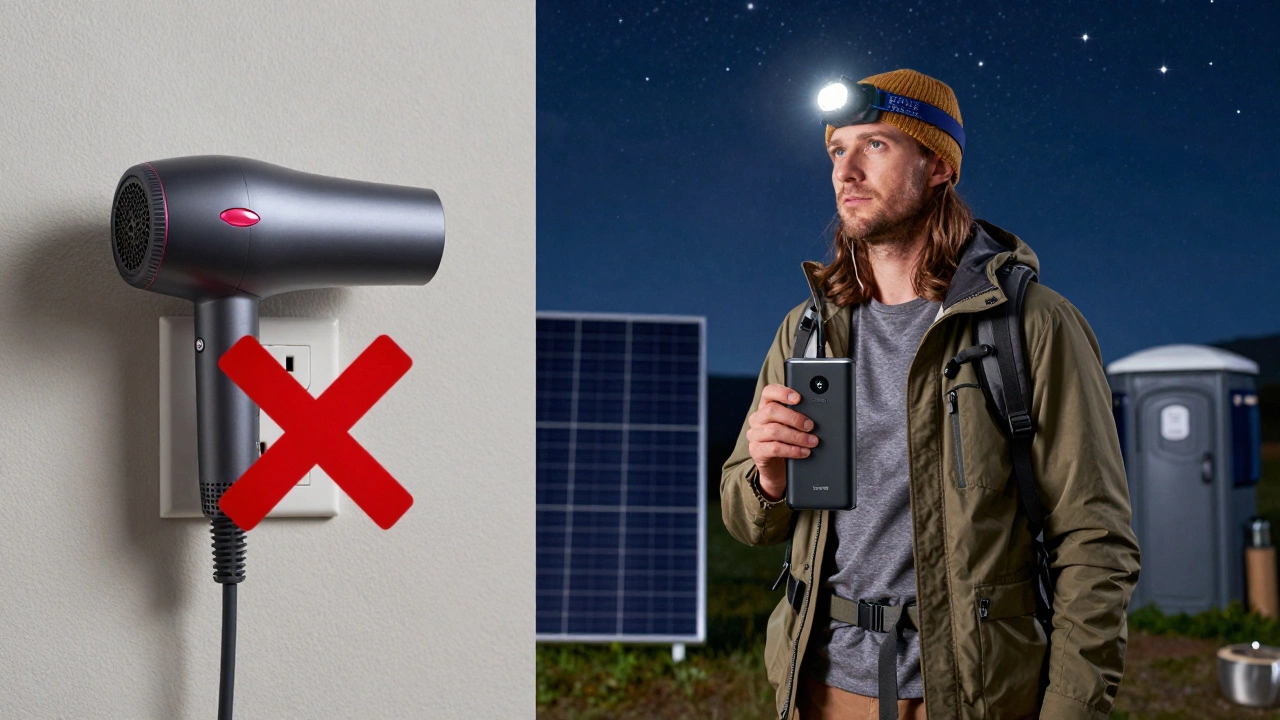
- Not Allowed: Hair dryers, curling irons, electric kettles, coffee makers, space heaters, mini-fridges (unless provided), gaming consoles, vacuum cleaners.
Why the restrictions? Power draw. A single 1500-watt hair dryer can drain a full day’s solar charge in under 10 minutes. Glamping sites that rely on off-grid power can’t afford that kind of waste. Most sites will list their power limits on their booking page-read them. If they say “100W max,” then your 120W blow dryer is out.
Pro tip: Bring a power bank. Even if your cabin has outlets, having a fully charged 20,000mAh power bank means you can keep your phone alive for two days without touching the grid. It’s a small thing that makes a big difference.
Off-Grid Glamping: No Electricity at All
Not all glamping is created equal. Some sites go completely off-grid-not just in power, but in water, waste, and even lighting. These are the ones that advertise “digital detox,” “starlight nights,” or “primitive luxury.”
In places like the Flinders Ranges or Tasmania’s remote national parks, you’ll find cabins lit by oil lamps or solar lanterns. No outlets. No Wi-Fi. No fridge. Just a cool box with ice packs and a wood stove for warmth. This isn’t a glitch-it’s the whole point. People book these sites to unplug, not just from Wi-Fi, but from the constant hum of modern life.
These sites often use propane for cooking and heating. Some have composting toilets and rainwater collection. If you’re looking for a true escape, this is it. But if you need to charge your phone for a work call or want to watch a movie before bed, you’ll be disappointed.
How to Know What You’re Getting Before You Book
Don’t assume. Don’t guess. Always check the details before you pay.
- Look for the “Amenities” section on the booking page. It should list power sources: “Solar-powered,” “Battery bank,” “Grid-connected,” or “No electricity.”
- Check the number and type of outlets. “Two USB ports” is common. “One 230V outlet” means you can plug in a small device.
- Read reviews. Look for phrases like “couldn’t charge my camera,” “power cut at 9 PM,” or “perfectly quiet with no electricity.” Real guests tell the truth.
- Call the site. Ask: “Can I run a CPAP machine overnight?” or “Is there a fridge? Does it run on solar?” If they hesitate or give a vague answer, that’s a red flag.
Some sites even offer power upgrade options-for an extra fee, you can get a dedicated outlet or a portable generator for a few hours. It’s rare, but it exists. Just be upfront about your needs.
Why Eco-Friendly Glamping Keeps Power Low
Electricity isn’t just about convenience-it’s about impact. The average Australian home uses 18 kWh of electricity per day. A typical glamping cabin with solar power generates 1-3 kWh per day. That’s less than one-tenth of what you use at home.
By limiting power, glamping sites reduce their reliance on diesel generators, cut emissions, and protect natural landscapes. Solar panels don’t need roads or fuel deliveries. Battery banks don’t pollute. And when you use less, you’re not just being green-you’re respecting the land you’re staying on.
It’s also about mindset. Glamping isn’t camping with luxury-it’s camping with intention. The quiet nights, the crackling fire, the absence of buzzing appliances-they’re not side effects. They’re the whole experience.
What to Pack for Glamping With Limited Power
If you’re heading to a site with limited electricity, your packing list changes. Here’s what works:
- Power bank (20,000mAh or higher)
- LED headlamp or handheld solar lantern
- Hand-crank radio or flashlight
- Non-electric entertainment: books, journals, cards, board games
- Thermal layers (for warmth without a heater)
- Insulated water bottle (to keep drinks hot or cold without a fridge)
- Portable propane stove (if cooking is allowed)
Leave the hair straighteners, electric blankets, and mini-fridges at home. You won’t need them-and you’ll be glad you didn’t try to bring them.
Glamping Is Evolving-But the Spirit Stays the Same
Five years ago, most glamping sites were tents with no power. Today, you’ll find cabins with smart thermostats, Bluetooth speakers, and even Wi-Fi. But the best sites still draw the line. They offer comfort without compromise-not the kind of comfort that uses a lot of power, but the kind that makes you feel truly rested.
Electricity in glamping isn’t about having everything. It’s about having what matters. A warm bed. Clean water. A place to charge your phone so you can call home. And the quiet-real quiet-that comes from knowing you’re not draining the earth to get it.
So yes, you usually have electricity when glamping. But you’ll rarely have more than you need. And that’s exactly how it should be.