All-Inclusive vs. DIY Cost Estimator
Calculate if the "convenience tax" is worth it. Enter your expected habits to see if an all-inclusive package is actually a deal or a donation to the resort.
Package Details
Your Daily Habits (DIY Estimate)
DIY Total: $0
Estimated cost if you manage your own meals/drinks.
Quick Summary: The Trade-offs
- Lower quality and variety of food compared to local eateries.
- The "resort bubble" effect that keeps you away from authentic culture.
- Higher upfront costs for amenities you might never actually use.
- Crowded public spaces and "buffet fatigue."
- Limited flexibility to change plans or explore the local area.
The Quality Trap: Buffets and Bottom-Shelf Spirits
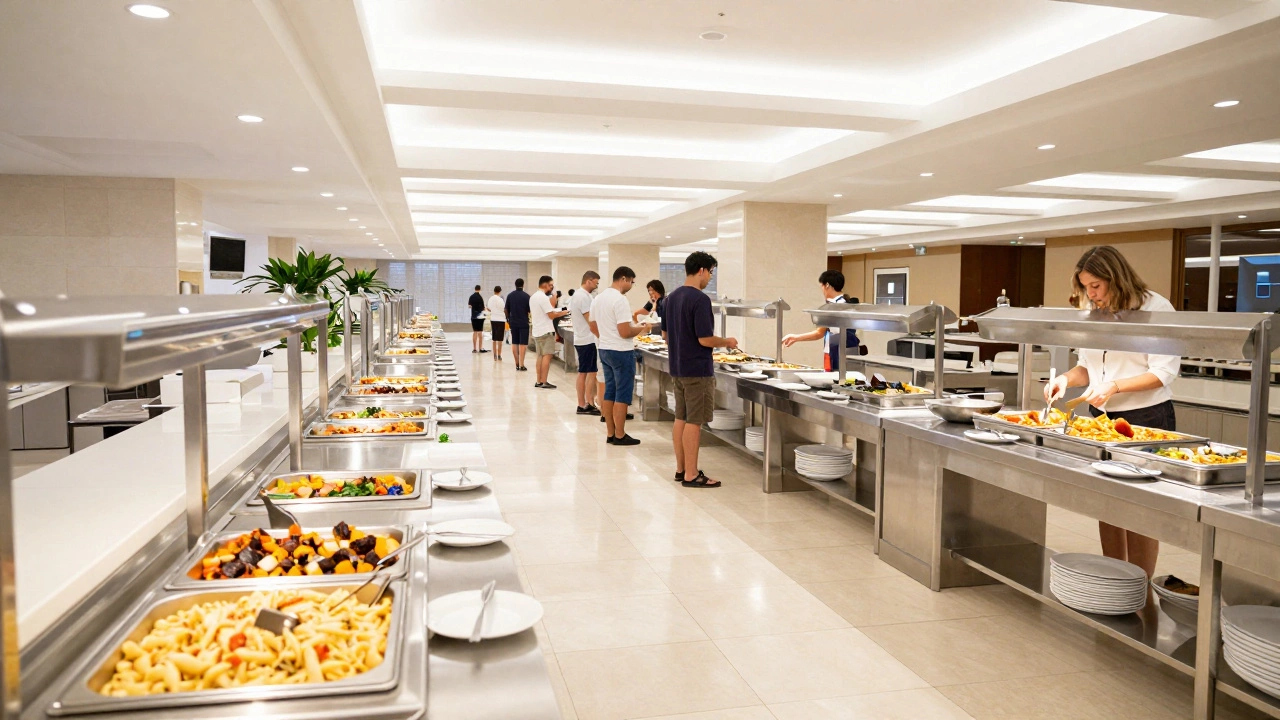
The biggest hit you take with an all-inclusive deal is usually on your plate. To keep costs low and profit margins high, resorts rely on volume. This means Buffet is a self-service style of dining where a variety of dishes are laid out on a table for guests to serve themselves. When a hotel has to feed 500 people three times a day, the food often becomes generic. You'll find plenty of pasta and grilled vegetables, but rarely anything that tastes like it was made with care.
It isn't just the food. The drinks follow a similar pattern. While the menu might list a wide variety of cocktails, the House Wine and spirits are typically the cheapest possible options. If you want a premium brand of scotch or a specific vintage of wine, you'll find yourself paying an extra "premium" fee that can quickly erase the perceived savings of the package. You end up paying for the idea of unlimited drinks, while actually consuming low-grade alternatives.
The Resort Bubble and Cultural Isolation
Ever notice how some hotels feel like a gated community? That's the "Resort Bubble." When your room, meals, and entertainment are all inside one fence, there is zero incentive to leave. This creates a psychological barrier. Why risk finding a taxi or navigating a foreign language when there's a swim-up bar and a scheduled volleyball game at 2 PM?
The problem is that the most rewarding part of travel is often the unexpected: the tiny family-run bistro in a side alley, the local market where you can't speak the language but find the perfect souvenir, or a conversation with a resident. By staying inside a Resort, you are essentially visiting a sanitized version of a country. You aren't experiencing Cultural Immersion; you're experiencing a corporate interpretation of it. You might be in Mexico, Jamaica, or Turkey, but the atmosphere feels like a generic American suburb with better weather.
| Feature | All-Inclusive Package | A La Carte (DIY) |
|---|---|---|
| Budgeting | Predictable, paid upfront | Variable, paid as you go |
| Food Quality | Mass-produced, consistent | Authentic, high variety |
| Exploration | Low incentive to leave | High incentive to explore |
| Value | Pays for unused amenities | Pay only for what you use |
| Stress Level | Low (no math during trip) | Moderate (managing expenses) |
Paying for Things You'll Never Use
Think about the math of an all-inclusive price. The hotel isn't gambling; they've calculated exactly how much the average person eats and drinks. Many guests never use the gym, don't care for the "nightly entertainment," and might only drink one coffee a day. Yet, you are paying for the person who drinks ten cocktails and eats five plates of shrimp at every meal.
You are essentially subsidizing the heaviest users of the resort. If you're a light eater or someone who prefers spending their days hiking or reading on a beach rather than hitting the open bar, you're paying a premium for services that provide you zero value. In a standard hotel booking, you'd simply pay for your room and buy a sandwich when you're actually hungry. Here, the Fixed Price model means you're donating money to the hotel's bottom line for amenities you've ignored.
The Crowd Factor and Lack of Privacy
All-inclusive resorts are designed for maximum capacity. Because the goal is to get as many people as possible into the "system," the communal areas are often packed. Have you ever spent your morning hunting for a lounge chair? It's a common sight: guests throwing towels on chairs at 6 AM just to secure a spot. This creates a competitive, stressful environment that is the opposite of a relaxing vacation.
The dining experience is similar. The buffet is often a chaotic scene of long lines and loud crowds. While some resorts offer A La Carte Restaurants as part of the package, these usually require reservations days in advance or have extremely limited menus. You trade the intimacy of a quiet dinner for the efficiency of a cafeteria.

The Hidden Costs of "Free"
The word "all-inclusive" is often a marketing trick. When you arrive, you'll quickly find a list of things that aren't actually included. Want a massage at the Spa? That's extra. Want a motorized water sport like jet skiing? Extra. Want a bottle of champagne in your room for an anniversary? Definitely extra.
Because you've already paid a large sum upfront, you might feel more inclined to spend on these add-ons, leading to "spending creep." Furthermore, the resort knows you're a captive audience. Since you're unlikely to leave the property, they can charge inflated prices for these extra services, knowing there's no local competition to keep them honest.
How to Decide if the Disadvantages are Worth It
Whether these downsides are a deal-breaker depends on your personality. If you are traveling with a large group of children who eat everything in sight and you just want to stop thinking about money, the convenience might outweigh the lack of authenticity. But if you value food, culture, and quiet, the all-inclusive model is a trap.
Consider a middle-ground approach: book a hotel with a great breakfast included, but keep your dinners and lunches open. This allows you to support local businesses and eat food that actually tastes like the region you're visiting, while still having a predictable start to your day. If you find yourself dreading the idea of a buffet line, it's a sign that you should skip the package and go for a more flexible arrangement.
Are all-inclusive resorts always more expensive?
Not necessarily. For heavy drinkers or families with teenagers, they can be cheaper than paying for every single item. However, for solo travelers or light eaters, they are almost always more expensive than booking a standard room and eating locally.
Is the food really that bad at all-inclusive hotels?
It varies. High-end luxury resorts often have excellent food. However, mid-range packages usually rely on bulk cooking, which leads to bland flavors and repetitive menus. The quality is generally lower than what you'd find at a local restaurant of the same price point.
Do I have to stay on the property if I pay for all-inclusive?
You can leave, but you'll be paying for meals and drinks twice. Many people feel a "guilt' pressure to stay on-site to get their money's worth, which is exactly why these resorts are designed to keep you inside the bubble.
What are the biggest hidden costs in these packages?
The most common hidden costs are premium alcohol, spa treatments, airport transfers, and excursions. Always check the "fine print" to see exactly what is included before you book.
How can I avoid the 'resort bubble' while staying at one?
Make a conscious effort to eat at least one meal a day off-property. Hire a local guide for a half-day tour rather than using the resort's corporate excursion desk, and explore the town center on foot.