Energy Efficiency Calculator
Calculate Your Home's Energy Savings
Why Passive Houses Save So Much Energy
Less energy usage
Heat recovery
R-value of straw bale walls
When you think of an environmentally friendly home, you might picture solar panels on the roof or a garden full of native plants. But those are just the surface. The real question isn’t what you add to a house-it’s what the house is made of, how it’s built, and how it lives in its environment. The most environmentally friendly type of home isn’t just one style-it’s a combination of smart design, natural materials, and low-impact living. And in practice, that means one thing more than any other: a passive house.
Why Passive Houses Lead the Way
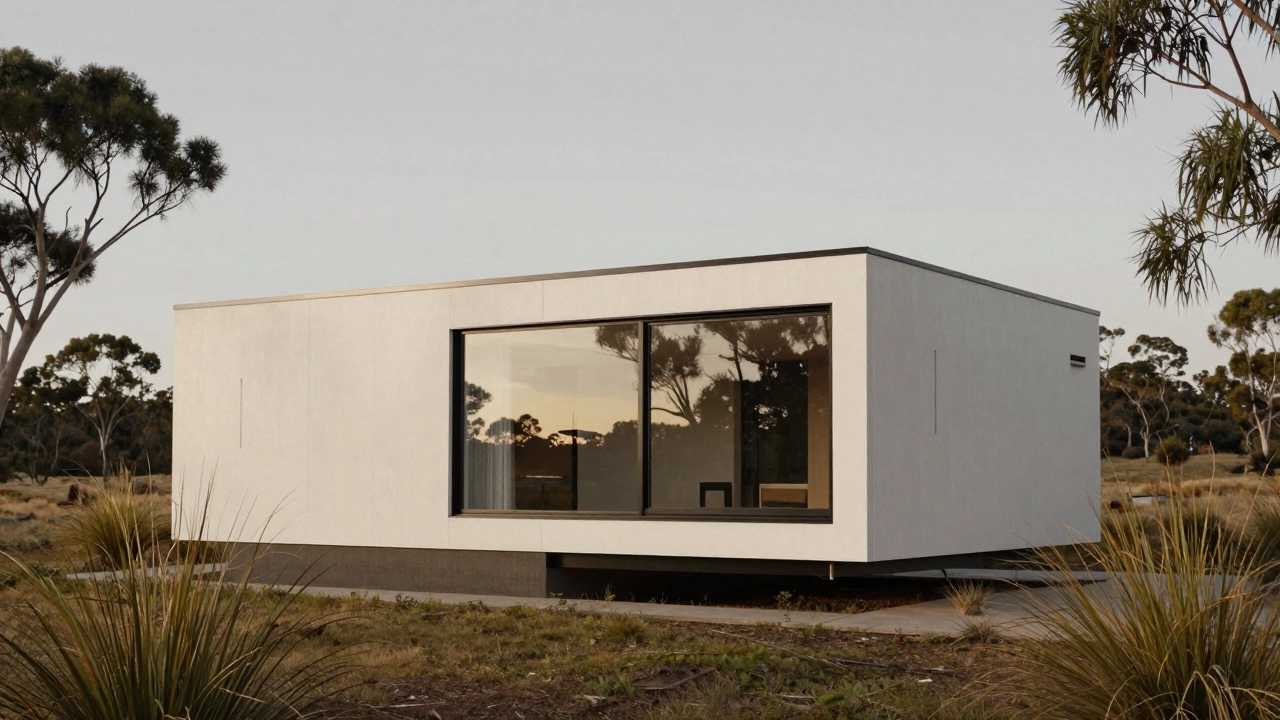
A passive house isn’t fancy. It doesn’t need solar panels to be green-it’s designed to barely need heating or cooling at all. Built to the Passive House Standard, these homes use ultra-thick insulation, airtight construction, and high-performance windows to keep indoor temperatures stable year-round. In Adelaide, where summers can hit 40°C and winters dip below 5°C, a passive house stays comfortable without running the heater or air conditioner for more than a few hours a month.The energy savings are real. A typical Australian home uses around 8,000 kWh of electricity per year. A certified passive house uses less than 1,500 kWh. That’s 80% less. And it’s not magic-it’s physics. The building envelope acts like a thermos. Heat stays in during winter. Heat stays out during summer. No fans. No ducts. No energy waste.
These homes also use mechanical ventilation with heat recovery (MVHR). That means fresh air comes in, stale air goes out, and 90% of the heat from the outgoing air is captured and reused. You get clean air without losing warmth. It’s the kind of detail most builders ignore, but it’s what makes passive houses truly sustainable.
Straw Bale Homes: The Forgotten Green Hero
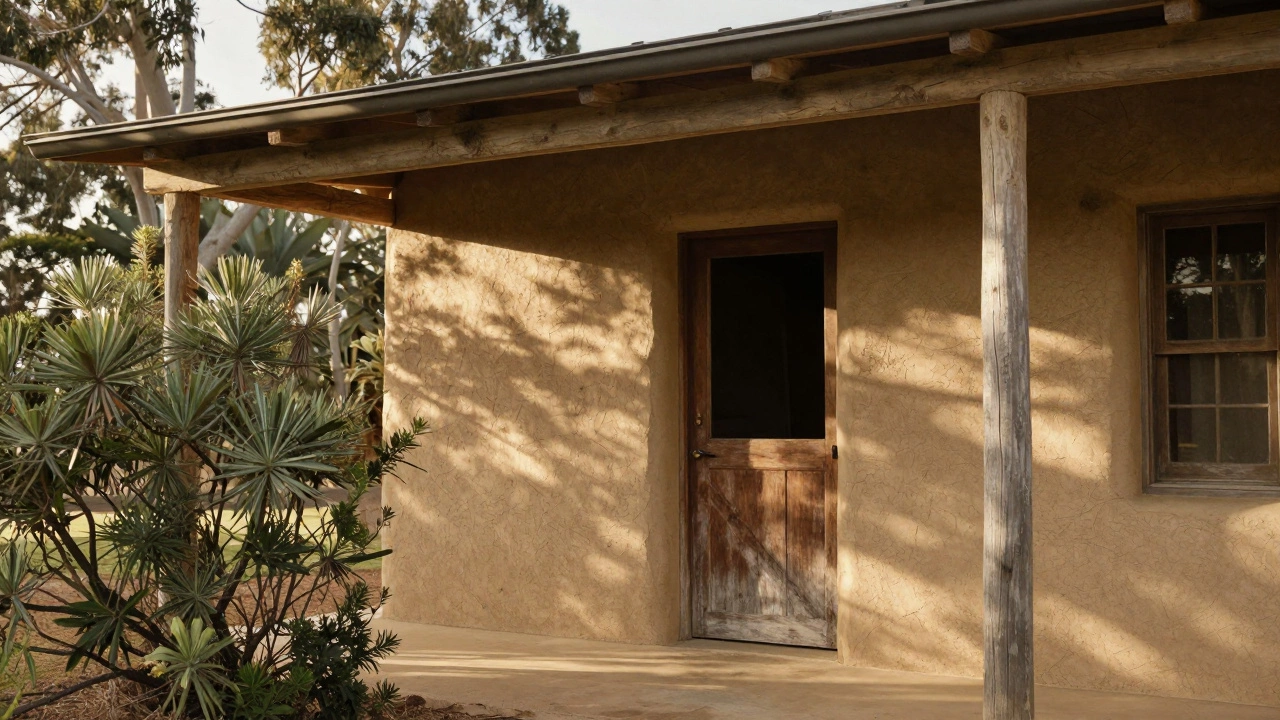
If you want something even more rooted in nature, look at straw bale homes. These aren’t barns or temporary shelters-they’re solid, code-compliant houses built with compressed agricultural waste. Straw is a byproduct of grain farming. Instead of burning it (which releases CO2), builders stack it like bricks, plaster it with clay or lime, and end up with walls that are thicker than standard stud walls.Straw bale walls have an R-value of around R-40 to R-50. That’s more than double the insulation of a typical Australian home. They’re also carbon-negative. Growing the straw pulls CO2 from the air. The bales store it. Even after the house is built, it keeps locking away carbon for decades.
They’re not perfect. Straw needs to stay dry. That means good foundations, wide overhangs, and breathable plasters. But in places like the Adelaide Hills, where humidity is low and rainfall is moderate, they thrive. There are working straw bale homes in South Australia that have stood for over 20 years without a single pest or rot issue.
Earthships: Off-Grid Living Made Real
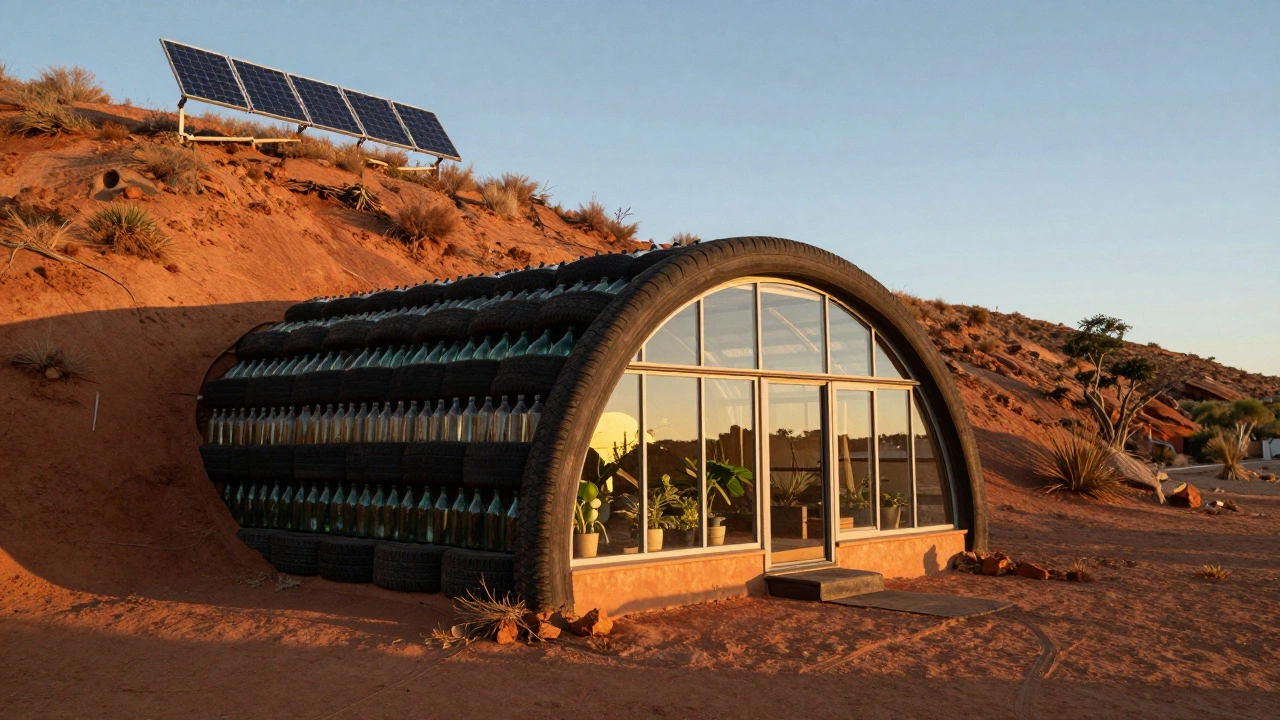
Then there’s the Earthship. These homes are built from recycled tires packed with earth, glass bottles, and reclaimed wood. The walls are thick, dark, and thermal-so they absorb heat during the day and release it slowly at night. Roofs are angled to catch rainwater, which is filtered and reused for flushing toilets, washing, and even drinking. Solar panels power everything. Greywater from sinks flows through indoor planters that clean it naturally before it soaks into the ground.Earthships don’t connect to the grid. They don’t use municipal water. They don’t need sewage systems. In remote areas, where bringing in power and water costs thousands, they’re not just eco-friendly-they’re the only practical option. One in the Northern Territory has been lived in full-time for 15 years by a family of four. No bills. No external inputs. Just sunlight, rain, and recycled materials.
They’re not for everyone. Building one takes time, skill, and patience. But they prove that homes don’t need modern infrastructure to be comfortable. They just need smart design.
Why Not Timber Frame or Modular Homes?
Timber frame homes get a lot of attention because wood is renewable. And it is-but not all timber is equal. A house built with certified FSC wood from sustainably managed forests is great. But if that wood came from a rainforest cleared last year? Not so much.Modular homes are efficient because they’re built in factories with less waste. That’s true. But if the modules are shipped across the country on diesel trucks, and the insulation is made from petroleum-based foam, you’re trading one kind of impact for another. The real win isn’t in how it’s built-it’s in what it’s made of and how it performs over time.
That’s why passive houses, straw bale homes, and Earthships win. They don’t just reduce emissions-they reverse them. They use waste as a resource. They capture energy instead of consuming it. They don’t just survive the climate-they adapt to it.
What About Solar Panels and Rainwater Tanks?
Solar panels and rainwater tanks are great additions. But they’re not the foundation of an eco-friendly home. Think of them like shoes. You can wear nice shoes on a dirty floor, but the floor still gets dirty. The real clean floor is the house itself.A house that leaks heat in winter and lets in heat in summer will need bigger solar panels just to keep up. A house that uses 500 kWh a year needs a 2kW solar system. A house that uses 8,000 kWh needs a 10kW system. That’s five times more panels. Five times more materials. Five times more energy used to make them.
The same goes for rainwater. A leaky, uninsulated house needs more water for cooling, cleaning, and even humidifying air. A well-designed home uses less water because it doesn’t waste energy-and energy and water are tied together. Generating electricity uses water. Pumping water uses electricity.
What’s the Best Choice for You?
If you’re building from scratch in a rural area with access to local straw or reclaimed materials, a straw bale home is hard to beat. It’s affordable, sustainable, and deeply connected to the land.If you’re in a city or want something more modern-looking with fewer construction quirks, a certified passive house is the way to go. It’s predictable, meets strict energy codes, and can be built with conventional tradespeople once they’re trained.
If you’re off-grid, remote, or want total independence from utilities, an Earthship-style home gives you freedom no other design can match.
There’s no single ‘best’ home. But there is a best approach: design for energy efficiency first. Then add renewables. Then add comfort. Never the other way around.
Real-World Examples in Australia
In Victoria, the Green House in Daylesford is a certified passive house built with locally sourced timber and clay plaster. It uses 85% less energy than a standard home. In New South Wales, a straw bale home in Bowral has been featured in national magazines for its zero-energy performance. And in Western Australia, a family lives full-time in an Earthship they built themselves using 800 recycled tires and 2,000 glass bottles.These aren’t experiments. They’re homes. People live in them. Kids grow up in them. They pay no power bills. They don’t need to worry about blackouts. And they’re not expensive to maintain.
Common Myths Debunked
Myth: Green homes cost more. A passive house costs about 5-10% more upfront. But the savings on energy bills pay that back in 5-7 years. After that, you’re saving $1,000-$2,000 a year. Myth: They look weird. Passive houses look like modern homes. Straw bale homes can be finished with stucco and look like traditional cottages. Earthships look like earth mounds with glass fronts. They’re not sci-fi-they’re just built differently. Myth: You can’t get a mortgage for them. Banks in Australia now have green home loan products with lower interest rates for certified passive houses and energy-efficient builds. Some even offer higher loan-to-value ratios.Where to Start
If you’re thinking of building or buying a green home:- Look for a builder certified in Passive House standards (PHI or PHIUS)
- Ask for energy modeling reports before you sign anything
- Check if the insulation is made from recycled content or natural materials (cellulose, wool, cork)
- Avoid homes with vinyl windows or foam insulation made from petrochemicals
- Ask about ventilation-no home is healthy without fresh air
The most environmentally friendly home isn’t the one with the most gadgets. It’s the one that asks the least from the planet. It’s the one that fits into its place, not against it. And that’s not just a trend. It’s the only way homes will survive the next 50 years.