Cottage Cost Calculator
Cost Estimate
Estimated Cost
Base construction:
Solar:
Rainwater:
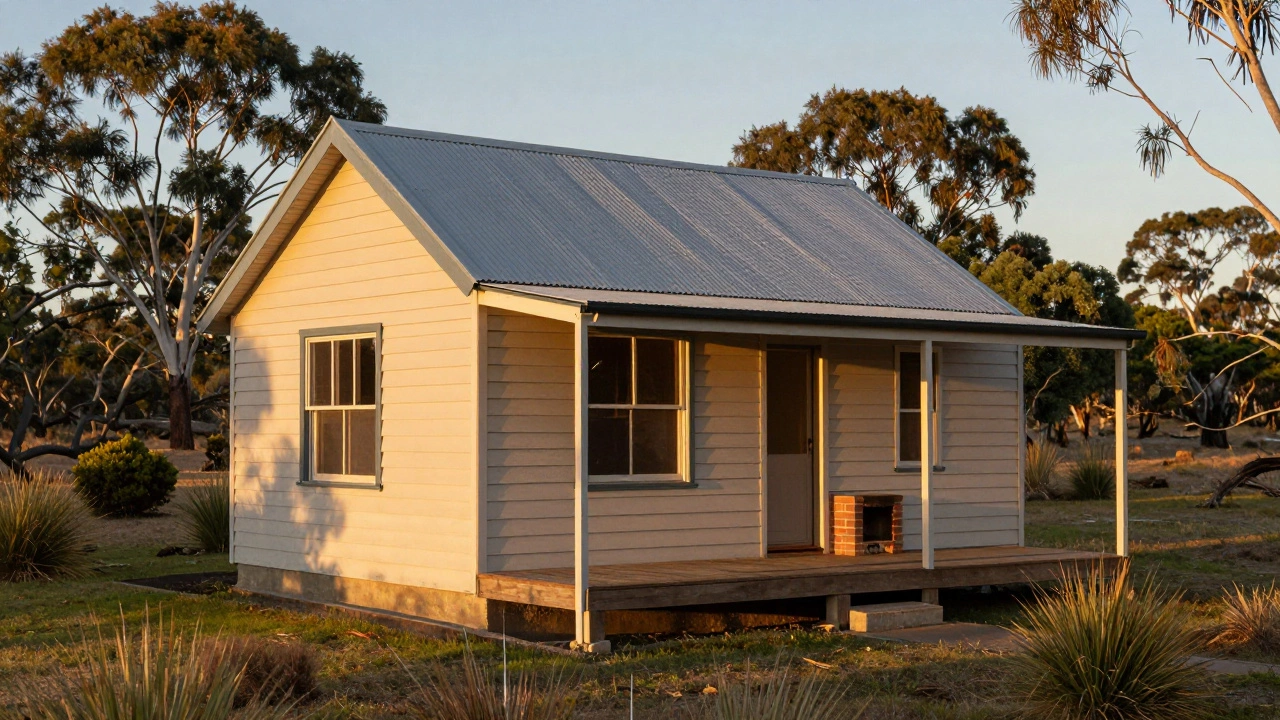
Building a home doesn’t have to cost a fortune. If you’re looking to cut costs without sacrificing comfort or sustainability, the cheapest style of house to build right now is a simple cottage - especially one built with local, natural materials and a compact footprint. In Australia, where land prices are rising and building regulations are tightening, this old-school design is making a comeback for all the right reasons.
Why Simple Cottages Are the Most Affordable
Most people assume that bigger homes are more cost-effective per square meter. That’s not true. The truth? Smaller, simpler designs cost far less to build - and they’re easier to maintain. A basic cottage, typically under 60 square meters, uses fewer materials, less labor, and requires no complex systems. No vaulted ceilings. No custom windows. No multi-level layouts. Just a single floor, a pitched roof, and four walls.
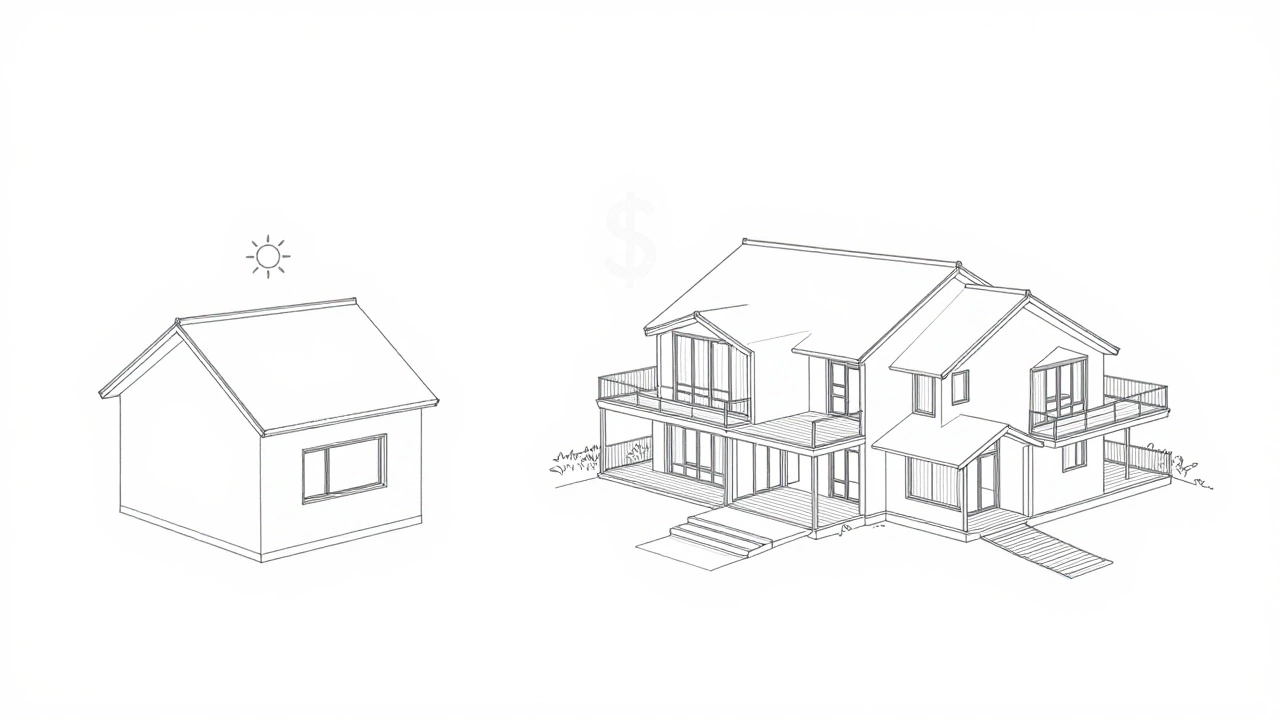
Compare that to a modern two-story home with open-plan living, engineered beams, and smart-home wiring. That kind of house can cost $3,000-$4,500 per square meter in South Australia. A well-built cottage? You can do it for $1,800-$2,400 per square meter, even with insulation and solar panels included.
The key is simplicity. Fewer corners mean less framing. Fewer materials mean less waste. Fewer trades needed means lower labor costs. One builder in the Adelaide Hills built a 50m² cottage for $89,000 all-in - including foundations, plumbing, electrical, and a small deck. That’s less than half the cost of a standard 100m² home in the same area.
Materials That Keep Costs Low
What you build with matters more than what you build. The cheapest cottages use locally sourced, low-tech materials that don’t need special handling or skilled labor.
- Timber framing - untreated pine or locally grown hardwoods are cheaper than steel or concrete blocks. In South Australia, kiln-dried pine is widely available and easy to work with.
- Cladding - weatherboard or corrugated metal (Colorbond) costs less than brick veneer and lasts just as long with basic maintenance.
- Roofing - a simple gable roof with metal sheets is the most affordable option. It sheds rain well, doesn’t need complex underlay, and can be installed by one crew in a day.
- Flooring - polished concrete or treated timber boards beat tiles or engineered wood. Concrete doesn’t need grout, underfloor heating, or special adhesives.
One builder in the Riverland used recycled bricks from a demolished barn for the fireplace and foundation edges. It saved $3,200 and gave the cottage character. You don’t need new materials to build something beautiful.
Eco-Friendly Doesn’t Mean Expensive
People think "eco-friendly" means solar panels, rainwater tanks, and composting toilets. Those help - but they’re not the cheapest path. The real greenest, cheapest move is to build small and build smart.
A 40m² cottage with double-glazed windows, 100mm wall insulation, and passive solar orientation (north-facing windows, overhangs for summer shade) can stay comfortable year-round without heating or cooling. That’s not luxury. That’s basic design.
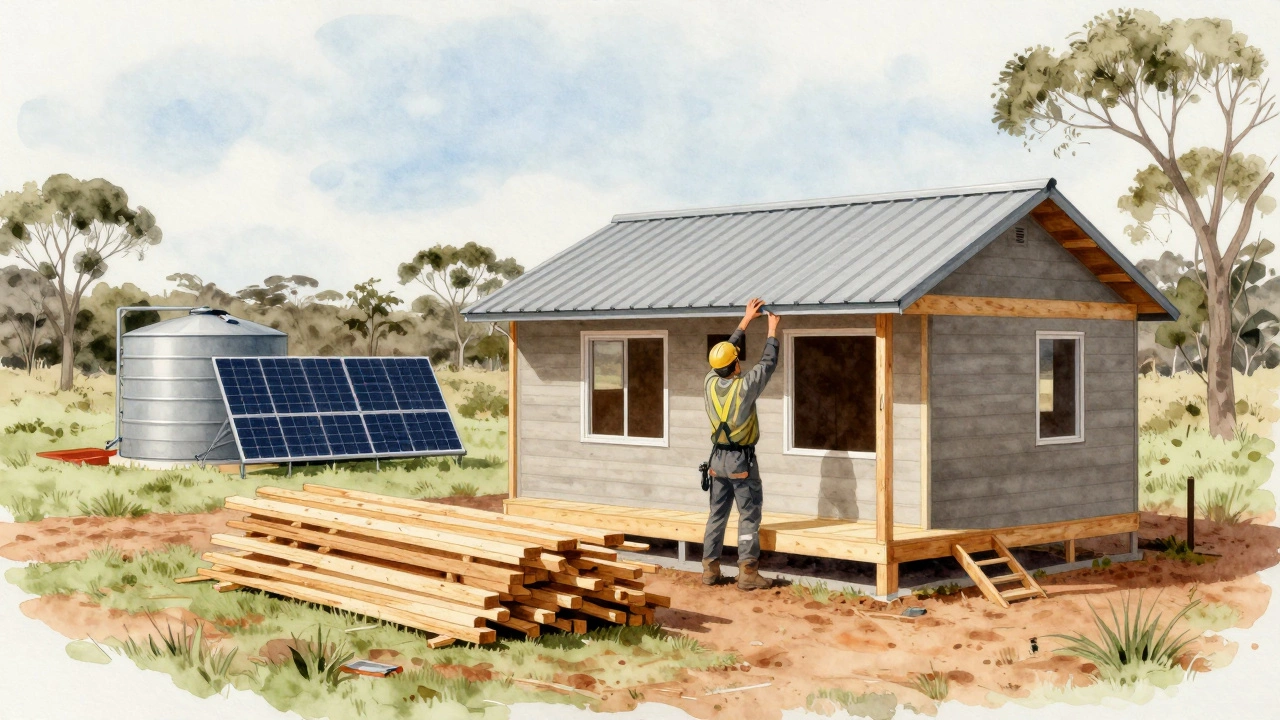
Adding a 1.5kW solar system costs about $3,000. A 5,000L rainwater tank runs $1,200. Both pay for themselves in under five years in Adelaide, where electricity prices hit 42c/kWh in 2025. You don’t need a full off-grid setup. Just enough to reduce bills.
Compare that to a 150m² home with the same features. It’ll cost twice as much to build - and twice as much to run. The cottage wins on cost, comfort, and carbon.
What to Avoid When Building Cheap
Not all "budget" homes are truly affordable. Some designs look cheap but end up costing more because of hidden problems.
- Shipping containers - they sound cheap, but cutting openings, insulating, and reinforcing them adds labor and materials. Most end up costing more than timber frame.
- Modular homes - factory-built units seem like a deal, but transport fees, crane lifts, and site prep can add $15,000-$25,000 to the price tag.
- Open-plan layouts - more space means more materials, more heating/cooling, and more wiring. A closed-off kitchen and bedroom cut costs fast.
- Custom finishes - quartz countertops, designer taps, and branded fixtures add up. Stick to standard fittings from Bunnings or local suppliers.
One couple in Mount Barker tried to build a "modern tiny home" with sliding glass walls and a floating staircase. They spent $140,000 and still didn’t get a permit because the design didn’t meet bushfire zone regulations. A simple cottage with a verandah would’ve cost $70,000 and passed easily.
Real Examples from Australia
Here’s what’s actually being built right now - not in the cities, but in regional towns where people are choosing affordability over flash.
- Clare Valley, SA - a 45m² cottage with timber frame, metal roof, and brick fireplace built for $82,000. No basement. No garage. Just a bedroom, kitchen, bathroom, and living area. Owner pays $18/month in electricity.
- Yorke Peninsula - a 55m² eco-cottage built with recycled timber and straw-bale insulation. Cost: $95,000. Includes solar, rainwater, and composting toilet. Built over 10 months by the owners and a local builder.
- Mount Gambier - a 60m² cottage with concrete slab, Colorbond walls, and a single heat pump. Total cost: $98,000. Built in 12 weeks. No mortgage. Owner works remotely.
These aren’t luxury homes. They’re functional, warm, and quiet. They don’t need a gardener. They don’t need a cleaner. They just need to be lived in.
How to Start Your Own Cottage Project
If you’re ready to build something simple and affordable, here’s how to begin:
- Decide on size - aim for 40-60m². More space = more cost.
- Choose a simple shape - rectangle or square. Avoid L-shapes or curves.
- Use local materials - ask builders what’s cheapest in your region.
- Design for passive solar - north-facing windows, overhangs, thermal mass (like a concrete floor).
- Get pre-approved - check your council’s guidelines for small dwellings. Many allow cottages under 60m² without full development approval.
- Build in stages - start with the core (bedroom, kitchen, bathroom). Add a verandah or shed later.
You don’t need an architect. A good builder with experience in small homes can draw up plans for under $1,500. Many use free templates from the Small Homes Service - a government-backed program that gives free, council-approved designs for cottages under 70m².
Final Thought: It’s Not About Size - It’s About Smarts
The least expensive house to build isn’t the tiniest. It’s the smartest. A well-designed cottage that fits your life, uses local materials, and works with the climate will always beat a big, flashy home that drains your bank account.
In 2025, with interest rates still high and building costs stubborn, the cottage isn’t a retreat - it’s a smart response. You don’t need to live like a hermit to save money. You just need to stop trying to impress your neighbors.
Is it legal to build a small cottage on my land in Australia?
Yes, in most areas. Many councils allow small dwellings under 60m² as "secondary dwellings" or "granny flats" without full development approval - as long as they meet setback, height, and fire safety rules. Check with your local council, but places like Adelaide, Murray Bridge, and Mount Gambier have clear guidelines for simple cottages.
Can I build a cottage myself to save money?
You can do some of the work yourself - painting, landscaping, installing fixtures - but structural work like framing, plumbing, and electrical must be done by licensed tradespeople. In South Australia, you need a builder’s license to pull permits for any dwelling over 10m². But you can hire a builder to supervise while you help with labor. That cuts costs by 20-30%.
Do eco-friendly cottages cost more to build?
Not if you focus on passive design. Insulation, solar orientation, and natural ventilation cost almost nothing to include during construction. Solar panels and rainwater tanks add upfront cost, but they pay for themselves in under five years in most parts of Australia. The real savings come from building small - not from buying green tech.
What’s the cheapest foundation for a cottage?
A concrete slab is the most affordable and reliable option for most Australian soils. Pier-and-beam foundations cost more and aren’t needed unless you’re on a steep slope. In flat areas, a 100mm slab with steel mesh and proper drainage costs about $15,000 for a 50m² cottage - less than half the price of a basement or raised floor.
How long does it take to build a simple cottage?
With a good builder and no delays, a 50m² cottage can be built in 8-12 weeks. Weather and material delivery can add time. If you’re doing some of the work yourself, it might take 4-6 months. But the result is a home you helped create - and one that won’t break your budget.