Airport Hotel Time Savings Calculator
How much time and money can you save?
Calculate your potential savings by comparing airport hotel stays with alternative travel options during delays, early flights, or long layovers.
Your Savings
Time saved: 0 minutes
Money saved: $0.00
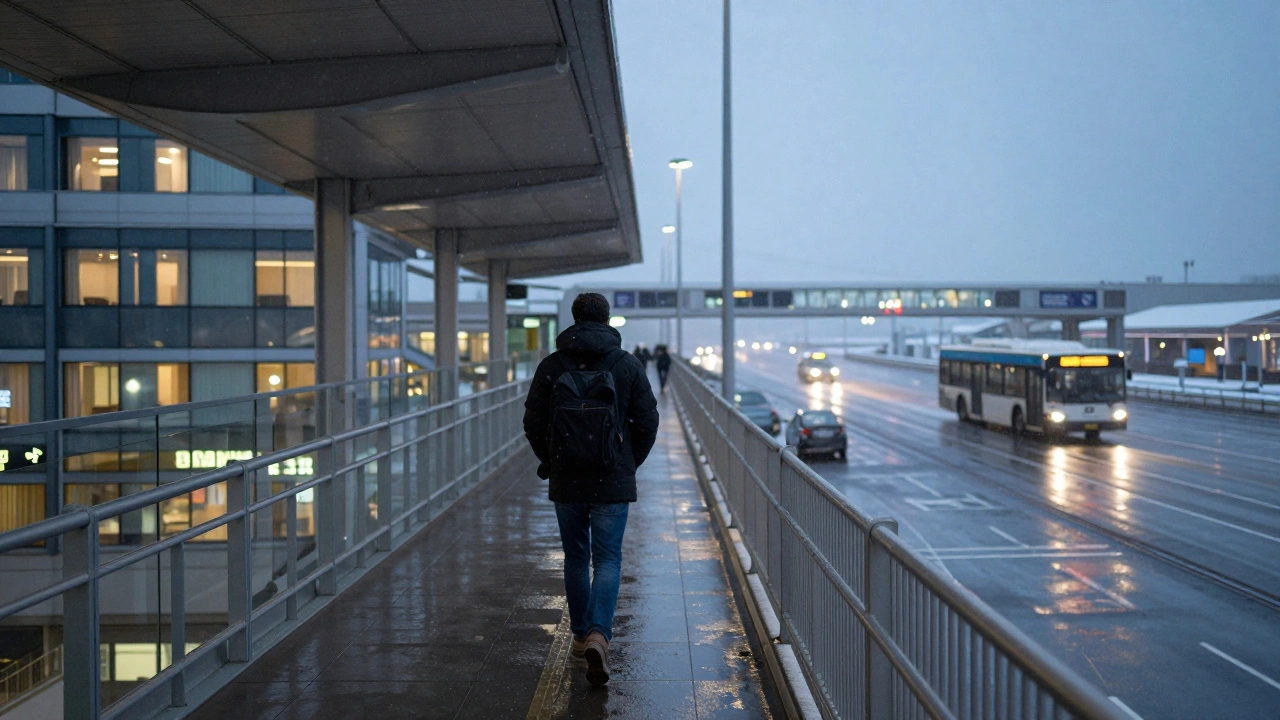
Have you ever looked at an airport hotel and wondered why it’s there? Not just any hotel, but one that’s literally connected to the terminal by a skybridge, has shuttle buses running every 10 minutes, and charges $200 a night for a room that looks like a business center with a bed? It’s not because someone thought it’d be cute. It’s because airports and travelers have a very specific, often stressful, relationship-and airport hotels exist to fix a problem no one talks about: time.
Travelers Don’t Control Time, But Airports Do
Think about the last time you had a red-eye flight or a 4 a.m. departure. You didn’t choose to wake up at 3 a.m. You didn’t choose to drive through empty streets at that hour. You chose to fly at 4 a.m. because it was the cheapest option, or the only one that fit your schedule. But here’s the thing: airports operate on rigid timetables. Planes don’t wait. Security lines don’t pause. Baggage handlers don’t take coffee breaks because you overslept.
That’s where airport hotels come in. They’re not luxury add-ons. They’re time buffers. A hotel right next to the terminal lets you sleep through your alarm, skip the 45-minute drive, avoid traffic accidents in the dark, and still make your flight without panic. It’s not about comfort-it’s about reliability. Airlines and airports know this. That’s why they partner with hotel chains to build these places. They reduce missed flights, which saves them money on rebooking, lost baggage, and customer complaints.
It’s Not Just for Early Flights
Most people assume airport hotels are only for people with early departures. But that’s only half the story. Think about what happens when your flight gets delayed. Say you’re in Chicago, flying to Sydney with a 12-hour layover. Your connecting flight gets pushed back 8 hours. Now you’re stuck in the terminal at 2 a.m. with no seats left, no working outlets, and a crying baby next to you. The nearest city hotel is 20 miles away. You could take a taxi, but it’ll cost $80 and take 30 minutes in traffic. Or you could walk 5 minutes to the airport hotel and pay $90 for a room with a shower, a bed, and silence.
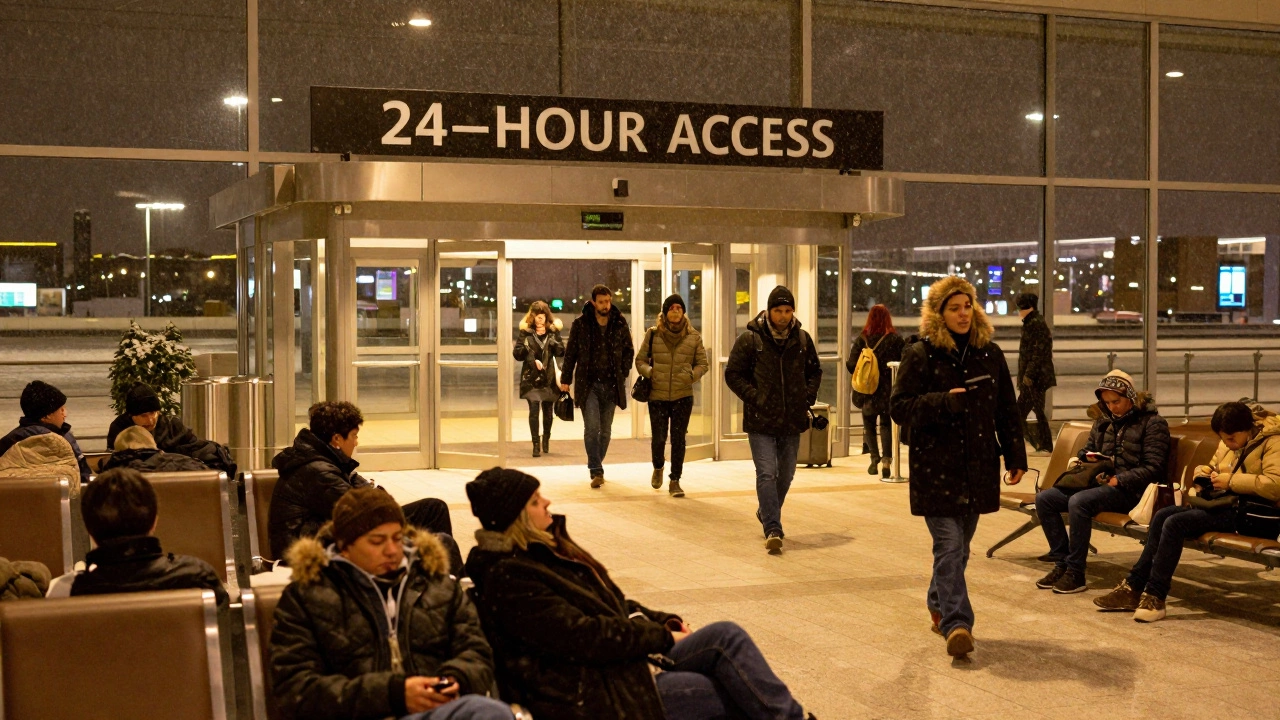
That’s not a luxury. That’s survival. Airlines don’t offer sleep pods in every terminal. Cities don’t run 24-hour public transit to every airport. Airport hotels fill the gap. They’re the only place that’s guaranteed to be open, accessible, and safe-even at 3 a.m. on a snowstorm night.
Business Travelers Don’t Have Time to Waste
Let’s talk about the people who use airport hotels the most: business travelers. They’re not on vacation. They’re on a clock. They have meetings at 8 a.m. in London, a conference call at 10 p.m. in Tokyo, and a flight home at 6 a.m. the next day. They can’t afford to check into a downtown hotel, deal with check-in lines, or risk missing their next flight because of a traffic jam.
A hotel next to the terminal means they can walk from their flight to their room, nap for three hours, shower, and be back at the gate before their next boarding call. No Uber. No parking. No waiting. That’s why companies like IBM, Deloitte, and Siemens have corporate accounts with airport hotel chains. They don’t care if the minibar is overpriced. They care if their employees show up on time, rested, and ready to work.
Transit Passengers Need More Than a Bench
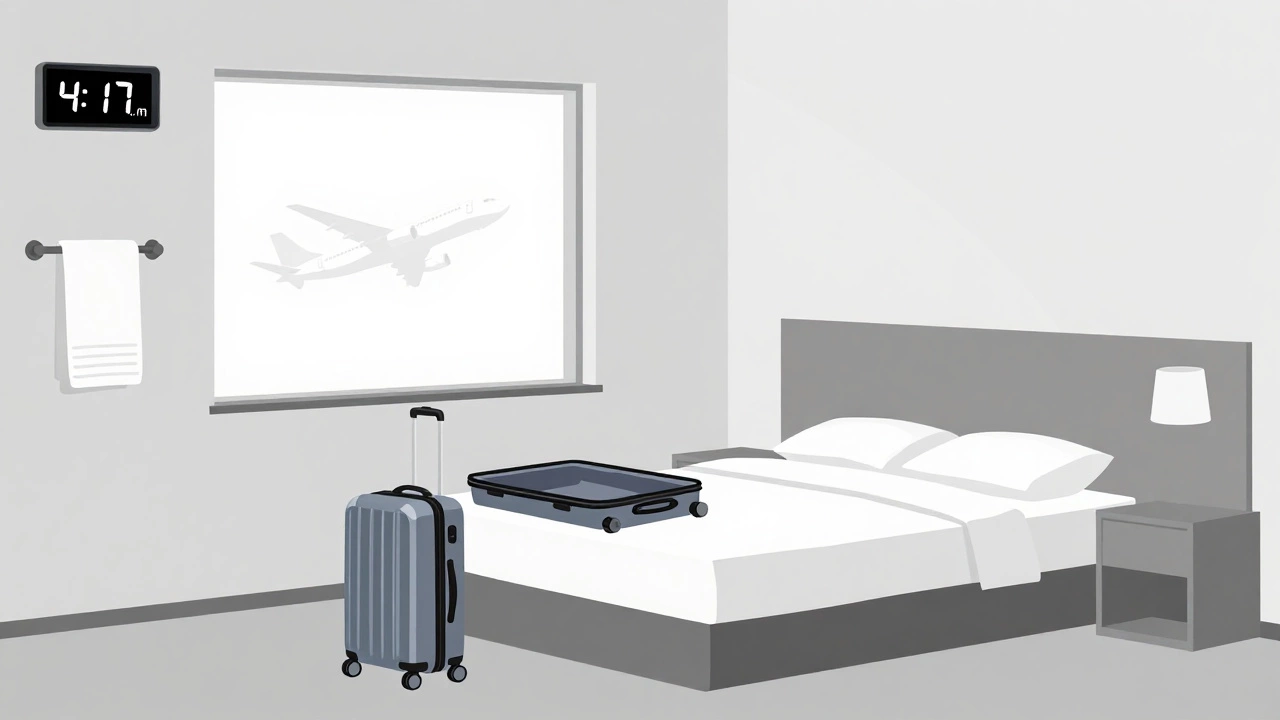
Some airports handle over 100,000 passengers a day. Not all of them are flying out. Some are connecting. Think about someone flying from Jakarta to Toronto with a 14-hour stop in Frankfurt. They don’t have a visa to leave the airport. They can’t go into the city. They’re stuck in a sterile, fluorescent-lit zone with no place to lie down. The airport has benches. But benches don’t have pillows. Or locks. Or showers.
That’s where the airport hotel becomes essential. For transit passengers, it’s not about sleeping-it’s about dignity. It’s about having a private space to change clothes, wash your face, and rest without being stared at by strangers or woken up by airport announcements. Some hotels even offer day-use rooms for $50, where you can book just a few hours to sleep, shower, and reset. These aren’t for tourists. They’re for people who have no other option.
Weather, Strikes, and Chaos Don’t Care About Your Plans
Let’s say you’re flying out of Atlanta in January. A snowstorm hits. Every flight is canceled. You’re stuck. The airport has 10,000 people in the concourse. No one knows when they’ll fly. The airline gives out vouchers for food. But no one gives you a place to sleep.
That’s when the airport hotel becomes a lifeline. Hotels near terminals have emergency protocols. They keep extra staff on call. They open up rooms for stranded passengers. They don’t turn people away because they don’t have a reservation. They know this happens. They plan for it. In 2024, over 220,000 travelers spent the night in airport hotels because of weather or operational disruptions-according to data from the International Air Transport Association (IATA). That’s not a fluke. It’s standard.
They’re Built to Be Fast, Not Fancy
Ever notice how airport hotels look the same? Same furniture. Same lighting. Same bland decor? That’s not an accident. They’re designed for speed, not aesthetics. Check-in is often automated. Key cards are handed out at kiosks. Rooms are cleaned in 15 minutes. No minibars. No room service. No bells or whistles. Why? Because the goal isn’t to impress you. It’s to get you in, rest, and out-before your flight.
The average stay at an airport hotel is 6.2 hours. That’s less than a full night. Most guests don’t even turn on the TV. They just want a bed, a shower, and silence. That’s why chains like Hilton Garden Inn, Holiday Inn Express, and Moxy have entire lines built for airports. They strip away everything that slows things down. No concierge. No gym. No pool. Just what’s necessary.
It’s a System Built on Predictable Pain
Airport hotels exist because travel is broken. Not in a dramatic way. Not in a “planes crash” kind of way. But in a thousand tiny ways: the 3 a.m. drive, the missed connection, the 12-hour layover, the snowstorm, the visa restriction. Airlines, airports, and governments know this. They don’t fix the system. They build around it.
Think of an airport hotel like a tire patch. It doesn’t stop the leak. But it keeps you from getting stranded. It’s not glamorous. It’s not exciting. But if you’ve ever been stuck in an airport at 2 a.m. with no place to go-you know how vital it is.
Next time you see one, don’t think of it as overpriced. Think of it as a quiet solution to a loud problem. A place that says: “I know you’re tired. I know you’re stressed. I’m here to let you breathe.”
Are airport hotels worth the cost?
Yes-if you value time, sleep, and peace of mind. A $150 room might seem steep, but compare it to the cost of missing a flight, paying for a last-minute taxi at 3 a.m., or losing a full day of business travel. For travelers who need to be on time, the price isn’t just reasonable-it’s a bargain.
Can you stay in an airport hotel without flying?
Absolutely. Many airport hotels welcome non-travelers. Some even offer day-use rooms for people who need a quiet place to work, nap, or wait for a ride. You don’t need a boarding pass. You just need a credit card and a willingness to pay.
Why are airport hotels so noisy?
Because they’re built next to runways. Planes take off and land every few minutes, day and night. Even with soundproofing, the vibration and low-frequency noise get through. Some hotels offer rooms on higher floors or away from the runway side-but they’re usually booked first. If you’re sensitive to noise, request a room facing away from the tarmac when you check in.
Do airport hotels have better security than regular hotels?
Yes. Since they’re attached to or located on airport property, they often share security systems with the terminal. That means 24/7 surveillance, controlled access, and staff trained to handle travel-related emergencies. You’re less likely to see a stranger wandering the halls than in a downtown hotel.
Are airport hotels safe for solo travelers?
They’re often safer than staying in unfamiliar city centers at odd hours. Most airport hotels have controlled entry points, well-lit walkways, and staff who recognize travelers. They’re designed for people who are tired, disoriented, or alone. If you’re flying solo and need a place to rest, an airport hotel is one of the most reliable options available.
What’s the difference between an airport hotel and a transit hotel?
An airport hotel is usually open to the public and located near the terminal. A transit hotel is often inside the secure area of the airport and only accessible to passengers with connecting flights. Transit hotels don’t require a visa or passport check-they’re designed for international travelers who can’t leave the airport. Think of them as a capsule hotel inside the terminal.