All-Inclusive Drink Policy Calculator
What Drinks Are Included?
Find out what alcoholic beverages are typically included at your resort based on your price point and type.
Your Expected Inclusions
Select your resort type and price range to see results.
When you book an all-inclusive resort, you expect to relax without worrying about extra charges. But one question always comes up: are alcoholic drinks included in all-inclusive? The answer isn’t simple. It depends on the resort, the price you paid, and even the time of day.
What "All-Inclusive" Usually Means
At its core, an all-inclusive package covers your room, meals, snacks, and basic drinks. That includes water, soft drinks, coffee, tea, and sometimes juice. But when it comes to alcohol, things get messy. Many resorts advertise "all-inclusive" like it’s a universal standard, but there’s no global rule. Each hotel sets its own limits.
Some places include cheap beer, house wine, and basic spirits like rum or vodka. Others only offer top-shelf drinks if you pay extra. You might get a local lager but not a imported craft IPA. A house red wine might be free, but a bottle of Cabernet Sauvignon? That’s an upgrade.
What You Can Typically Expect
Most mid-range all-inclusive resorts in the Caribbean, Mexico, or Thailand include:
- Domestic beer (like Corona, Heineken, or local brands)
- House wine (by the glass, not bottles)
- Basic spirits: rum, vodka, gin, whiskey (usually well brands)
- Simple cocktails: mojitos, piña coladas, daiquiris (made with the house liquor)
- Soft drinks, juice, and non-alcoholic cocktails
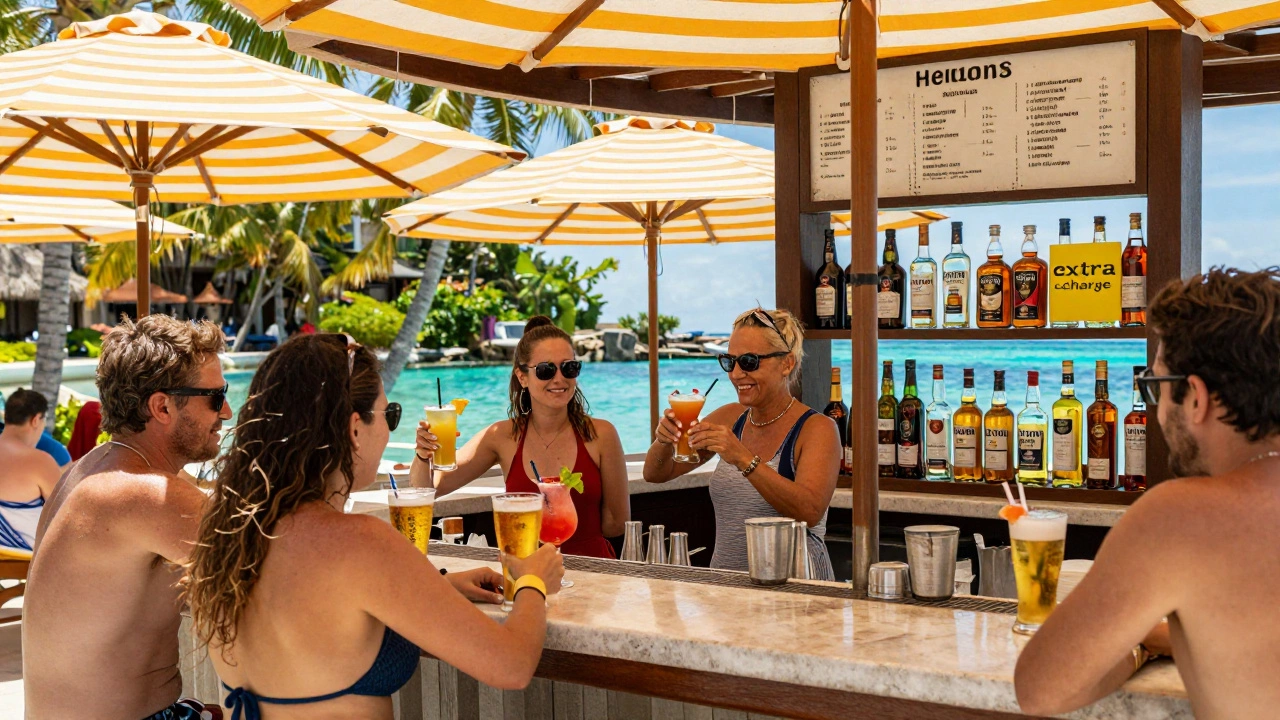
These are the drinks you’ll see on the menu at the pool bar or buffet. They’re not fancy, but they’re enough for most guests. You won’t get a single-malt Scotch or a $12 cocktail made with artisanal bitters unless you pay extra.
Where the Limits Kick In
Here’s what’s usually not included:
- Top-shelf liquor: brands like Glenfiddich, Patron, or Grey Goose
- Premium wines: bottles from France, Italy, or California
- Specialty cocktails: drinks with exotic ingredients, fresh fruit muddling, or premium mixers
- Drinks at specialty bars: cigar lounges, rooftop bars, or beachside cabanas
- Alcohol served after 11 p.m. at some resorts
Some resorts even restrict alcohol service during meal times. You might be able to order a drink at lunch, but not during dinner service. Others cap the number of drinks you can order per hour - five drinks in 60 minutes, then you wait.
How to Know What’s Really Included
Don’t trust the word "all-inclusive" on a website. Always check the fine print. Look for phrases like:
- "Premium beverages included" - this means top-shelf drinks are covered
- "Limited brand selection" - means only local or basic brands
- "Select alcoholic beverages" - a red flag that not everything is included
Call the resort directly. Ask: "What brands of rum, whiskey, and beer are included?" Don’t settle for "all drinks are included." Get specifics. If they hesitate or give a vague answer, assume the worst.
Look at guest reviews on TripAdvisor or Google. Search for "alcohol included" or "drinks policy." Real guests will tell you if they had to pay extra for a simple gin and tonic.
Upscale All-Inclusives: What’s Different
If you’re paying $600+ per night, you’re likely booking a luxury all-inclusive. These places often include premium drinks. Resorts like Sandals, Secrets, or AMResorts’ Platinum tier usually offer:
- Named-brand spirits: Jack Daniel’s, Absolut, Bacardi Superior
- Wine lists with vintages and varietals
- Unlimited access to specialty bars
- 24/7 drink service, even late at night
At these resorts, you might get a glass of Chardonnay with dinner or a whiskey neat after the beach. But even here, there are limits. Rare single malts or champagne by the bottle? That’s still extra.
What Happens If You Go Over the Limit?
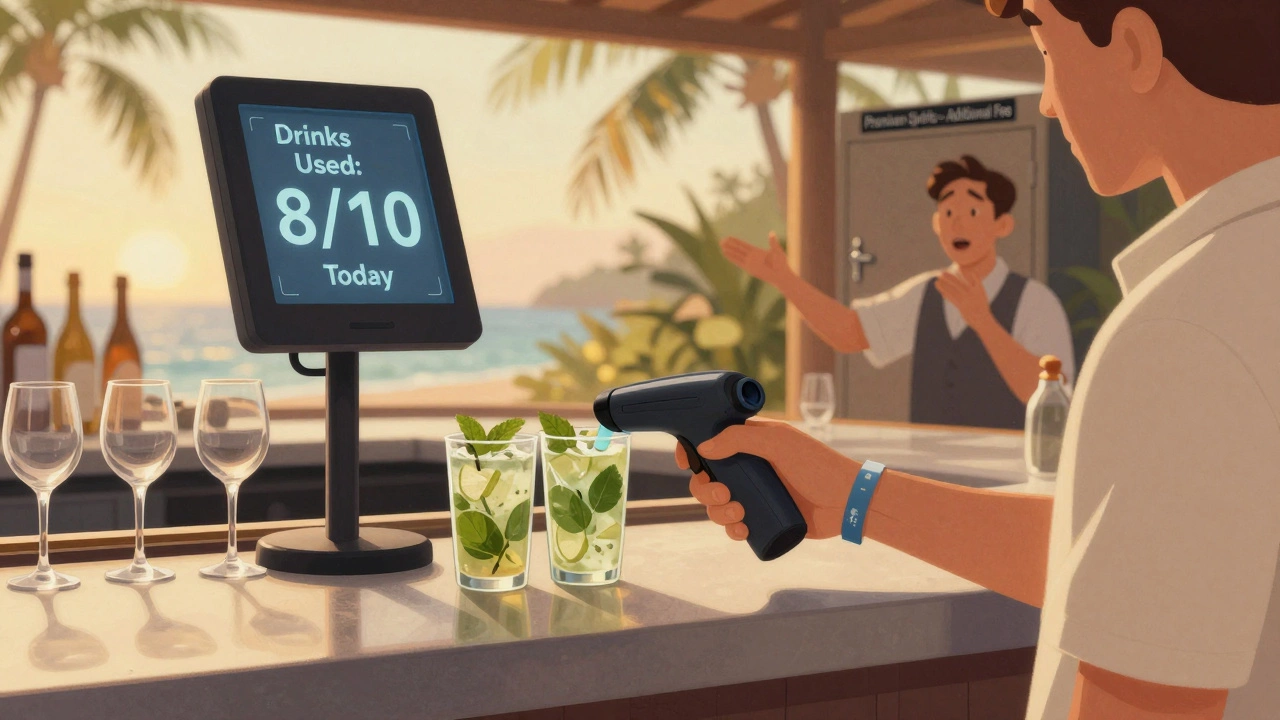
Most resorts track your drink consumption. You’ll get a wristband or a card that’s scanned every time you order alcohol. If you hit your limit - say, 10 drinks a day - you’ll be told you’ve reached your allowance.
Some resorts let you pay extra on the spot. Others just stop serving you. In rare cases, they’ll charge you a fee to continue. Don’t be surprised if you’re asked to pay $15 for a drink you thought was free.
There’s no universal rule. One resort might give you 20 drinks a day. Another might cap you at five. Always ask before you order.

How to Save Money and Still Enjoy
You don’t need to splurge on top-shelf drinks to have a good time. Here’s how to make the most of what’s included:
- Stick to the house rum and soda - it’s often just as good as the branded stuff
- Order wine by the glass, not the bottle - you’ll get more variety
- Try local specialties: in Mexico, go for mezcal; in Thailand, try Thai rum
- Ask for "the house version" of your favorite cocktail - it’s usually cheaper and just as tasty
- Drink during happy hour if offered - many resorts have 30-minute windows with discounted or free drinks
And if you really want that $20 cocktail? Order it once - as a treat. Don’t make it your daily habit.
What to Do If You’re Surprised by Extra Charges
You booked an "all-inclusive" and got a bill with $80 in drink charges? That’s not uncommon. Resorts often add hidden fees for premium drinks, late-night service, or drinks outside the main bars.
Before you leave, review your final bill. If you see charges for drinks you thought were included, ask for clarification. Sometimes it’s a mistake - maybe they scanned your card wrong or confused you with another guest.
Don’t be afraid to push back. If you were told by a sales rep or website that "all drinks are included," and you were charged, you have a case. Keep screenshots of the website or email. Resorts hate negative reviews, and they’ll often refund you to avoid one.
Bottom Line
Yes, alcoholic drinks are included in most all-inclusive resorts - but only the basics. You won’t get the same quality or variety as a high-end bar. If you’re a wine lover, a craft beer fan, or someone who likes premium spirits, you’ll likely pay extra. But if you’re okay with local beer, house rum, and simple cocktails, you’ll be fine.
Do your homework. Ask the right questions. Read the fine print. And don’t assume "all-inclusive" means everything - it means everything they decide to include.