Eco-Friendly Cottage Assessment
Is This Cottage Really Eco-Friendly?
Answer these questions based on the cottage's actual practices to determine its sustainability score.
1. Building Materials
2. Energy Systems
3. Water Management
4. Waste Systems
5. Food Sourcing
6. Transportation
When people ask, "What is the most eco-friendly place on Earth?" they’re often imagining a remote cabin tucked into a forest, powered by solar panels, with composting toilets and no carbon footprint. But here’s the truth: eco-friendly cottages aren’t just about location-they’re about how they’re built, run, and connected to the land. The most eco-friendly place on Earth isn’t a single spot on a map. It’s a model. And that model is already alive in places like the Scottish Highlands, the Swedish archipelago, and the hills of Tasmania.
It’s Not About the Location, It’s About the System
Many think the most eco-friendly place is somewhere untouched-like Antarctica or deep in the Amazon. But those places aren’t designed for human habitation. They’re preserved by isolation. True sustainability happens where people live, work, and thrive without harming the environment. That’s why the best eco-friendly spots aren’t wild frontiers. They’re carefully designed communities built around renewable energy, zero waste, and local food systems.
Take the village of Findhorn in Scotland. It’s not famous for its scenery alone. It’s known because every building there runs on wind and solar power. Rainwater is harvested, greywater is filtered through reed beds, and food is grown in permaculture gardens. Residents don’t just avoid plastic-they design systems that replace it entirely. This isn’t a tourist attraction. It’s a functioning, lived-in community that’s been doing this for over 50 years.
What Makes a Cottage Truly Eco-Friendly?
Not all cottages labeled "eco-friendly" deserve the name. Some just use bamboo towels and sell organic coffee. Real sustainability goes deeper. Here’s what separates the genuine from the greenwashed:
- Building materials: Reclaimed timber, hempcrete, or rammed earth instead of concrete and steel.
- Energy: Off-grid solar with battery storage, not just a grid-tied system that still relies on fossil fuels.
- Water: Rainwater catchment, greywater recycling, and low-flow fixtures-no municipal water dependency.
- Waste: Composting toilets, zero landfill policy, and repair/reuse culture.
- Food: On-site gardens, local sourcing, and no imported goods.
A cottage that uses solar panels but imports food from halfway across the world isn’t eco-friendly. It’s just a fancy version of a regular vacation home.
The Top Three Real-World Examples
Here are three places where the eco-friendly cottage model isn’t just a trend-it’s the standard.
1. The Green House, Tasmania
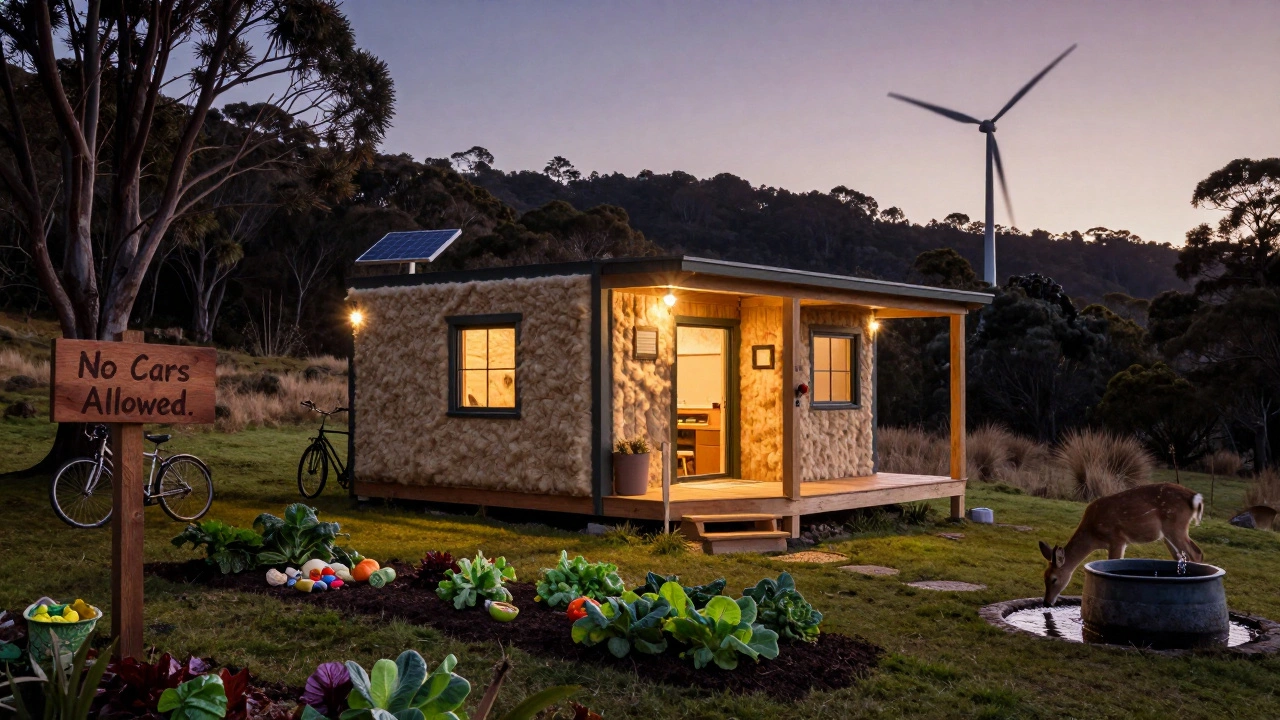
Perched on a hillside near Hobart, this cluster of five cottages runs entirely off-grid. Each one is built from locally sourced timber and insulated with sheep’s wool. Solar panels charge lithium batteries that power LED lighting, induction stoves, and heat pumps. Water comes from a spring-fed tank filtered through a sand-and-charcoal system. Guests grow their own vegetables in raised beds and compost all food scraps. No cars are allowed on the property-bikes and walking trails connect each cottage. This isn’t a resort. It’s a self-sufficient homestead.
2. Svanhovd Eco-Cottages, Sweden
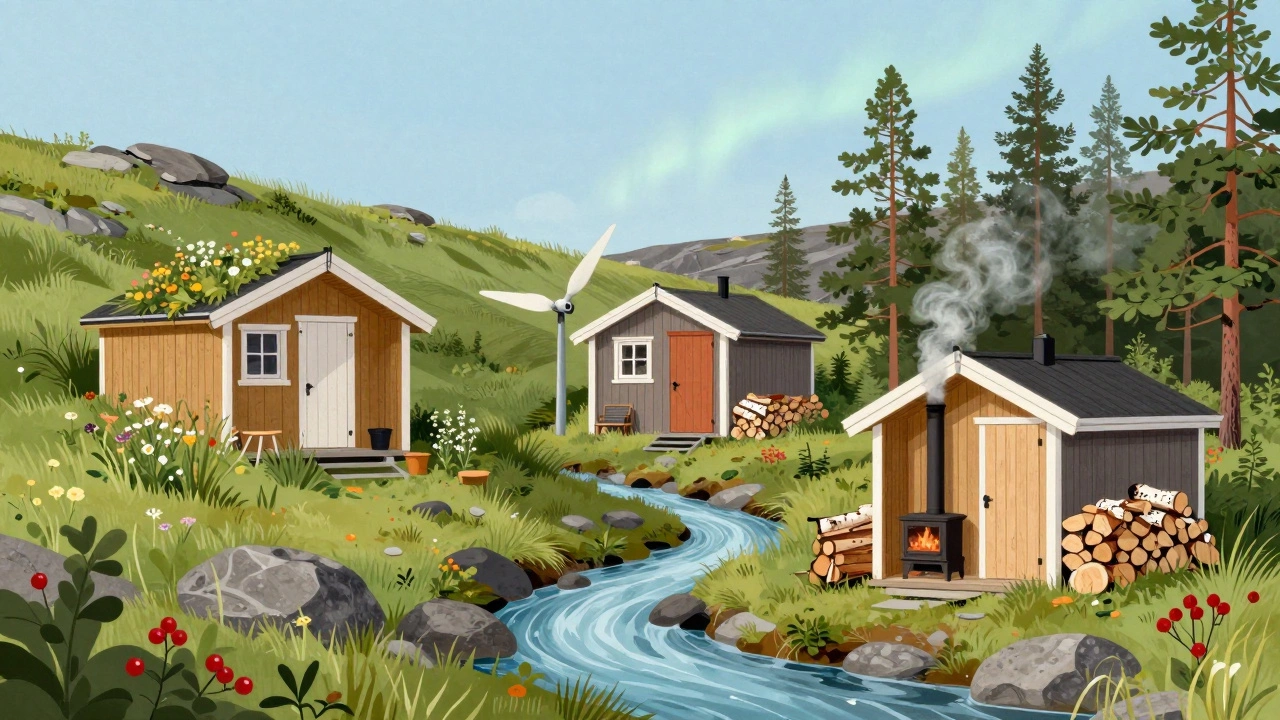
In the far north of Sweden, near the Norwegian border, these cottages are buried into the earth for natural insulation. The roofs are covered in wild grasses and wildflowers that attract pollinators. Each unit has a wood-burning stove heated with sustainably harvested birch. Electricity comes from a small hydro turbine running off a nearby stream. Guests help harvest berries and mushrooms in season. There’s no Wi-Fi. There’s no TV. But there’s clean air, quiet nights, and the smell of pine resin after rain.
3. The Eco Pod, Scotland
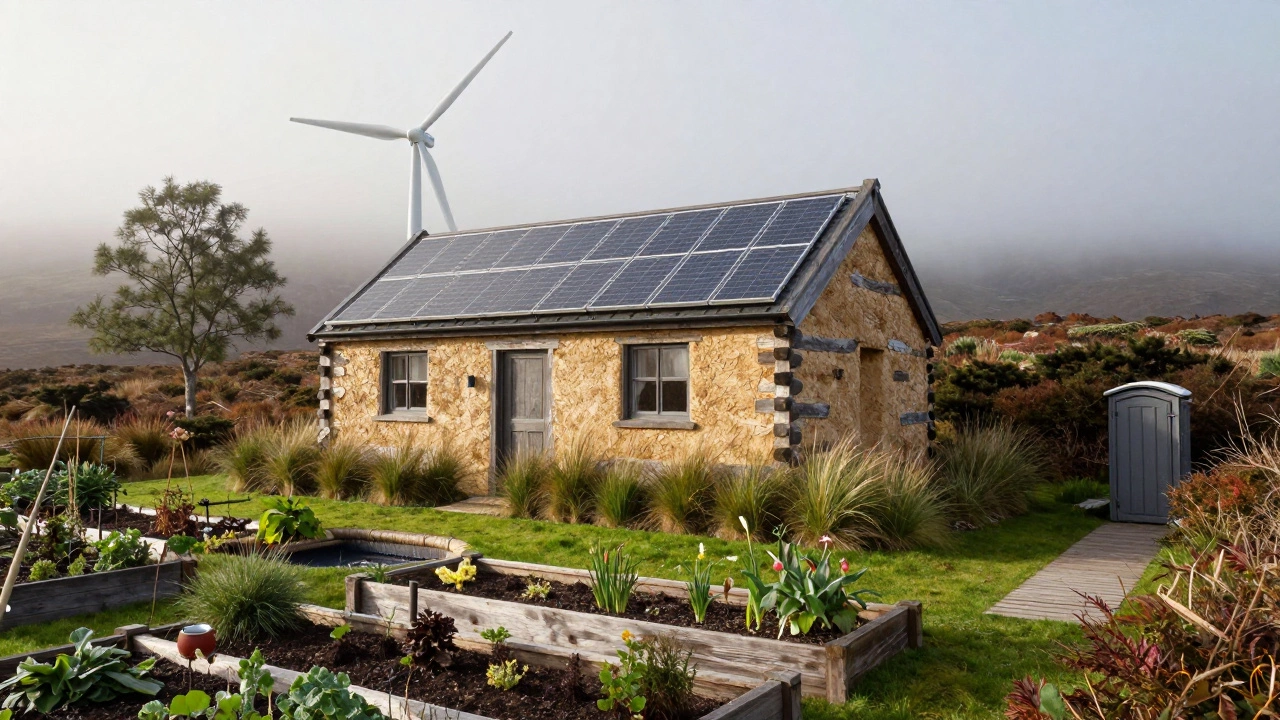
On the Isle of Skye, this single cottage was built using recycled shipping containers. The walls are lined with mycelium insulation-a material grown from mushroom roots. A wind turbine spins above the roof, and a composting toilet turns waste into fertilizer for the orchard. The owners run a small seed bank, sharing heirloom plant varieties with visitors. They’ve eliminated single-use items entirely. Even the soap is made from olive oil and lye, pressed by hand.
Why Most "Eco" Cottages Fail
Too many places call themselves eco-friendly because they have a few solar panels or a recycling bin. But here’s what they miss:
- Hidden energy use: If your cottage uses electric heating but the power comes from coal, you’re not green.
- Transportation: If guests fly in from overseas to stay for three days, the carbon cost outweighs the savings.
- Water sourcing: Pumping groundwater for showers isn’t sustainable-even if you use low-flow showerheads.
- Local impact: If you’re replacing a local farmer’s land with a luxury cabin, you’re not helping the community.
The best eco-friendly cottages don’t just reduce harm-they restore balance. They give back more than they take.
How to Spot the Real Deal
If you’re looking to stay in a truly sustainable cottage, ask these questions:
- Where does your electricity come from? (If they say "the grid," dig deeper.)
- How is water collected and treated?
- What happens to waste? (Composting? Recycling? Landfill?)
- Is food grown or sourced locally? Can you see the garden?
- Are materials used reclaimed or locally mined/grown?
- Do they have a carbon offset policy-or do they avoid emissions entirely?
If they can’t answer clearly, it’s likely marketing, not sustainability.
The Future Isn’t Just Green-It’s Regenerative
The next step beyond eco-friendly isn’t just using less. It’s giving back. Some cottages now plant trees for every guest. Others restore wetlands or release native bees. One property in Wales reintroduced beavers to a dried-up stream-and watched the whole ecosystem come back to life. That’s not tourism. That’s healing.
The most eco-friendly place on Earth isn’t a place you visit. It’s a place that changes you. It teaches you how to live lightly. And when you leave, you don’t just take memories-you take habits. A way of thinking. A new standard.
So next time you book a cottage, ask: Is this just a quiet getaway-or is it part of a larger solution?