Tiny House Energy Savings Calculator
Calculate Your Potential Savings
Most people think tiny houses are just a trend for hipsters or retirees looking to downsize. But if you look closer, you’ll see they’re one of the most practical ways to live with less impact on the planet. A typical tiny house is under 400 square feet-sometimes as small as 120. That’s less than half the size of an average American home, and even smaller than many Australian sheds. And it’s not just about size. The way these homes are built, powered, and lived in makes them genuinely eco-friendly.
Less Materials, Less Waste
Building a traditional home uses tons of resources. Concrete, steel, drywall, insulation, roofing, lumber-all of it adds up. The average new house in Australia uses over 20 tons of building materials. A tiny house? Often under 5 tons. That’s a 75% reduction just from cutting the scale.
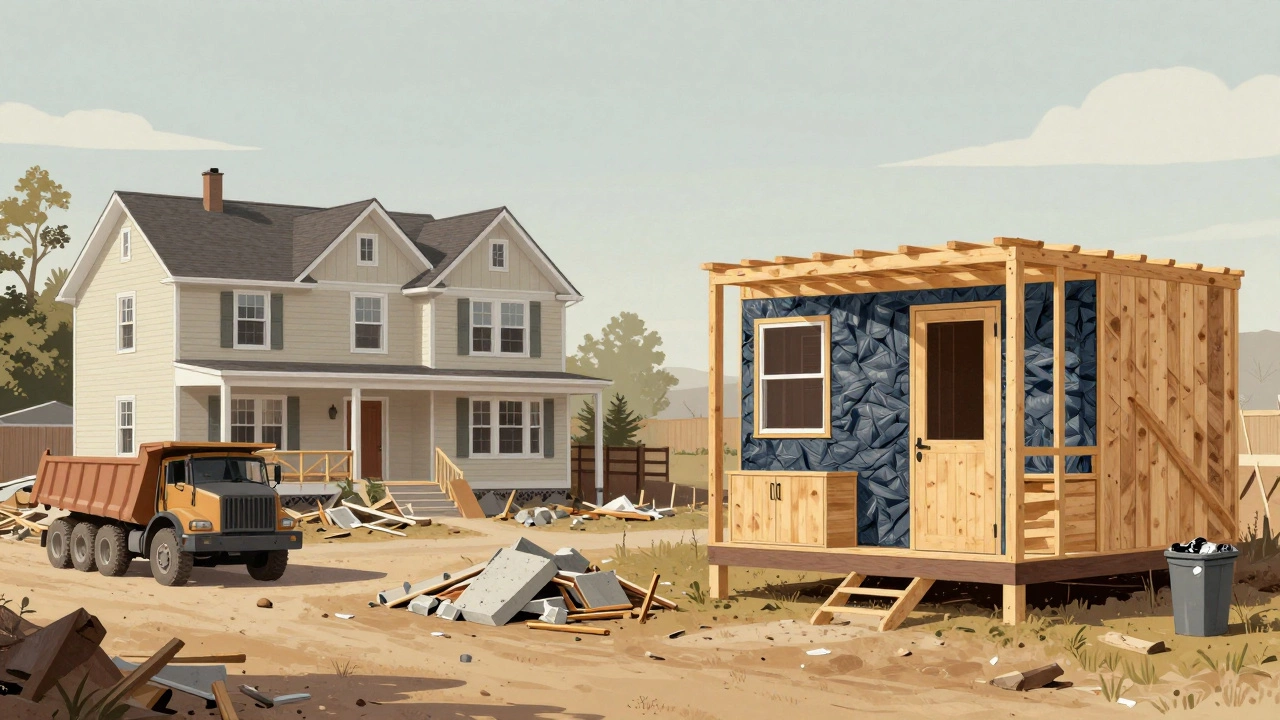
Most tiny homes are built with reclaimed or recycled materials. I’ve seen kitchens made from old barn wood, flooring from salvaged pine, and cabinets repurposed from shipping pallets. Even insulation often comes from recycled denim or wool. One builder in Adelaide reused 80% of the materials from a demolished shed to construct a 240-square-foot home. No new timber. No landfill waste. Just smart reuse.
Construction waste from a tiny house project is usually small enough to fit in a single bin. Compare that to a standard build, where half a dump truck of debris ends up in landfills. Tiny homes don’t just use fewer materials-they make the most of what they do use.
Lower Energy Use, Lower Bills
Heating and cooling a 2,000-square-foot house in winter or summer takes a lot of energy. A tiny house? It’s like warming a large closet. The smaller space means less air to heat or cool. Many tiny homes use mini-split heat pumps that use less than 1,000 watts-about the same as a hairdryer. That’s 80% less energy than a typical home HVAC system.
Passive solar design is common too. Large south-facing windows (in the Northern Hemisphere) or north-facing (in Australia) let in winter sun to naturally warm the space. Overhangs or shade cloths block summer heat. Thick insulation-often 2x6 walls with spray foam or cellulose-keeps the temperature steady without cranking up the AC.
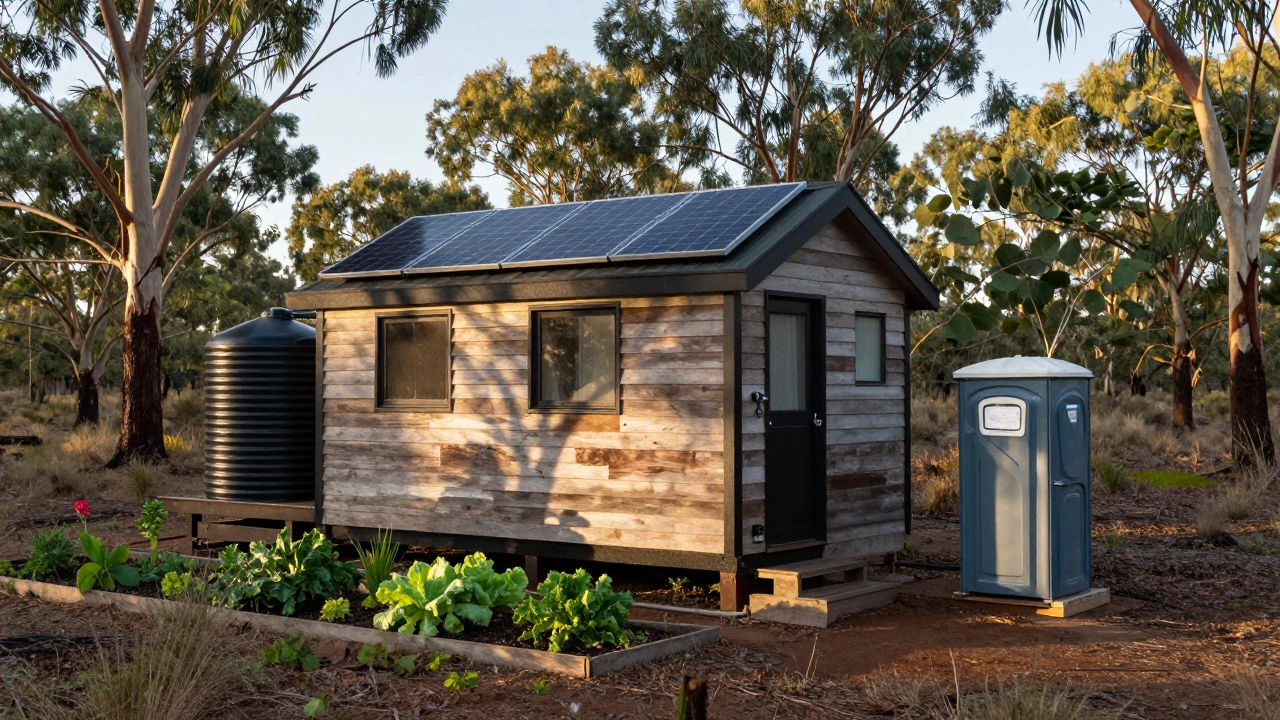
Some tiny homes run entirely on solar. A single 400-watt panel, paired with a 200Ah lithium battery, can power LED lights, a small fridge, a water pump, and a phone charger. No grid needed. No fossil fuels. In Adelaide, where we get over 2,800 hours of sun a year, that’s not just possible-it’s reliable.
No Water Waste, No Sewer Lines
Most tiny houses use 90% less water than a standard home. Why? Because there’s no lawn to water. No long showers. No running taps while brushing teeth. People who live in tiny homes learn to be intentional. A 5-minute shower with a low-flow head uses 10 liters. A full bath? 150 liters. Tiny home dwellers rarely fill a tub.
Many use composting toilets. No water flushed away. No sewage system needed. Human waste turns into nutrient-rich compost in 6 to 12 months. Rainwater harvesting is common too. A 200-gallon tank on the roof can collect enough water for washing, cooking, and flushing a composting toilet. In dry areas like South Australia, that’s not just smart-it’s necessary.
One couple in the Adelaide Hills runs their tiny home entirely off rainwater and solar. They’ve never paid a water bill. Their only monthly cost? A small fee to empty the compost bin every few months. That’s sustainability built into daily life, not just a marketing slogan.
Less Land Use, More Freedom
Tiny houses don’t need big plots. A standard home sits on 500 to 1,000 square meters of land. A tiny house? Often on 20 to 50 square meters. That leaves room for native plants, food gardens, or untouched bushland. Instead of paving over a whole backyard, you can grow herbs, keep chickens, or let bees thrive.
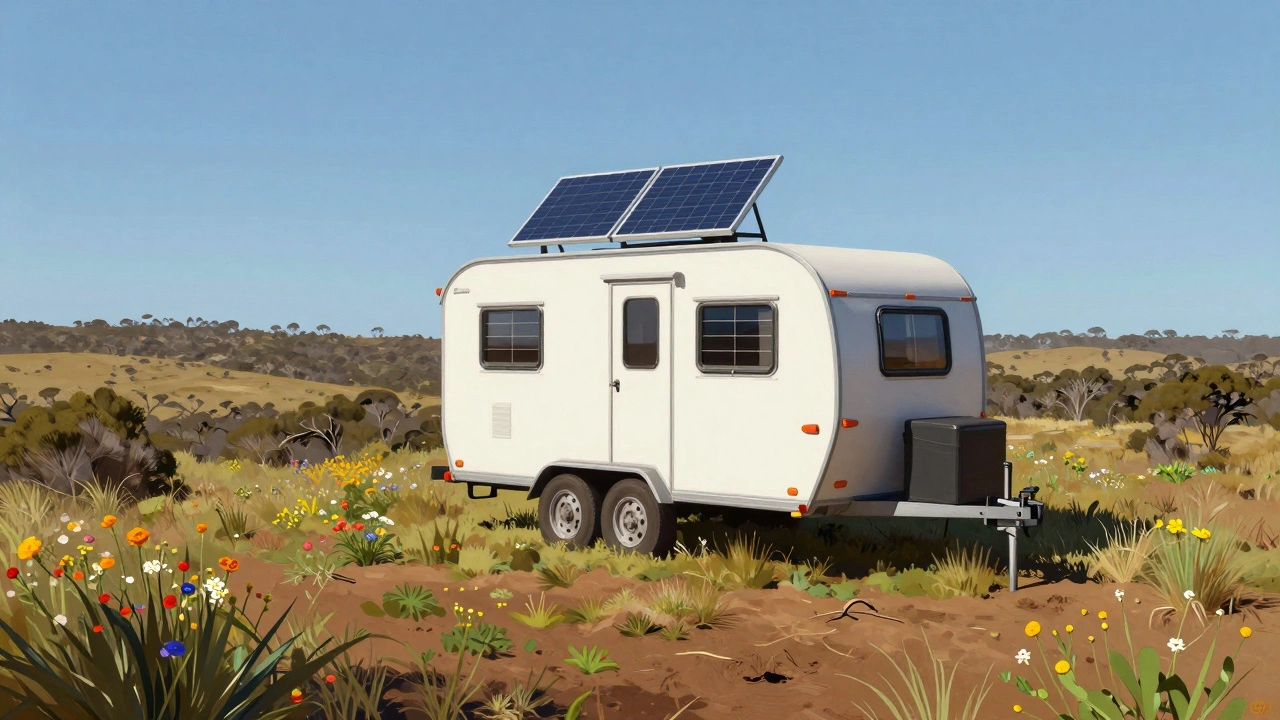
Many tiny homes are built on trailers, meaning they can move. That’s not just for travel-it’s for land stewardship. You can park on underused land, avoid clearing forests, and rotate locations to let soil rest. In places like Tasmania or the Murray-Darling Basin, this reduces pressure on fragile ecosystems.
And because they’re mobile, tiny homes don’t require permanent foundations. No concrete poured into the ground. No disruption to native roots or underground water tables. That’s a quiet win for local wildlife and soil health.
Less Consumption, More Mindfulness
Living in a tiny house doesn’t just change how you build-it changes how you live. When you have 30 square feet of storage, you stop buying things you don’t need. You fix what breaks. You borrow tools instead of buying them. You share meals, not closets.
Studies from the University of California show that tiny home residents consume 45% less stuff than people in regular homes. They buy fewer clothes, fewer gadgets, fewer plastic-packaged foods. Their carbon footprint drops not just from energy use, but from reduced production demand.
One woman in Melbourne told me she used to shop online every week. After moving into her 200-square-foot home, she went six months without buying anything new. Not because she couldn’t afford it-because she realized she didn’t want it. That shift in mindset is the most powerful eco-friendly change of all.
They’re Not Perfect, But They’re Progress
Are tiny houses the answer to climate change? No. One person living small won’t fix global emissions. But if 10% of new homes in Australia were tiny or small-scale, we’d cut millions of tons of CO2 every year. We’d save billions of liters of water. We’d reduce pressure on forests, mines, and landfills.
Some tiny homes are built poorly. Some use cheap, toxic materials. Some are just small, not sustainable. That’s why it matters how you build and live in one. The real eco-friendly tiny house is made with care, powered by sun, watered by rain, and lived in with intention.
It’s not about living like a hermit. It’s about living like someone who knows the planet has limits-and chooses to respect them.
Do tiny houses really save energy compared to regular homes?
Yes, by a large margin. A typical tiny house uses 70-90% less energy than a standard home. Heating and cooling a small space requires far less power. Many tiny homes run on solar panels and use energy-efficient appliances. One study from the University of Colorado found that tiny home residents used an average of 7,000 kWh per year, compared to 12,000-15,000 kWh for the average U.S. household. In Australia, where electricity prices are rising, that’s a major savings.
Can tiny houses work in cold climates like Tasmania or the Snowy Mountains?
Absolutely. The key is insulation and design. Many cold-climate tiny homes use 2x6 walls with R-30 insulation, triple-glazed windows, and thermal mass materials like stone or concrete floors that store heat. Passive solar design works even in winter-south-facing windows (north-facing in Australia) capture low-angle sun. Some owners add small wood stoves or electric heaters that only run when needed. People live year-round in tiny homes across Canada, Scandinavia, and Tasmania. It’s not about the size-it’s about how well it’s built.
Are tiny houses legal to live in full-time in Australia?
It depends on where you are. In most Australian cities, zoning laws don’t yet fully recognize tiny homes as permanent dwellings. But many councils allow them on private land as secondary dwellings or granny flats, especially if they meet building codes. Some rural areas are more flexible. Places like Byron Bay, the Yarra Valley, and parts of South Australia have seen growing acceptance. The key is checking local council rules and ensuring your tiny home meets the National Construction Code (NCC). Some people start by placing theirs on a friend’s land or in an eco-village to test the waters.
What’s the environmental downside of tiny houses?
The biggest risk is poor materials. Some builders use cheap plywood, formaldehyde-laden insulation, or vinyl siding that off-gasses toxins. Others install diesel-powered generators instead of solar. If you buy a pre-built tiny home, ask for material safety data sheets. Avoid anything with VOCs or non-recyclable plastics. Also, if you’re towing your tiny house often, the fuel use can add up. The eco-friendly version is one that’s built with care, powered cleanly, and lived in mindfully-not just moved around for Instagram.
How do tiny houses compare to other eco-friendly housing options like shipping containers or yurts?
Tiny houses usually have the edge in insulation and comfort. Shipping containers are steel, which conducts heat and cold like a radiator. They need heavy insulation to be livable, which adds cost and weight. Yurts are great for temporary use but struggle in wet or windy climates without upgrades. Tiny homes are built like traditional houses-just smaller-so they handle weather better. They also offer more storage, better windows, and easier plumbing integration. For permanent, all-season living, tiny homes are often the most practical eco-friendly choice.