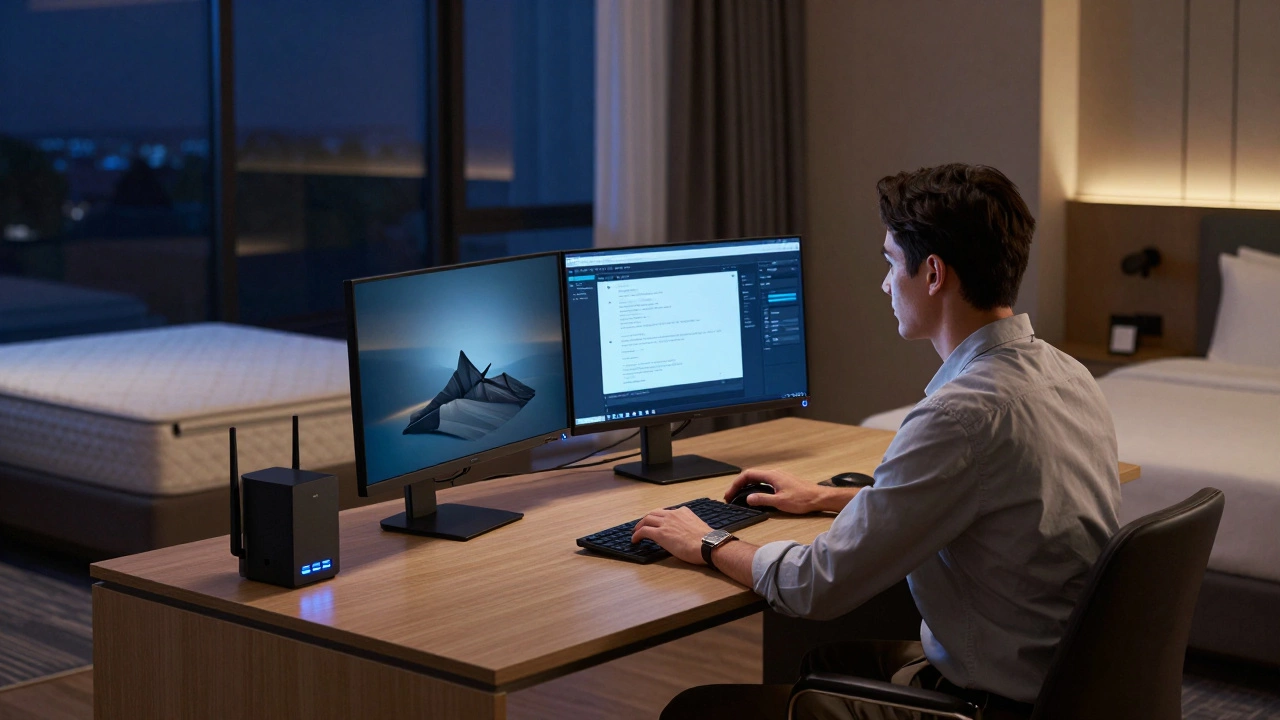
When you're on a business trip, your hotel isn't just a place to sleep-it's your office, your meeting room, your quiet zone, and sometimes your only reliable connection to the outside world. A good business hotel doesn't just offer a bed and a TV. It needs to solve real problems for people who are juggling deadlines, video calls, and airport shuttles-all while jet-lagged and under pressure.
Reliable, high-speed internet isn't optional-it's the baseline
Forget slow Wi-Fi. In 2026, business travelers expect internet speeds that can handle multiple HD video calls, large file uploads, and cloud-based tools without a single buffer. A hotel that still advertises "free Wi-Fi" without mentioning speed is already falling behind. Top business hotels now guarantee at least 100 Mbps download speeds per room, often with dedicated business-grade networks that don’t slow down during peak hours. Some even offer wired Ethernet ports in desks for users who need rock-solid connections for presentations or trading platforms.
And it’s not just about speed-it’s about reliability. If your Zoom call drops during a client negotiation because the hotel’s network crashed, you’ve lost more than time-you’ve lost trust. That’s why leading chains like Marriott’s Business Class and Hilton’s Executive Floor now monitor network performance in real time and alert IT teams when signal strength dips below acceptable levels.
A workspace that actually works
Many hotels still offer a tiny desk with a chair that squeaks and a lamp that flickers. That’s not a workspace-it’s a distraction. A proper business hotel room includes a desk that’s at least 48 inches wide, with enough clearance for a laptop, external monitor, notebook, and coffee mug. Power outlets? At least four, including USB-C ports, placed where your arms naturally rest, not behind the desk where you have to crawl under it to plug in.
Good lighting matters too. Natural light is ideal, but if that’s not possible, adjustable LED task lighting with warm and cool settings lets you match your environment to your task-cool for focused work, warm for evening emails. Noise isolation is just as important. Rooms should be soundproofed against hallway chatter, elevator dings, and HVAC noise. Some hotels now use white noise machines or apps that play ambient office sounds to mask disruptive noises.
Meeting spaces that don’t feel like conference rooms
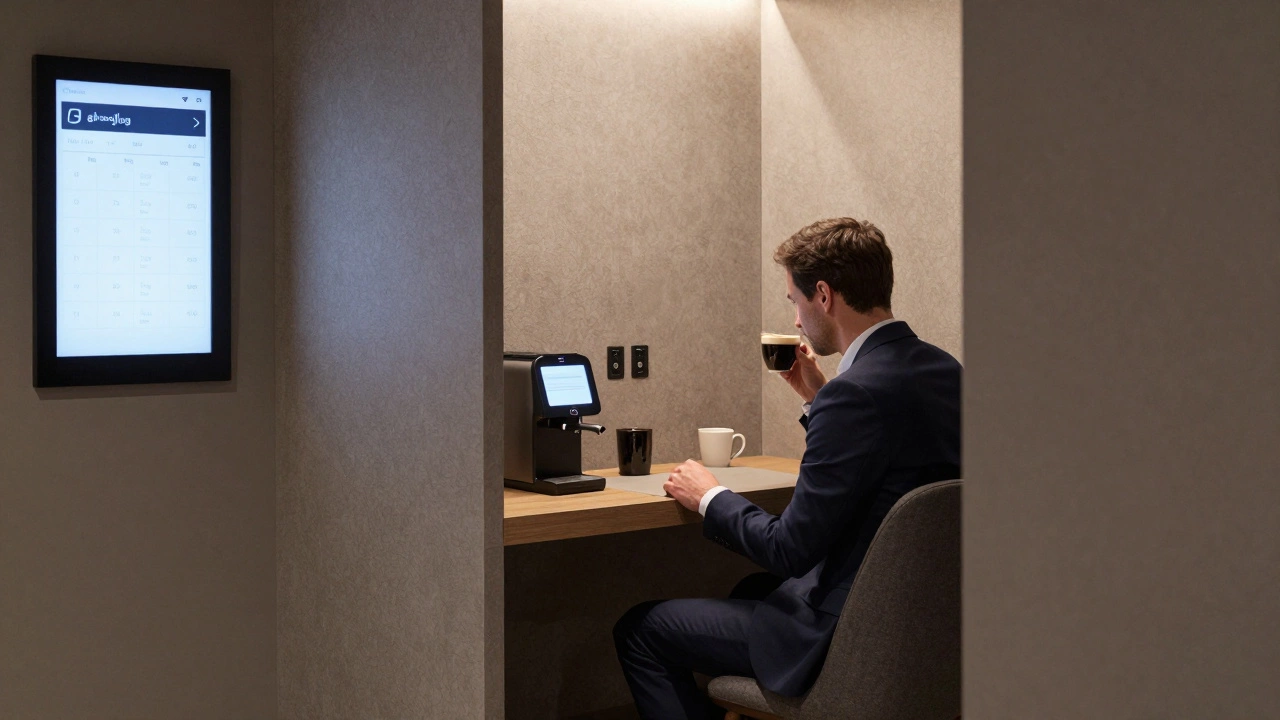
Business travelers don’t always need a full boardroom. Sometimes, they just need a quiet corner to hop on a call with their team-or meet a client for a quick coffee. That’s why modern business hotels have flexible, bookable spaces: private phone booths with acoustic panels, small lounges with high-top tables, and even silent pods with built-in screens and charging stations. These aren’t just add-ons-they’re essential.
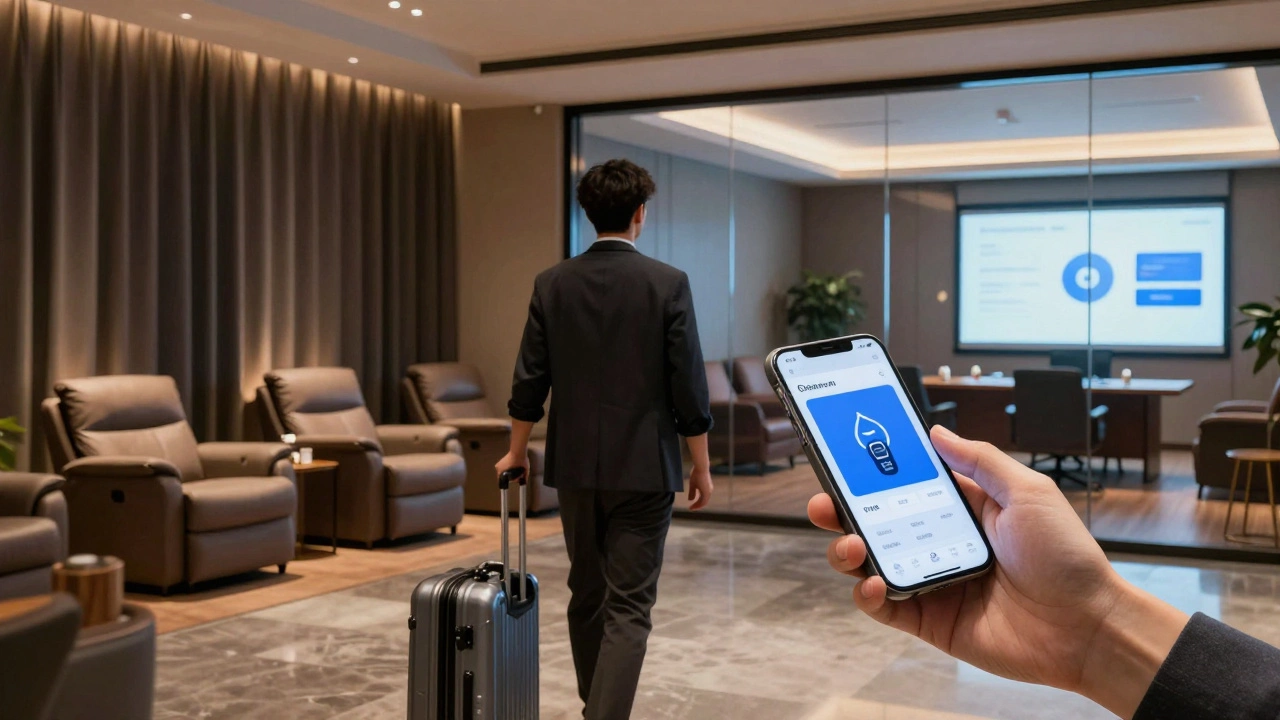
For larger meetings, the hotel should offer at least one well-equipped meeting room with a 4K display, wireless screen sharing, a professional-grade microphone system, and tech support on standby. No more fumbling with HDMI cables or asking the front desk to find a projector. The best hotels even let you reserve these spaces through their app, with real-time availability and billing tied to your room key.
24/7 food and drink that doesn’t suck
Business trips don’t follow a 9-to-5 schedule. You might land at 11 p.m. after a delayed flight. Or you might need a quick snack at 2 a.m. after a late call with Tokyo. A business hotel must offer more than a continental breakfast and a vending machine.
Top-tier properties have 24-hour grab-and-go sections with healthy options: protein bowls, pre-made salads, fresh fruit, and even hot meals like grilled chicken or veggie stir-fry. Coffee stations with barista-quality machines are standard. Some hotels now partner with local cafés to deliver fresh pastries or cold brew to your room at any hour. Alcohol? It’s not a luxury-it’s a business tool. A well-stocked minibar with craft beers, quality wines, and spirits lets you host a client casually without leaving the building.
Concierge service that actually helps
Most hotels have a concierge desk. But in a business hotel, the concierge should function like a personal assistant. Need a last-minute printing job? Done. Need a car to the airport at 5 a.m.? Arranged. Need a local SIM card or a power adapter for your device? They have it. The best business hotels train their staff to anticipate needs before they’re spoken aloud.
Some even offer digital concierge apps that let you text requests-"Can you send up a charger?" or "What’s the fastest route to the convention center?"-and get replies within minutes. These aren’t gimmicks. They’re time-savers that reduce stress and let you focus on your work.
Check-in and check-out that respects your time
Waiting in line at 7 a.m. to check in, or rushing to drop off your key at 10 p.m. after a long day, is a waste of energy. Business travelers value speed and flexibility. That’s why contactless check-in via app is now the norm. You can select your room, get a digital key, and bypass the front desk entirely. Same for check-out: no need to wait for a bill. Charges auto-populate in your email or app, and you’re gone in under a minute.
Extended checkout? Many business hotels now allow late check-out until 2 p.m. at no extra charge for elite members or guests staying three nights or more. That extra few hours can mean the difference between catching a flight and having to book an extra night.
Location matters more than you think
A business hotel in a quiet suburb might be cheap and peaceful-but if it’s 45 minutes from the convention center and 30 minutes from the airport, it’s a logistical nightmare. The best business hotels are located within 10 minutes of major transit hubs, business districts, or conference centers. Proximity to public transport, ride-share pickup zones, and even bike-share stations makes a huge difference.
Some companies now use location data to approve or reject hotel bookings. If your hotel is too far from the meeting site, your expense report gets flagged. That’s why chains like Hyatt and InterContinental prioritize properties near airports, train stations, and downtown cores.
Quiet zones and recovery spaces
Business travel is exhausting. Even the most efficient traveler needs to recharge. That’s why top business hotels are adding quiet lounges-areas with no phones allowed, dim lighting, reclining chairs, and blackout curtains. These aren’t spas. They’re recovery zones. Some even offer short meditation sessions or guided breathing exercises via tablet.
And sleep quality? It’s not an afterthought. High-end business hotels use premium mattresses, noise-canceling curtains, and temperature control systems that adjust automatically. Some even offer sleep kits: earplugs, eye masks, and herbal tea-delivered upon request.
Technology that works for you, not against you
Smart rooms are common now-but many are just gimmicks. A voice-controlled thermostat that doesn’t understand your accent? A TV that won’t connect to your Netflix account? That’s frustrating, not helpful.
The best business hotels use technology that integrates with your life. Think: automatic syncing of your calendar to the room’s digital display, one-touch access to your preferred streaming services, and apps that let you control lighting, temperature, and room service from your phone. Some even use AI to learn your habits-if you always turn up the heat at 7 p.m., it does it for you.
Security and privacy aren’t optional
Business travelers carry sensitive data: client contracts, financial reports, confidential emails. A business hotel must offer secure Wi-Fi with enterprise-grade encryption, private meeting rooms with no recording devices, and secure document disposal. Some hotels now offer encrypted USB drives for temporary use, and others have policies that ban housekeeping from entering rooms during business hours unless explicitly requested.
Privacy extends to your digital footprint too. Hotels that track your browsing habits or sell your data to advertisers are losing trust fast. Leading brands now have clear privacy policies-and they’re transparent about what they collect and why.