Cottage Size & Character Checker
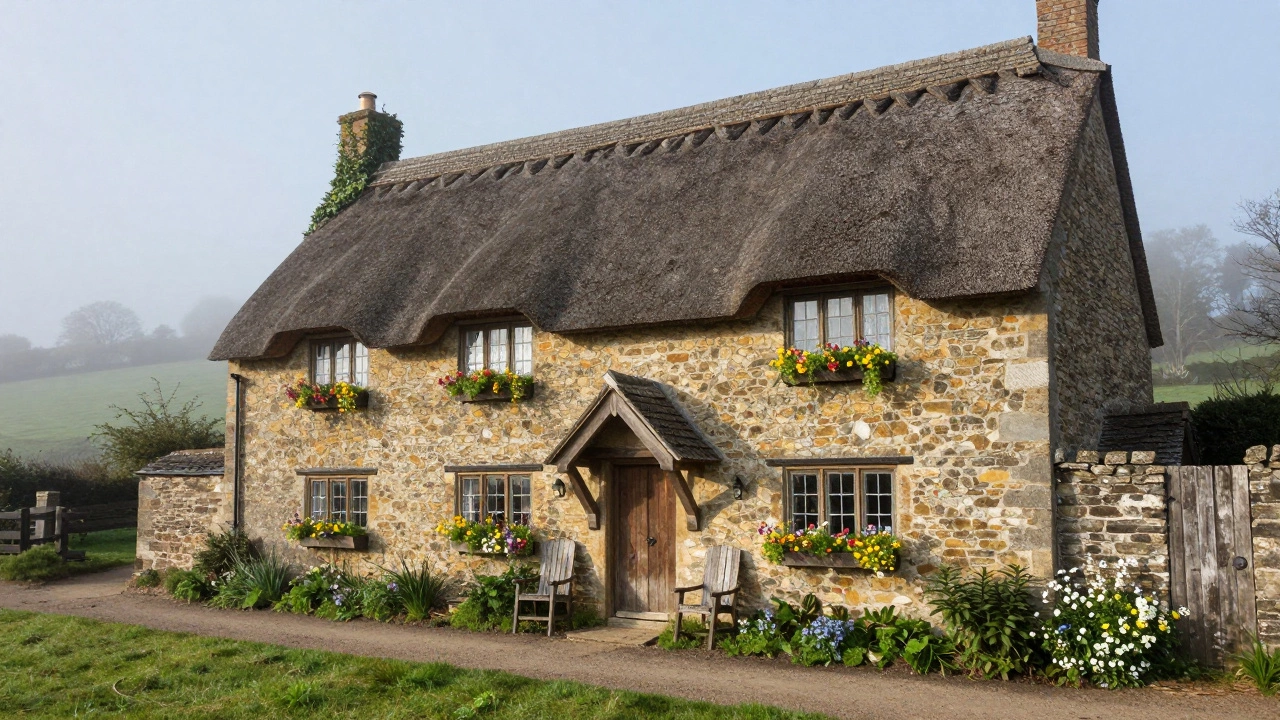
People often picture a cozy, weathered wooden house with a thatched roof and flowers spilling from window boxes when they hear the word cottage. But how big is it really? There’s no single official number, but if you’re looking to buy, rent, or even build one, there are clear patterns that define what makes a house a cottage - not just a small house.
Most cottages are under 1,200 square feet
In the UK, where the term originated, a true cottage rarely exceeds 1,200 square feet. Many traditional English cottages are even smaller - between 600 and 900 square feet. That’s about the size of a two-car garage with a bedroom added on. In the U.S., the same rule applies: if it’s under 1,200 square feet and feels like a snug, charming retreat, it’s likely called a cottage. Anything larger than that starts to feel more like a cabin, a bungalow, or just a small house.
Why 1,200? It’s not magic. It’s practical. Cottages were originally built for farm workers or laborers who didn’t need much space. They had one or two bedrooms, a small kitchen, and maybe a sitting room. The focus wasn’t on luxury - it was on shelter, warmth, and simplicity. That legacy still shapes what we call a cottage today.
It’s not just about square footage - it’s about character
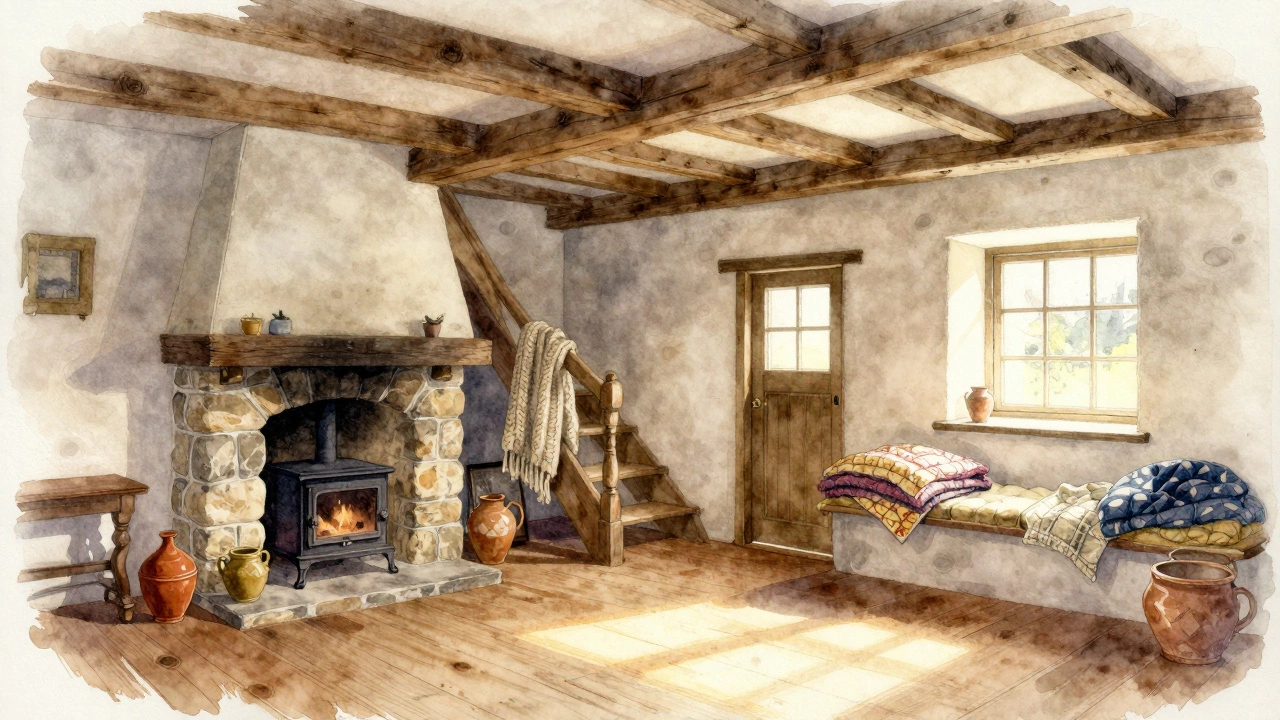
A 1,000-square-foot house with flat walls, vinyl siding, and no charm isn’t a cottage. A 900-square-foot house with a sloped ceiling, exposed beams, a stone fireplace, and a tiny porch? That’s a cottage. The difference isn’t in the numbers - it’s in the soul.
Real cottages have quirks. Low doorways because people back then were shorter. Thick walls made of local stone or timber. Windows that aren’t perfectly aligned. A kitchen that opens straight into the living area. These aren’t design flaws - they’re proof of history. Modern homes built to look like cottages often miss this. They’re too clean, too uniform. Cottages feel lived-in, not staged.
Look at the architecture. Traditional cottages often have:
- Steeply pitched roofs to shed rain and snow
- Small-paned windows, sometimes with wooden frames
- Chimneys made of brick or stone
- Front porches or verandas, even if just wide enough for two chairs
- Natural materials: wood, stone, plaster, thatch
These features aren’t decorative add-ons. They’re functional. They kept people warm in winter and cool in summer before central heating existed. Today, they’re what make a cottage feel authentic.
What cottages are not
Let’s clear up some confusion. A cottage is not:
- A tiny home on wheels - that’s a tiny house
- A vacation rental with a pool and five bedrooms - that’s a luxury villa
- A modern minimalist box with floor-to-ceiling glass - that’s a contemporary home
- A guesthouse built behind a main house - that’s an ADU (accessory dwelling unit)
Some people call any small house a cottage. Real estate agents do it all the time. But if you’re looking for the real thing - the kind you’d find in the English countryside or along the coast of Maine - you need to look beyond size.
There’s also a big difference between a cottage and a cabin. Cabins are usually built from logs, often in forested areas, and feel more rugged. Cottages are more refined, often with painted wood, shutters, and gardens. A cabin might have a wood stove. A cottage might have a cast-iron range and a window seat.
Regional differences matter
In the U.S., the term “cottage” is used loosely. In Florida, a cottage might mean a 1,500-square-foot beach house with a screened porch. In Vermont, it could be a 700-square-foot stone house with a wood-burning stove. In the UK, the definition is tighter. The National Trust defines a cottage as a small, simple dwelling, often rural, built before 1900.
In Canada, cottages are seasonal homes by lakes - often 800 to 1,000 square feet, with basic plumbing and no central heat. In Ireland, cottages are stone-built, with thick walls and tiny windows, designed to hold in heat. Each region has its own version, but they all share one thing: they feel intimate, not grand.
Modern cottages still follow the rules
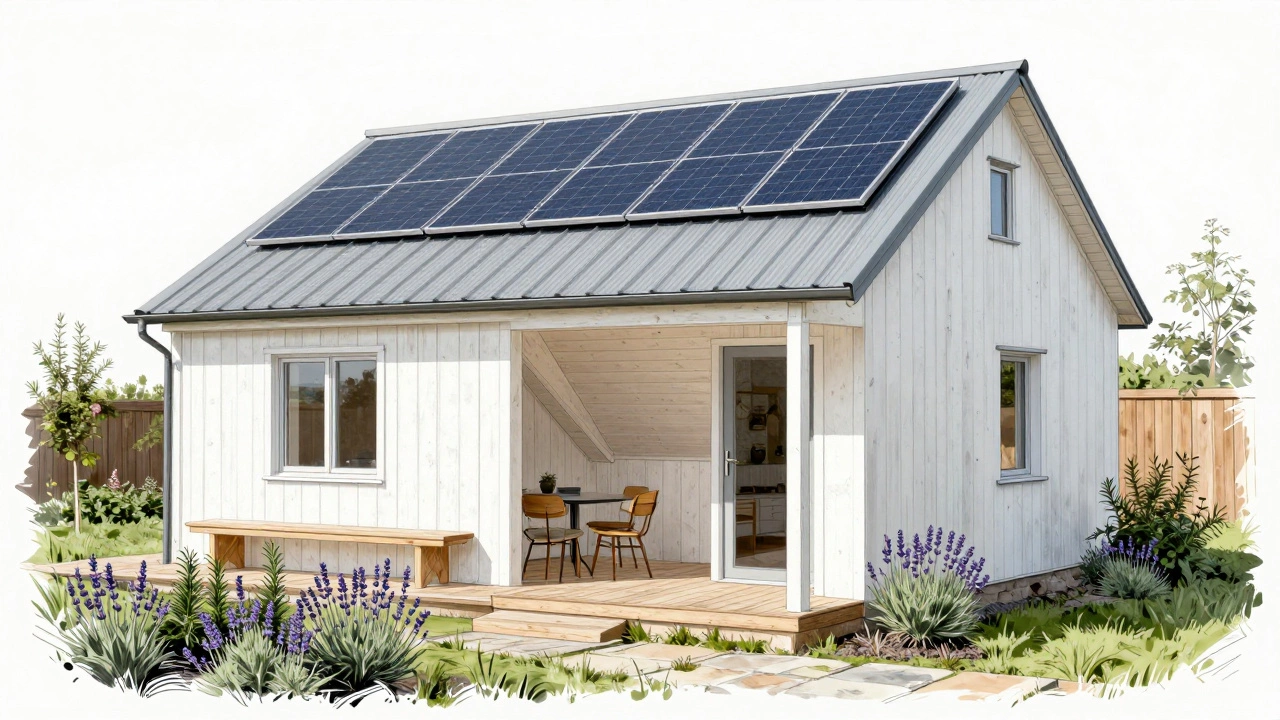
Today, people build new cottages all the time. But the best ones don’t copy McMansions. They copy the spirit. A modern cottage might have solar panels and energy-efficient windows, but it still has a low ceiling in the living room, a narrow staircase, and a front door that opens right onto a garden path. It might be 1,100 square feet - still under the 1,200 threshold - but it’s designed to feel smaller than it is.
Architects who specialize in cottage-style homes know this. They use design tricks: angled ceilings, built-in furniture, multi-use spaces. A dining nook becomes a desk. A window seat becomes storage. The goal isn’t to maximize space - it’s to make the space feel warm and human.
Why does this matter?
If you’re searching for a cottage to buy or rent, knowing the real definition helps you avoid scams. A listing might say “cozy cottage,” but if it’s 2,000 square feet with a two-car garage, it’s not a cottage. It’s a house pretending to be one.
If you’re building one, understanding the standards helps you create something timeless. You don’t need to replicate a 1700s English cottage exactly. But if you want it to feel like one, stick to the principles: small scale, natural materials, charm over perfection, and a connection to the land around it.
And if you just love the idea of a cottage - the quiet mornings, the smell of woodsmoke, the feeling of being tucked away - then size isn’t the point. It’s the feeling. But if you want to find the real thing, start with the numbers. Under 1,200 square feet. With character. And no garage bigger than your living room.
Is a 1,500-square-foot house considered a cottage?
Generally, no. A 1,500-square-foot house is larger than the traditional size range for cottages, which typically fall between 600 and 1,200 square feet. While some regions, especially in the U.S., may label larger homes as cottages for marketing, true cottages are defined by their modest scale and character, not just the number of square feet. A house this size is more accurately called a bungalow, a small home, or a vacation home.
Can a cottage have two stories?
Yes, but it’s rare. Traditional cottages are usually one story, or one-and-a-half stories with a low attic space. Two full stories are uncommon because cottages were built for simplicity and affordability. If a two-story home has a small footprint, steep roof, and cottage-style details like shutters and a porch, it might still be called a cottage - especially if it’s under 1,200 square feet total. But most two-story homes that size feel more like townhouses than cottages.
What’s the difference between a cottage and a cabin?
Cottages are usually made of wood, stone, or brick with painted exteriors and more refined details like shutters and window boxes. Cabins are typically built from logs or rough-hewn timber, often in remote forested areas. Cottages often have gardens and are located near villages or farmland. Cabins are more rugged, with fewer amenities, and are usually used as seasonal retreats. Think of a cottage as a cozy home and a cabin as a wilderness shelter.
Do all cottages have thatched roofs?
No. Thatched roofs are iconic in old English cottages, but they’re not required. Most cottages - especially in North America - have shingle, metal, or slate roofs. Thatch is expensive, requires skilled labor, and isn’t fire-resistant in many areas. The real defining features are the size, materials, and charm, not the roof type. A cottage with a metal roof and white shutters is still a cottage.
Can you live in a cottage year-round?
Absolutely. Many cottages were built as primary homes, not just summer retreats. In the UK, Ireland, and parts of Canada and New England, people live in cottages full-time. Modern cottages often include updated insulation, heating, plumbing, and electrical systems to make them comfortable in all seasons. The key is whether the structure is built for year-round use - not the label. A well-built cottage under 1,200 square feet can be just as livable as any larger home.
Final thought: It’s about feeling, not just feet
At the end of the day, a cottage isn’t defined by a square footage limit on a zoning form. It’s defined by how it makes you feel. Does it feel like a hug? Like a quiet place to read by the fire? Like it’s been there for generations, even if it’s brand new? That’s the real test.
If you’re searching for one, don’t just look at the listing. Walk around it. Open the door. Look up at the ceiling. See if the windows are crooked. Check if the wood is weathered, not painted to look old. If it feels like it remembers the seasons - then you’ve found a cottage.