Cottage Layout Selector
How to use: Select the lifestyle factor that best describes your needs to see which cottage floor layout is the most appropriate match for you.
Single-Story
Bungalows & Beach Huts
Accessibility1.5 Stories
Classic English Style
Charm & CozinessTwo-Story
Country Family Homes
Privacy & SpaceSplit/Basement
Hillside Dwellings
Terrain AdaptableYou might think a cottage is just a small house, but the actual layout can be surprisingly varied. If you're browsing rentals or dreaming of building one, you've probably noticed that some look like tiny boxes while others have cozy nooks tucked away under the roof. There isn't a single legal rule that says a cottage must have a specific number of floors, but tradition and practicality usually dictate the design.
Quick Guide: Cottage Levels at a Glance
- Single-Story: Common for bungalows and beach huts.
- 1.5 Stories: The classic "cottage feel" with bedrooms in the attic.
- Two-Story: Standard for larger family country homes.
- Split-Level: Found in hilly terrains to follow the land.
The Classic Single-Story Layout
Many people associate cottage floor plans is architectural layouts designed for small, cozy dwellings, often focusing on a single level for accessibility and simplicity with a single floor. This is the heartbeat of the bungalow style. In these homes, everything happens on one level. You've got your kitchen, living room, and bedroom all sharing the same ground plane.
Why do people choose this? It's mostly about ease of movement. If you're looking at a retirement cottage in the Cotswolds or a vacation shack in the Hamptons, a single story removes the need for stairs. It's also easier to heat. When you don't have heat escaping up a staircase to a second floor, your energy bills stay lower, which is a big win for those living off-grid or in colder climates.
The Magic of the 1.5 Story Cottage
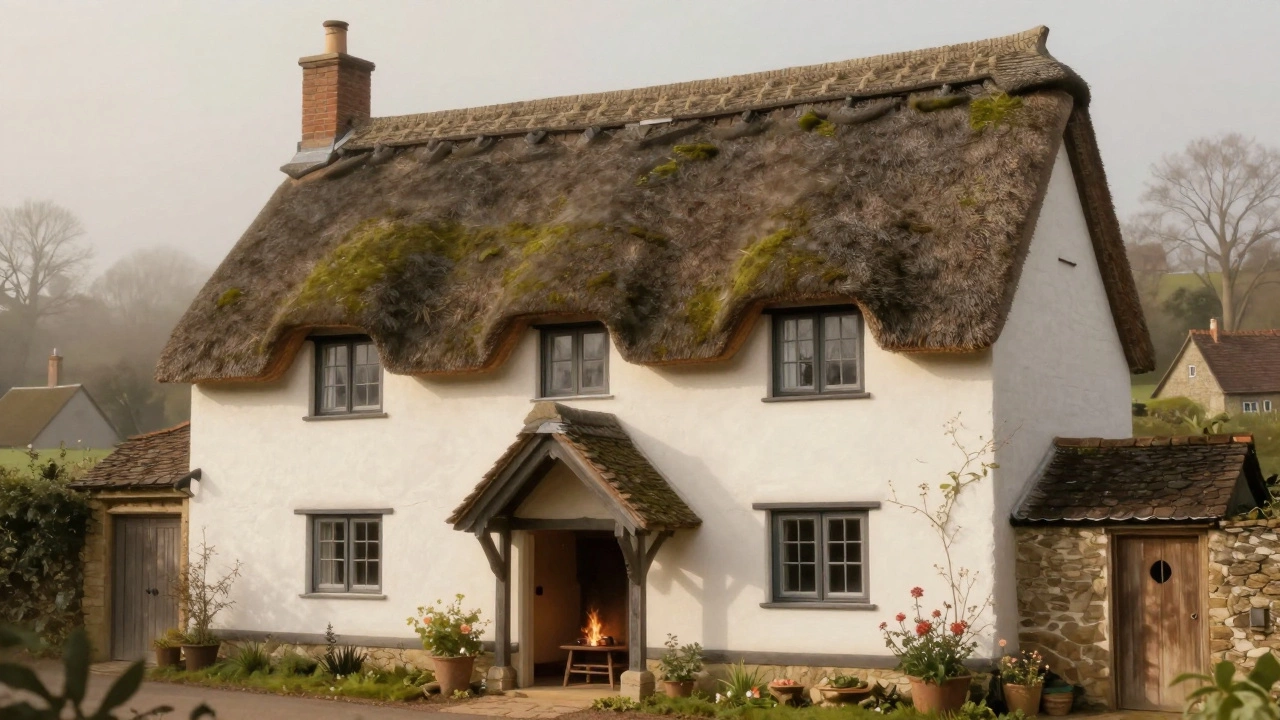
If you see a house with a steep, pitched roof and small windows poking out of the top, you're likely looking at a 1.5-story design. This isn't a full second floor because the ceiling height in the upper rooms is limited by the roofline. This is where you'll find Dormer Windows is vertical window structures that project outward from the slope of a roof to create more headroom and light .
This layout is incredibly popular in traditional English Cottages, which are historic rural dwellings characterized by thick walls, thatched roofs, and asymmetrical layouts. The ground floor usually handles the social life-the "hearth" of the home-while the "half-floor" above is reserved for sleeping quarters. It creates a cozy, cocoon-like feeling that a full second story just can't replicate. You don't get a massive master suite; instead, you get a snug room where the bed is tucked right under the eaves.
Full Two-Story Country Homes
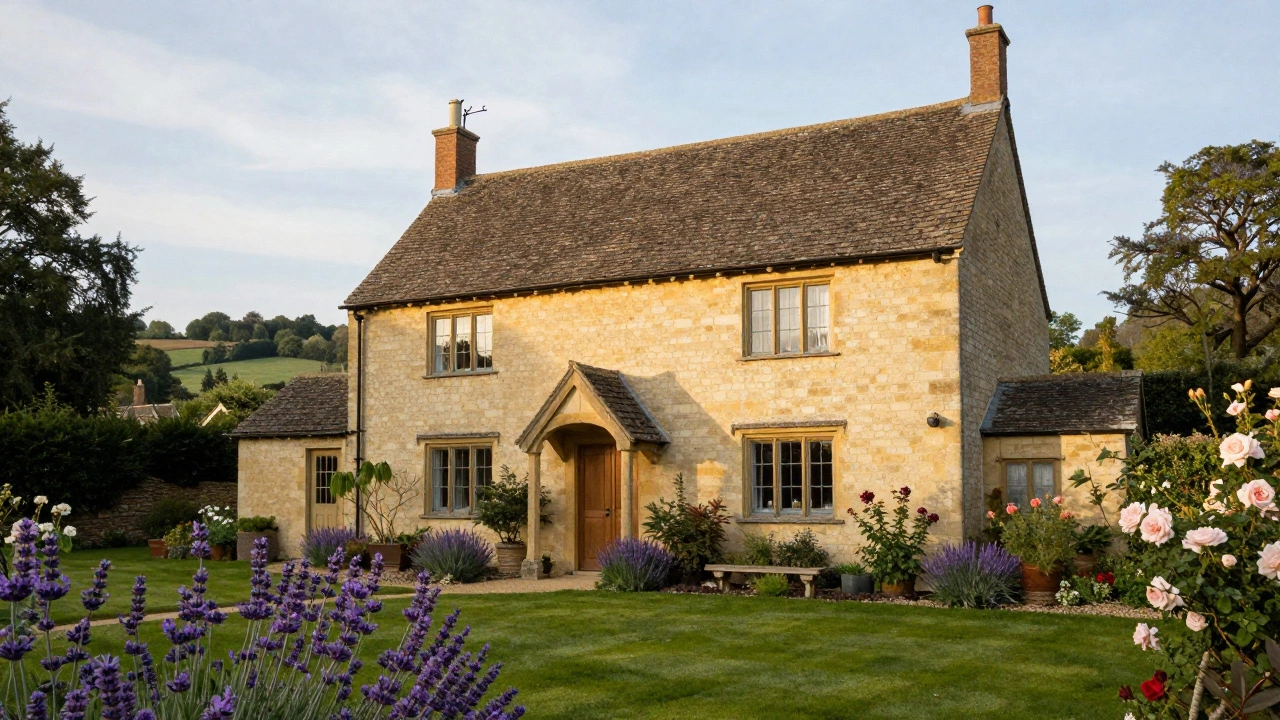
When a cottage evolves into a more permanent family residence, it often grows to two full floors. Here, the division is clear: the first floor is for living and the second floor is for private quarters. This separation is great for privacy, especially if you're hosting guests. You can have a noisy dinner party downstairs while kids or guests sleep undisturbed above.
In these larger versions, you'll often see a more structured approach to the Floor Area, which is the total square footage of a building's usable space. While a tiny cottage might be 500 square feet, a two-story country cottage can easily reach 1,500 to 2,500 square feet. This allows for dedicated spaces like a home office or a laundry room, which are usually missing in smaller, single-level versions.
Split-Level and Walk-Out Basements
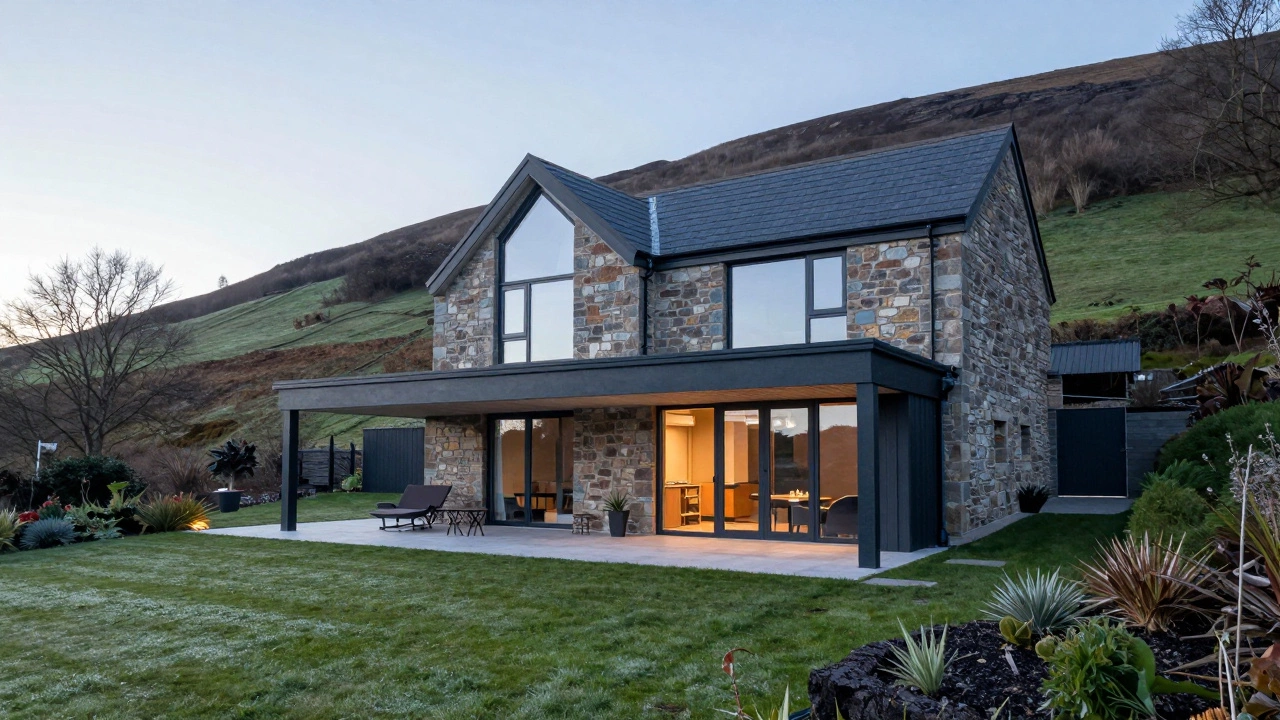
Not every cottage follows a flat grid. In mountainous or coastal areas, builders use split-level designs. This means the floor shifts up or down by a few steps as you move from the kitchen to the living room. It makes the house feel larger and more organic, as if it's growing out of the hillside.
Then there's the "walk-out basement." In many modern country cottages, the house is built into a slope. From the front, it looks like a one-story home, but from the back, there's a fully functional lower level that opens directly onto the garden. This effectively gives you two floors of living space without making the house look like a towering mansion, which helps it blend into the natural landscape.
| Type | Typical Floors | Best For... | Key Feature |
|---|---|---|---|
| Bungalow | 1 | Accessibility & Seniors | No Stairs |
| Classic Cottage | 1.5 | Atmosphere & Charm | Loft Bedrooms |
| Country House | 2 | Large Families | Private Zoning |
| Hillside Cottage | Split/Basement | Sloped Terrain | Multi-level Entry |
Choosing the Right Level for Your Needs
Deciding how many floors your cottage should have depends on your lifestyle. Are you looking for a quiet retreat to read books? A single-story layout is a no-brainer. Do you want that romantic, old-world feel where you climb a narrow staircase to a bedroom? Go for the 1.5-story option.
Consider the climate too. In very snowy regions, raising the main living area to a second floor can keep you above the frost line and provide better views of the landscape. On the other hand, if you're in a windy coastal area, keeping a low profile with a single story helps the building withstand high gusts better than a tall, two-story structure.
Common Mistakes in Cottage Planning
One big trap people fall into is trying to cram too much into a 1.5-story layout. Because of the sloping ceilings, you can't just put a standard wardrobe anywhere. You have to plan for "dead space"-those areas where the ceiling is too low to stand but perfect for built-in drawers. If you ignore this, you'll end up with a room that feels claustrophobic rather than cozy.
Another issue is the "staircase tax." In a very small cottage, a staircase takes up a huge percentage of your ground-floor square footage. If your total footprint is only 600 square feet, losing 40 square feet to a staircase is a significant hit. This is why many tiny home enthusiasts stick to a single floor or use a ladder-style loft instead of a full flight of stairs.
Does a cottage always have to be small?
Not necessarily. While the word "cottage" usually implies a smaller dwelling, it's more about the style and setting than the exact size. You can have a large, luxury country cottage that spans two full floors and several thousand square feet, as long as it maintains that rustic, rural charm.
What is the difference between a cottage and a cabin?
A cabin is typically more rugged, often made of logs, and designed for very remote areas. A cottage is usually a bit more "finished," with plastered walls and a more permanent feel. While both can be single or multi-story, cottages are generally seen as more refined dwellings.
Can I add a second floor to an existing cottage?
Yes, but it depends on the foundation. Older cottages often have shallow footings that weren't designed to hold the weight of a second story. You'll need a structural engineer to check if your walls and ground can support the extra load before you start adding bedrooms upstairs.
Are 1.5 story cottages harder to heat?
They can be. Since heat rises, the loft bedrooms in a 1.5 story cottage are often very warm in the winter, while the ground floor can feel chilly. Installing a ceiling fan to push warm air back down or using zoned heating is a great way to balance the temperature.
Which layout is best for resale value?
Generally, two-story cottages have a higher market value because they offer more usable square footage. However, single-story bungalows are in high demand for retirees, meaning they often sell quickly and hold their value exceptionally well in specific demographics.
Next Steps for Your Cottage Project
If you're in the planning phase, start by mapping out your "must-have" rooms. If you need a separate office, a two-story or split-level design will give you the privacy you need. If you're prioritizing a relaxed, open flow, a single-story layout is the way to go.
For those dealing with steep land, don't fight the slope. Look into walk-out basements; they're the best way to get the benefits of two floors without the visual bulk of a traditional two-story house. Finally, always check local zoning laws, as some rural areas have "height restrictions" that might prevent you from building a full second story to keep the skyline natural.