Food Waste Calculator for All-Inclusive Resorts
Estimate how much food waste you create at all-inclusive resorts based on your buffet habits. The average guest wastes 20-30% of what they take.
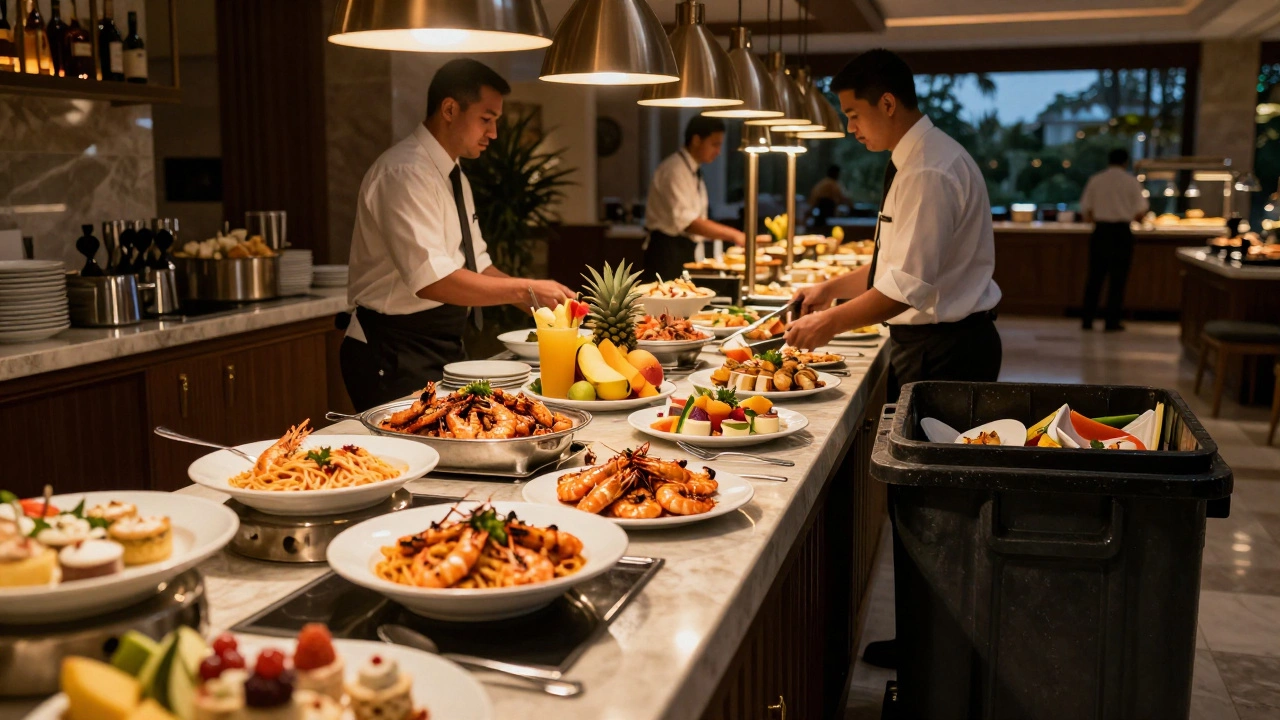
Ever sat through a five-hour buffet at an all-inclusive resort, plate piled high with grilled shrimp, pasta, tropical fruit, and dessert, only to wonder what happens to all that uneaten food when the sun goes down? It’s not just a few leftover rolls or half-eaten salads. In a single night, a mid-sized all-inclusive hotel can generate over 200 pounds of food waste from one meal alone. And that’s just one buffet. Multiply that by three meals a day, seven days a week, and you’re looking at tons of food vanishing into the void every month.
Where Does the Food Go?
Most guests assume leftovers are composted, donated, or recycled. The truth is far more complicated - and often less eco-friendly than you’d hope. In many all-inclusive hotels, especially in popular tourist zones like Mexico, the Caribbean, or Southeast Asia, uneaten food ends up in landfills. Why? Because local waste systems aren’t built to handle the volume. Even if a hotel has a composting program, it’s usually limited to coffee grounds, fruit peels, and maybe some veggie scraps. Meat, dairy, bread, and cooked dishes? Those rarely make it past the kitchen dumpster.
Some resorts do try to reduce waste. A few high-end properties in Europe and North America have partnered with local food banks or shelters to donate untouched, sealed items. But that’s rare. Regulations around food safety make it risky. One spoiled chicken breast, one broken cold chain, and the whole donation gets tossed - or worse, blamed. So most hotels play it safe: if it’s been on the buffet line, it’s trash.
Why Is So Much Food Wasted?
The problem isn’t just carelessness - it’s business design. All-inclusive resorts make money by encouraging guests to eat as much as possible. More food = more perceived value = higher guest satisfaction = repeat bookings. That’s why buffets are endless, portions are oversized, and dishes are constantly refilled. A resort might serve 12 types of pasta, 8 kinds of meat, and 15 desserts - even if only 30% of guests actually eat them. It’s not about feeding people. It’s about making them feel like they’re getting their money’s worth.
And guests? They’re conditioned to overfill their plates. Why? Because if you don’t take the lobster, someone else might. Or maybe you’re just tired of waiting in line for seconds. Either way, you take more than you need. Studies from the Cornell Food and Brand Lab show that people serve themselves 20-30% more food at all-you-can-eat buffets than they actually eat. That’s not gluttony - it’s psychology.

What Are Resorts Doing About It?
Some are starting to change. A few chains - like Club Med and certain Marriott properties - have begun testing smaller, more frequent buffet rounds. Instead of laying out 50 dishes at once, they bring out new items every 45 minutes. That cuts waste by nearly 40% because food doesn’t sit out, dry out, or get touched by 200 people before being thrown away.
Others are switching to à la carte options within the all-inclusive model. Guests can still eat as much as they want, but they order specific dishes instead of piling plates. It’s not as flashy as a seafood tower, but it’s smarter. One resort in Cancún reported a 55% drop in food waste after making this switch. Staff also started tracking what gets left behind. Turns out, most people leave the same three things: fried plantains, overcooked rice, and the mystery meat stew.
Technology is helping too. Some hotels now use AI-powered cameras above buffets to estimate how much food is being taken versus eaten. If the system notices that 80% of the sushi is untouched, the next day they cut the sushi order in half. No more guessing. No more waste.

What Can Guests Do?
You can’t fix the system alone - but you can reduce your footprint. Start by taking smaller portions. Seriously. Go back for seconds if you’re still hungry. It’s not a race. You’ll eat more, waste less, and feel better afterward. Skip the dessert if you’re not sure. You can always get another slice later.
Also, don’t feel pressured to try everything. You don’t need to sample all 12 sauces just because they’re there. Pick two or three that actually sound good. You’ll enjoy them more, and you’ll help the hotel cut down on unnecessary prep.
If your resort has a compost bin or a donation sign, ask. Some staff are happy to help if you show interest. A simple question like, “Is any of this food being saved for the community?” can spark real change. Hotels listen when guests care.
The Bigger Picture
Food waste from all-inclusive hotels isn’t just an environmental issue - it’s a moral one. The UN estimates that if food waste were a country, it’d be the third-largest emitter of greenhouse gases after the U.S. and China. In places where local communities struggle with hunger, seeing luxury resorts throw away whole roasted pigs while kids go without meals isn’t just wasteful - it’s offensive.
But change is possible. More travelers are asking questions. More hotels are listening. In 2024, the Global Sustainable Tourism Council started certifying resorts that reduce food waste by over 30% in a year. That certification is now on 127 properties worldwide. It’s not a magic fix, but it’s a start.
The next time you’re at an all-inclusive, think about the food you leave behind. Not because you’re guilty - but because you have power. You can choose to take less. You can choose to ask. And you can choose to expect better.
Do all-inclusive hotels donate leftover food?
Some do, but it’s rare. Food safety laws make it risky to donate anything that’s been on a buffet line. Most hotels avoid it because of liability. A few high-end resorts in the U.S. and Europe partner with local shelters, but only if the food is still sealed, untouched, and stored properly. In tropical destinations, it’s almost never done.
Is composting common in all-inclusive resorts?
Composting is limited. Most resorts compost only fruit peels, coffee grounds, and vegetable scraps. Meat, dairy, bread, and cooked dishes are too messy, smelly, or attract pests. Even in eco-conscious resorts, composting rarely covers more than 15-20% of total food waste. The rest goes to landfills.
Why do all-inclusive hotels serve so much food?
It’s a business model. The more food you see, the more value you feel you’re getting. Buffets with 20+ dishes make guests feel like they’re getting their money’s worth - even if they only eat three items. Over-serving is intentional. It drives satisfaction, repeat bookings, and positive reviews.
Can guests reduce food waste at all-inclusive hotels?
Yes. Take smaller portions. Go back for seconds if you’re still hungry. Skip items you’re not sure about. Avoid the temptation to "try everything." You’ll waste less, enjoy your meals more, and help the hotel cut costs. A few thoughtful choices can make a real difference.
Are there any eco-certified all-inclusive hotels?
Yes. Since 2024, the Global Sustainable Tourism Council has certified 127 resorts that cut food waste by 30% or more. These hotels use smaller buffet rounds, track waste with technology, and train staff to minimize prep. Look for their certification logo on websites or at the front desk.