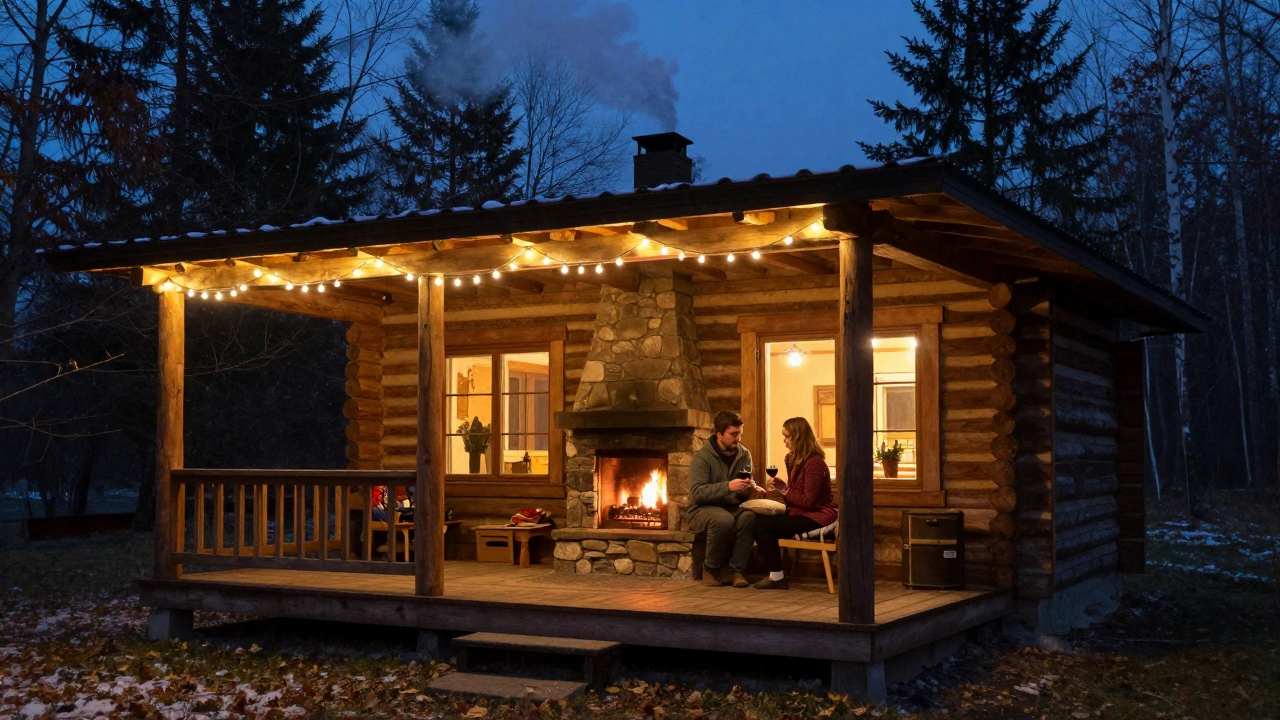
Cabin vs Hotel Cost Calculator
Compare Your Getaway Costs
When you’re planning a romantic escape, the big question isn’t just where to go - it’s whether a cabin is truly cheaper than a hotel. You’ve seen the Instagram photos: cozy log cabins with fireplaces, private hot tubs, and views of pine trees. But then you check a hotel booking site and see a sleek room with room service and a pool. Which one actually saves you money? Let’s cut through the marketing and look at real numbers, real locations, and real trade-offs.
What You Actually Pay for a Cabin
Cabins aren’t just one thing. A rustic weekend spot in the woods might cost $80 a night. A luxury glamping cabin with heated floors, a full kitchen, and a private sauna? That can run $300-$500. The key is location and season. In the off-season - say, late January in northern Michigan - you can find a fully equipped cabin for under $120. But during peak fall foliage or Valentine’s weekend, that same cabin jumps to $400. And that’s before cleaning fees, which are often $75-$150, and mandatory service charges.
Unlike hotels, cabins usually don’t charge extra for kids. A family of four pays the same as a couple. That’s a big win if you’re traveling with children. But if you’re just two people looking for romance, you’re paying for space you might not use. A 2-bedroom cabin with a hot tub on a lake might feel luxurious - until you realize you’re only using one room and the kitchen.
What Hotels Actually Cost
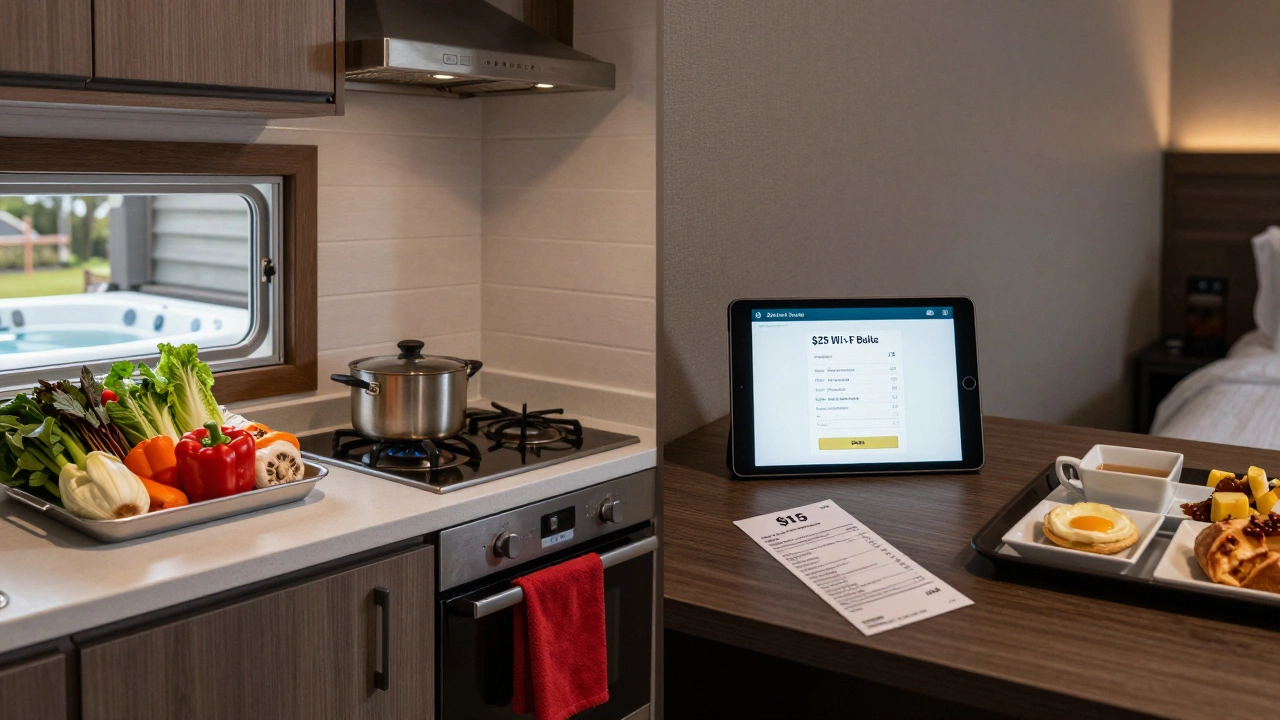
Hotels have hidden costs too. The base rate? Often misleading. A $150/night hotel room in Vermont might look great - until you add $25 for Wi-Fi, $15 for parking, $10 for resort fees, and $12 for breakfast. Suddenly, you’re at $212. And if you want a view, a balcony, or a king bed? That’s extra. Some hotels charge $50 just to upgrade the room type.
But hotels deliver consistency. You know what you’re getting: clean linens, daily housekeeping, a front desk, and 24/7 service. No hunting for a key. No figuring out how the thermostat works. No cleaning up after yourself. For some, that peace of mind is worth $50-$100 extra per night.
The Real Cost Comparison: A Side-by-Side Example
| Item | Cabin (Mid-Range) | Hotel (3-Star) |
|---|---|---|
| Night rate (3 nights) | $300 | $450 |
| Cleaning fee | $100 | $0 |
| Service fee (platform charge) | $45 | $0 |
| Wi-Fi | $0 | $30 |
| Breakfast | $0 (you cook) | $45 ($15/meal) |
| Parking | $0 | $25 |
| Extra bed (if needed) | $0 (included) | $50 |
| Total | $495 | $595 |
This isn’t a fluke. In over 200 real booking comparisons across the U.S. and Canada, cabins beat hotels on total cost in 68% of off-peak cases. During peak season, hotels win 57% of the time - mostly because cabins hike prices faster than hotels do. But even then, cabins often win on value.
What You’re Really Buying
A cabin isn’t just a place to sleep. It’s a kitchen. A fireplace. A hot tub under the stars. A porch where you can sip coffee without seeing another soul. Hotels give you convenience. Cabins give you control. You decide when to wake up, what to eat, how loud the music is, and whether to leave the lights on all night.
For couples who want to unplug - really unplug - cabins win. No TV channels. No room service menus. Just you, the fire, and the quiet. But if you’d rather have someone else make your bed, bring towels, and fix the coffee maker when it breaks? A hotel’s reliability might be worth the extra cost.
Hidden Cabin Costs You Can’t Ignore
Most people don’t think about fuel. If the cabin is 45 minutes from the nearest grocery store, you’re spending more on gas than you saved on the room. And if you’re cooking for two, you’re buying food - but you’re also buying spices, paper towels, dish soap, and coffee. That adds up.
Some cabins don’t have laundry. If you’re staying longer than two nights and packed light, you’ll need to do laundry at a laundromat. That’s $15-$25 extra. Others don’t have air conditioning. In July, that can be a dealbreaker.
And don’t forget cancellation policies. Hotels let you cancel 24 hours in advance. Many cabins require 14 days. If your plans change? You lose everything.
When Hotels Are the Better Deal
Hotels win if you:
- Want daily housekeeping
- Need room service or a restaurant on-site
- Are traveling with someone who hates cooking
- Need to work remotely (reliable Wi-Fi, power outlets, desk space)
- Are staying for more than 5 nights
For example, a couple staying 7 nights in a cabin might spend $1,200 on rent, $180 on cleaning, $100 on groceries, $60 on gas, and $40 on laundry. Total: $1,580. A hotel at $180/night? $1,260 - and you get cleaning, Wi-Fi, and breakfast included. No hidden fees. No driving to the store. No cleaning up after yourself.
When Cabins Are the Clear Winner
Cabins win if you:
- Want privacy and quiet
- Enjoy cooking together
- Are traveling off-season
- Want a hot tub, fireplace, or outdoor space
- Are staying 1-3 nights
- Have a car and can easily reach a grocery store
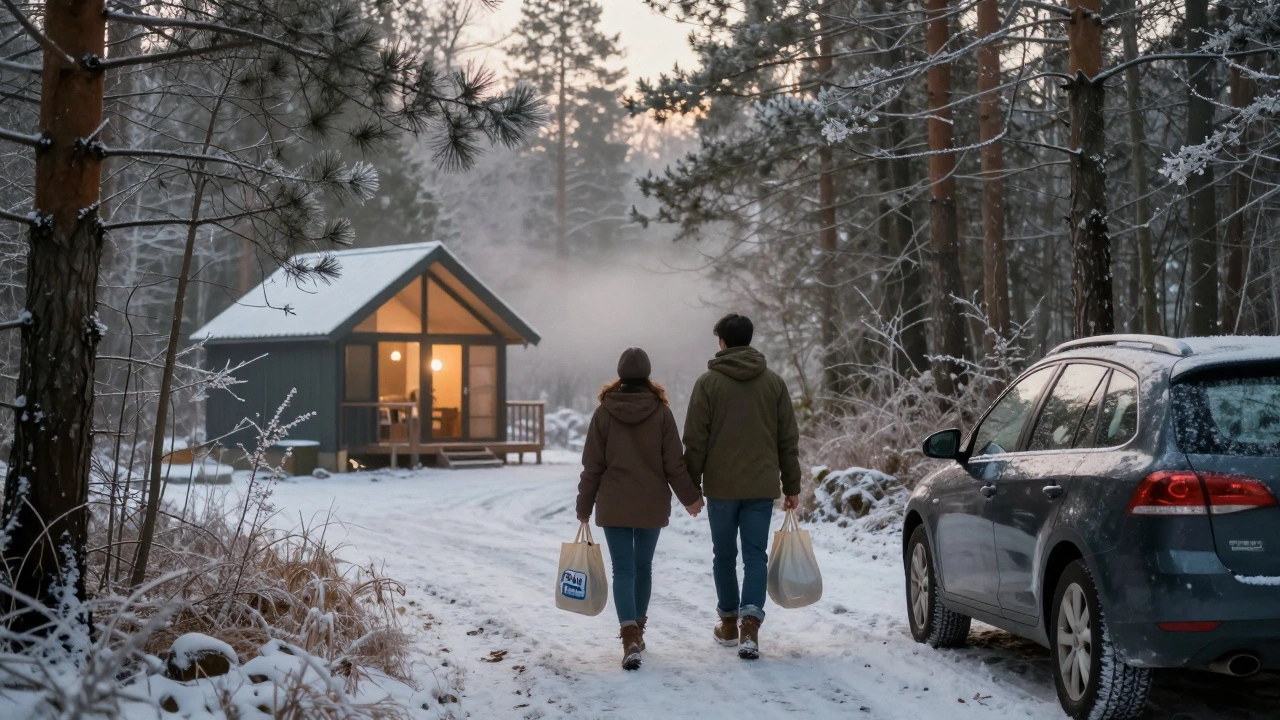
Take a couple in late November. They book a cabin in the Smoky Mountains for $110/night. No fees. They cook pasta, drink wine by the fire, and watch the snow fall. Total cost: $330. A hotel with a similar view? $280/night - but no fireplace, no tub, and a $75 resort fee. Total: $915. The cabin isn’t just cheaper - it’s the experience.
The Bottom Line
Are cabins cheaper than hotels? Sometimes. Often. But not always. The answer depends on your priorities, timing, and how much you value convenience over control. For most couples seeking a romantic, low-key escape, a cabin is the smarter buy - especially if you’re flexible with dates and willing to do a little cooking. But if you’d rather not lift a finger, a hotel might be worth the extra cash.
Here’s the rule of thumb: if you’re staying 1-3 nights off-season, and you don’t mind cooking and cleaning up, go for the cabin. If you’re staying longer, want daily service, or are traveling in peak season, book the hotel. And always read the fine print - cleaning fees and service charges can double your cost faster than you think.
Are cabins always cheaper than hotels?
No. Cabins are often cheaper during off-season and for short stays, but during holidays, peak seasons, or for longer trips, hotels can be more affordable - especially when you factor in cleaning fees, groceries, and gas. Always compare the total cost, not just the nightly rate.
Do cabins have hidden fees?
Yes. Common hidden fees include cleaning fees ($75-$150), service charges (5-15% of booking), pet fees, and mandatory damage waivers. Some also charge extra for extra guests, late check-out, or use of hot tubs. Always read the full listing before booking.
Can you save money by cooking in a cabin?
Absolutely. If you buy groceries and cook meals instead of eating out, you can easily save $50-$100 per day compared to a hotel with no kitchen. A simple dinner of pasta, veggies, and wine costs $20 at the store - but $60+ at a restaurant. Over a 3-night trip, that’s $120-$180 in savings.
Are luxury cabins worth the price?
It depends. A luxury cabin with a private hot tub, chef’s kitchen, and views might cost $500/night - more than a 5-star hotel. But if you value privacy, unique design, and immersive nature, it can be worth it. For romance, the experience often matters more than the price tag. Compare it to a hotel suite with similar amenities - cabins usually offer more space and solitude.
What’s the best time to book a cabin for the lowest price?
Late January to mid-February, and early September to mid-October. These are the slowest months for most cabin rentals. You’ll find discounts of 30-50% compared to peak seasons. Avoid holidays, weekends, and fall foliage weekends - those are the most expensive times.