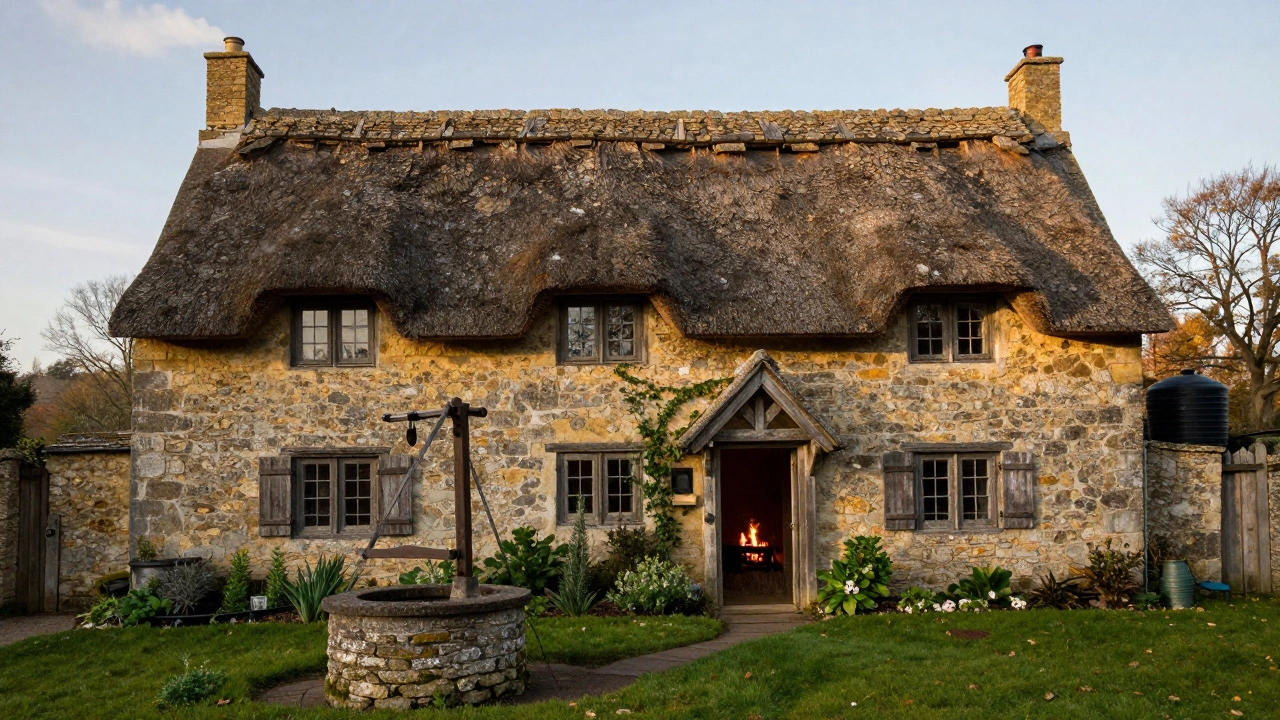
A rural cottage isn’t just a small house in the countryside. It’s a living piece of history shaped by weather, hard work, and simple needs. If you’ve ever seen a stone-built home with a thatched roof, crooked windows, and a garden full of herbs, you’ve seen a rural cottage. These aren’t fancy vacation rentals or modern prefab cabins. They’re real places where people lived for generations - and many still do.
What Makes a Cottage "Rural"?
The word "rural" doesn’t just mean "away from the city." It means tied to the land. A rural cottage is built to serve farming, animal care, or small-scale gardening. Its location is usually isolated - sometimes a half-mile from the nearest neighbor. You won’t find streetlights or sewer lines. Instead, you’ll find rainwater tanks, wood stoves, and hand-dug wells.
These homes were never designed for comfort in the modern sense. They were built for survival. Thick stone walls kept out winter cold. Small windows reduced heat loss. Low ceilings saved on firewood. Even the chimneys were built low to avoid strong winds. Every part of the structure had a purpose.
Typical Features of a Rural Cottage
Not every old house in the countryside is a true rural cottage. Here’s what sets them apart:
- Materials: Local stone, cob (a mix of clay, sand, straw), or timber. Brick was rare until the 1800s.
- Roof: Thatch made from reeds or straw. Metal or slate roofs came later and were usually added by wealthier owners.
- Size: Usually one or two rooms downstairs, with a small loft or attic for sleeping. Total floor space often under 60 square meters.
- Windows: Small, sometimes with wooden shutters. Glass was expensive, so many cottages had oiled paper or animal horn panes until the 19th century.
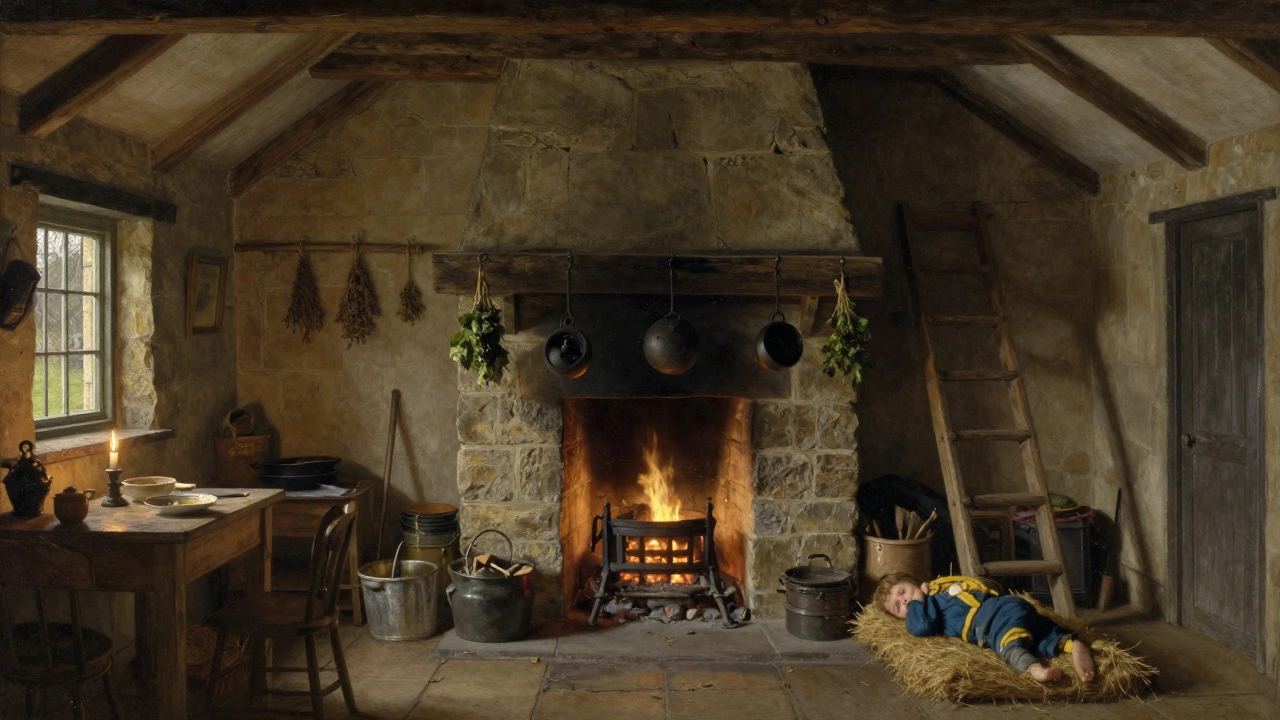
- Fireplace: Always central - not just for heat, but for cooking, drying clothes, and even lighting.
- Outbuildings: A separate pigsty, woodshed, or dovecote was common. Sometimes a small barn or milking shed.
Modern renovations often add insulation, plumbing, or solar panels. But the original structure remains. That’s what makes them special.
Where Are Rural Cottages Found?
You’ll find them in places where farming was once the main way of life:
- England’s Cotswolds and Yorkshire Dales
- Wales’ Snowdonia region
- Scotland’s Highlands and islands
- France’s Normandy and Provence
- Italy’s Tuscany and Umbria
- Parts of Ireland, Portugal, and Spain
In Australia, true rural cottages are rare. Most early settlers built simple weatherboard homes, not stone cottages. But you can find a few in the Southern Highlands of New South Wales or the Adelaide Hills, where British settlers tried to recreate the homes they left behind.
How Were They Built - and Who Lived There?
Most rural cottages were built by the people who lived in them - or by local craftsmen paid in food or labor. There were no architects. No building permits. Just generations of trial and error.
They weren’t owned by rich landowners. They were rented by farm laborers, shepherds, or small-scale crofters. Often, entire families lived in one room. Children slept on the floor near the fire. Livestock sometimes shared the same space in winter.
Life was hard. Water had to be carried from a stream. Firewood had to be chopped. Crops had to be planted by hand. But there was also deep independence. You grew your own food. You made your own tools. You didn’t rely on outside systems.
Why Do People Love Rural Cottages Today?
Today, many rural cottages have been restored and turned into holiday homes. But that’s not why they still matter.
People are drawn to them because they feel real. There’s no pretense. No luxury branding. No smart home gadgets. Just thick walls that remember centuries of wind and rain. A door that creaks the same way it did in 1820. A hearth that still smells like woodsmoke.
They remind us that comfort doesn’t need electricity. Beauty doesn’t need polish. And a home doesn’t need to be big to be meaningful.
Modern Rural Living - Is It Still Possible?
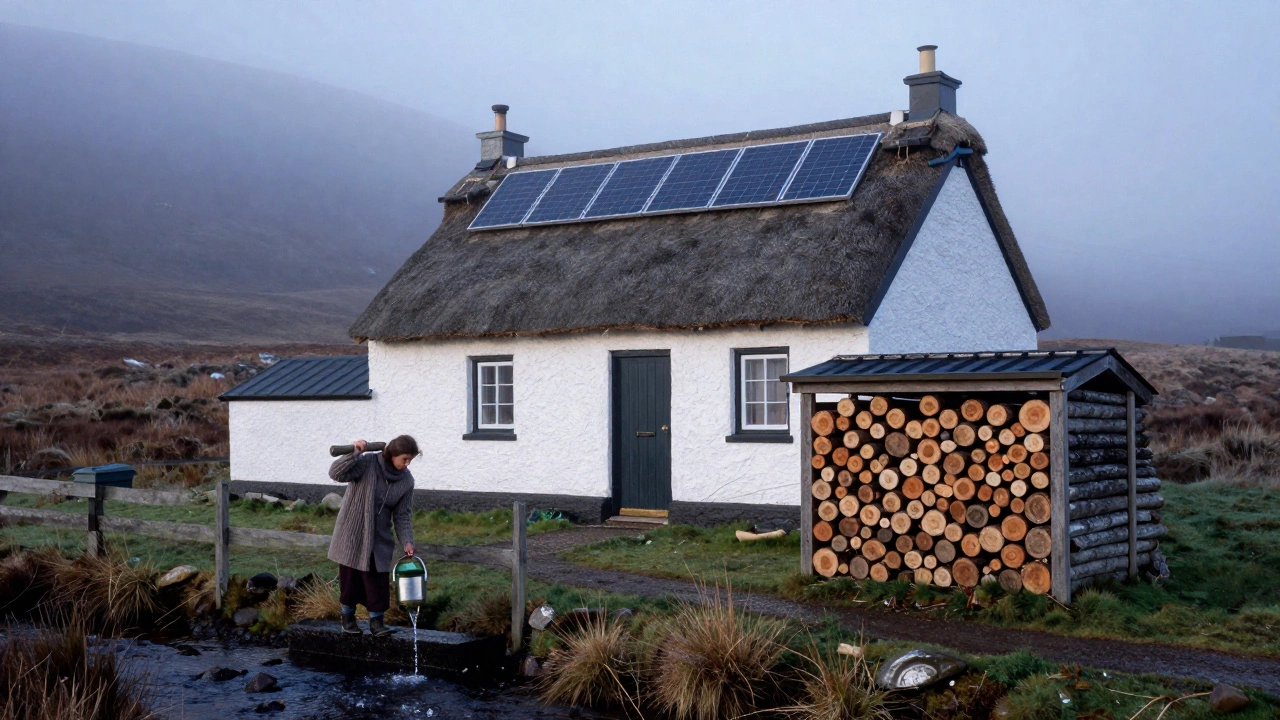
Some people today try to live in rural cottages full-time. They install solar panels, composting toilets, and rainwater filters. They grow their own vegetables. They heat with wood. They cut out internet and TV.
It’s not easy. Water pumps break. Roofs leak. Snow blocks the driveway for weeks. But those who do it say the trade-off is worth it. They feel connected - to the land, to the seasons, to their own hands.
It’s not about escaping modern life. It’s about choosing a slower rhythm. One that lets you hear the wind, not the news.
How to Tell If a Cottage Is Truly Rural
Not every small house in the country counts. Here’s how to spot the real thing:
- Look at the materials - if it’s made of modern concrete or vinyl siding, it’s not a true rural cottage.
- Check the layout - a real one has no hallways. Rooms flow directly into each other.
- Examine the windows - if they’re large, double-glazed, and floor-to-ceiling, it’s likely a renovation.
- Ask about the roof - thatch is rare now. If it’s been replaced with tiles or metal, it’s still a cottage, but not original.
- Find out the history - if it was built after 1950, it’s probably a replica or a new build.
The best rural cottages still have cracks in the walls. Dust in the corners. A door that won’t close all the way. That’s not a flaw. It’s proof they’ve been lived in.
What’s the Difference Between a Rural Cottage and a Country House?
People often mix these up. A country house is bigger - often 200 square meters or more. It was built for landowners, not laborers. It has formal gardens, multiple floors, and decorative details. Think of a Georgian manor, not a stone hut.
A rural cottage was built for work. A country house was built for show.
One holds the memory of a family’s daily life. The other holds the memory of wealth.
Why Rural Cottages Still Matter
In a world of prefab homes and climate-controlled apartments, rural cottages are a quiet rebellion. They prove that simple materials, built with care, can last for centuries.
They teach us that a home doesn’t need to be perfect to be good. That warmth comes from hearth, not heating systems. That beauty lives in weathered wood and uneven stone.
They’re not relics. They’re lessons.